
CSCS CEU Requirements: How to Maintain Your Certification
June 17, 2026
10 min. read
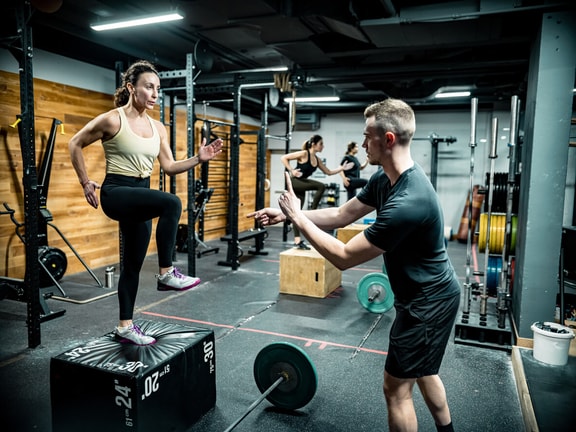
Earning the Certified Strength and Conditioning Specialist® (CSCS®) credential is a definitive professional milestone. However, passing the exam is only the beginning. To keep your credential active and protect your professional standing, you must commit to ongoing continuing education, maintain a current CPR/AED certification, and submit your recertification on time.
As an added benefit, most Medbridge CSCS-approved courses are also approved for PT (physical therapy) and AT (athletic training), so if you hold multiple licenses, you can fulfill requirements across all of them in a single course.
For most professionals, the immediate question is simple: How many CSCS CEUs do I need? The answer depends entirely on your original certification date and where it falls within the current cycle.
The National Strength and Conditioning Association (NSCA) operates on a three-year recertification cycle. The current cycle runs from January 1, 2024, through December 31, 2026.1
Whether you are a veteran strength coach or newly certified, this guide breaks down exactly how CSCS CEU requirements work, which activities qualify, and how to map out your recertification plan seamlessly.
What is a CSCS CEU?
A Continuing Education Unit (CEU) is the metric the NSCA uses to quantify your professional development. For the majority of educational events, CEUs are calculated directly from contact hours:
1 Contact Hour = 0.1 CEU
10 Contact Hours = 1.0 CEU
Certain educational benchmarks use flat reporting values rather than strict contact hours. For example, college coursework, publishing research, earning advanced certifications, and completing internships follow specialized reporting scales.3
Scope of eligible topics
To qualify for CEUs, your continuing education must align directly with the CSCS Detailed Content Outline (DCO). Approved topic areas include:3
Scientific foundations: Anatomy, physiology, biomechanics, bioenergetics, and sport psychology.
Practical and applied applications: Exercise technique, program design, testing and evaluation, performance technology, and sport nutrition.
Clinical and administrative: Return-to-play reconditioning, organization/administration, and coaching ethics.
This breadth allows you to customize your learning journey. A sports scientist might dive deep into performance telemetry, while a dual-credentialed physical therapist or athletic trainer might earn their units via advanced return-to-play rehabilitation coursework.
How many CSCS CEUs do you need?
Your total CEU requirement is based on your original certification date. The NSCA prorates requirements for professionals who pass their exam mid-cycle so they aren't penalized for time they weren't certified.1
Original certification date | CSCS CEUs required |
Before January 1, 2024 | 6.0 |
During 2024 | 4.0 |
During 2025 | 2.0 |
January 1, 2026 through June 30, 2026 | 1.0 |
July 1, 2026 through December 31, 2026 | 0 |
The current reporting deadline is December 31, 2026, and all units must be earned within this specific active window. For most credential holders, that means completing eligible activities between January 1, 2024, and December 31, 2026. Professionals certified later in the cycle must ensure all earned CEUs are dated after their official exam date.
To ensure well-rounded professional development, the NSCA requires you to earn your units from at least two of the four primary categories. Furthermore, each category has an internal cap; any units earned above a category’s maximum allowance will not count toward your final total.3
Two paths to recertification
The NSCA provides two distinct options to maintain your CSCS credential:1
The continuing education pathway: Earn and report your required CEUs, maintain an active CPR/AED certification, and pay the recertification fee.
The examination pathway: Retake and pass the full CSCS certification exam at a testing center, maintain your CPR/AED certification, and pay the associated fees.
Because retaking a comprehensive, multi-hour exam is both stressful and costly, the vast majority of professionals choose the continuing education pathway. The CEU pathway is the preferred option because it allows professionals to build knowledge through activities directly connected to their daily work, making it far more manageable when spread across a three-year cycle.
Which activities can count towards CSCS CEUs?
The NSCA organizes eligible activities into four categories. Understanding the categories can help prevent a last-minute scramble before the reporting deadline.
Category A: Attendance
This category covers your active engagement as a learner at educational events.
What qualifies: Attendance at live conferences, clinics, seminars, workshops, and synchronous virtual webinars.3
The rules: Non-NSCA events qualify perfectly as long as the content falls within the CSCS scope of practice. Live attendance does not require advance pre-approval from the NSCA.
Value: Typically 0.1 CEU per hour, capped at a maximum of 2.0 CEUs per individual event.3
Audit prep: Always retain your certificate of attendance, a letter of verification showing dates/hours, or the official event program.
Example: Attending an eight-hour live workshop on speed development, strength programming, or athlete assessment will yield 0.8 CEU, provided the content aligns with the DCO.
Category B: Sharing expertise
This category honors your contributions to the broader strength and conditioning community.
What qualifies: Speaking at seminars, presenting research posters, serving as an expert panelist, or volunteering on formal NSCA committees.3
Publications: Authoring or co-authoring articles, abstracts, book chapters, or full textbooks.
Value: Presentations net 1.0 CEU per hour (capped at 2.0 per event). Material published in a peer-reviewed journal yields 1.0 CEU, while articles in non-peer-reviewed trade publications earn 0.5 CEU.3
Example: Presenting a one-hour lecture on reactive strength index (RSI) progressions at an industry seminar or an NSCA State Clinic will yield 1.0 CEU.
Category C: Educational activities
This category captures a mixture of self-paced learning, academic upgrades, and personal professional development.
What qualifies: Completing pre-approved home study courses, undergraduate or graduate college coursework, formal internships, or earning secondary certifications.3
Personal development allowance: You can claim units for unapproved home study (for example, reading textbooks, reviewing journals, or listening to industry podcasts). Documenting 5 hours of this independent work yields 0.5 CEU, with a rigid cap of 0.5 CEU per calendar year.3
CPR/AED note: Maintaining a valid CPR/AED card is a mandatory prerequisite to recertify, but renewing it does not earn you CEUs. However, a formal First Aid certification renewal can be claimed for 0.5 CEU.3
Example: Completing a 3-credit-hour college semester course in biomechanics or advanced exercise physiology yields 1.5 CEUs (calculated at 0.5 CEU per semester credit hour).
Category D: Quizzes and assessments
This category offers structured, self-paced assessment options directly through the certifying body.
What qualifies: Passing quizzes associated with the Strength and Conditioning Journal, official NSCA video lectures, conference quizzes, or the U.S. Anti-Doping Agency (USADA) Coaching Advantage Quiz.3
Value: Generally ranges between 0.2 and 1.0 CEU per quiz passed.3
Example: Passing two individual Strength and Conditioning Journal article quizzes on the NSCA portal will yield 0.4 CEU (calculated at 0.2 CEU per individual quiz).
How to build a CSCS CEU plan
To build an efficient recertification strategy, log in to your NSCA portal and verify three metrics: your original certification date, your outstanding CEU total, and what you have already reported.
Example CSCS CEU plan
If you were certified before 2024 and need the full 6.0 CEUs, a balanced, multi-category plan might look like this:
Educational activity | Category | CEU value |
Attend a 10-hour live human performance workshop | Category A | 1.0 CEU |
Attend an 8-hour synchronous virtual sports science summit | Category A | 0.8 CEU |
Complete two pre-approved home study/online courses | Category C | 2.0 CEUs |
Document five hours of independent journal review per year | Category C | 1.5 CEUs |
Pass four strength and conditioning journal quizzes | Category D | 0.7 CEU |
Total earned | Multi-category | 6.0 CEUs |
Note: Actual CEU values depend on specific provider status and NSCA guidelines. Before enrolling in an outside course or registering for an event, always verify that the provider holds an approved NSCA provider number or that the curriculum strictly matches the CSCS exam outline.
6 common CSCS recertification mistakes to avoid
An unexpected audit can put your hard-earned credentials at risk. Maximize your preparation by avoiding these common administrative missteps:
Maxing out a single category: Don't rely solely on one method of education. Keep the individual category maximums in mind; everything over the cap is discarded.
Forgetting the two-category minimum: Even if you accumulate 10.0 CEUs, your renewal will be rejected if they all originate from a single category.
Misdating activities: Ensure every course certificate explicitly displays a completion date falling securely between January 1, 2024, and December 31, 2026.
Assuming every course is pre-approved: For distance learning and home study, ensure the provider has an active NSCA provider number. If they don't, the coursework must be logged under the limited Personal Development subcategory.
Letting CPR/AED credentials lapse: Your first responder card must be fully valid on the exact day you submit your digital recertification application.
Purging your paperwork: The NSCA conducts random audits. Keep physical or digital copies of your certificates, course outlines, and transcripts for at least one full year after the cycle closes.
Streamline your recertification with Medbridge
Meeting your CSCS CEU goals doesn't have to mean tracking down disjointed workshops or scrambling at the end of a three-year cycle. Medbridge serves as a comprehensive partner in care, offering an all-in-one platform built to fulfill your NSCA requirements on your own schedule.
By choosing Medbridge, you can check off your mandatory multi-category obligations in one place:
Earn Category A Credits: Participate in interactive, synchronous live webinars covering advanced sports medicine and training topics.
Access Category C Home Study: Get unlimited access to a growing library of 30+ video-based, NSCA-approved continuing education courses.
Learn From Elite Instructors: Study evidence-based protocols taught by world-class industry experts like Jay Dicharry (Clinical Examination of the Runner), Phil Plisky, Elizabeth Lane, and Jared Vagy.
Elevate athlete care beyond the classroom
Beyond tracking your points, a Medbridge subscription bridges the gap between continuing education and daily workflow application. CSCS credential holders gain access to over 8,000+ customizable, video-based exercises and athlete education resources, allowing you to build tailored home exercise programs (HEPs) and performance tracking protocols in minutes. You can also tune into industry-focused audio content like the Rehab and Performance Lab podcast to unpack challenging return-to-sport timelines while on your commute.
CSCS CEU requirements are ultimately designed to support continued, high-level learning across an evolving strength and conditioning landscape. The best approach is to proactively select evidence-based learning activities that support your current daily workflow while satisfying NSCA reporting rules.
By tracking your category balances early, prioritizing topics that elevate your clinical and coaching practice, and leveraging an integrated platform like Medbridge, you can navigate the December 31, 2026, deadline smoothly and with zero administrative surprises.
Ready to knock out your recertification requirements? Explore Medbridge Strength & Conditioning Courses Today.
References
National Strength and Conditioning Association. (n.d.). Recertification. https://www.nsca.com/certification/recertification/
National Strength and Conditioning Association. (n.d.). How to maintain your certification [PDF]. https://www.nsca.com/globalassets/certification/certification-pdfs/how-to-maintain-your-certification.pdf
National Strength and Conditioning Association. (n.d.). CEU categories. https://www.nsca.com/certification/continuing-education/ceu-categories/
Meet the Authors


Subscribe to Our Newsletter
Related Posts

January 1, 2025
2025 Athletic Trainer BOC CEU Requirements: Recertification Quick Reference Guide
By Medbridge

August 3, 2022
Continuing Education in Healthcare: What You Need to Know
By Medbridge

August 18, 2025
Medbridge CEUs Support Extended Athletic Trainer Certification Renewal Deadline
By Medbridge
September 15, 2026
Medbridge and Athlete Development Solutions Partner to Eliminate the Gap Between Rehab and Return to Sport
By Medbridge