
From Skeptic to Advocate: How Medbridge Pathways Changed My Approach to Care
One clinician's journey from Pathways skeptic to advocate after discovering how Pathways enhanced their education and training, helping them become more effective and present with patients.
February 19, 2026
4 min. read
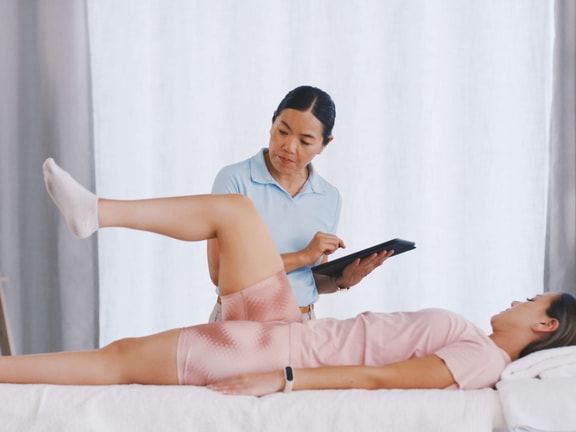
I’ll admit it, I was skeptical at first.
When I was encouraged to try Medbridge Pathways—new, standardized move-based care programs—my initial reaction was resistance. After seven years of education and training to evaluate, problem-solve, and design individualized care, why would I rely on something that felt “cookie-cutter”? Even if the programs were research-based, could they really outperform a plan built from my own clinical reasoning?
But after experimenting with the platform and seeing how patients responded, my perspective shifted completely. This wasn’t just another shiny tool attempting to flatten my clinical expertise for the sake of efficiency. Instead, Pathways was actually enhancing my education and training, helping me become more effective and present with my patients.
A smarter way to support the right patient
One of the first patients I enrolled in a Pathway was a runner in her 30s who was training for a half-marathon. She was otherwise healthy, experienced with exercise, and presented with classic IT band and lateral knee pain just weeks before race day. Her deficits were straightforward: weakness of the gluteus medius and maximus.
Traditionally, I would have scheduled weekly visits leading up to the race. Instead, I introduced her to a Medbridge Pathway. She progressed independently through four phases of targeted strengthening, with just one follow-up visit about a month later to confirm readiness. I didn’t need to constantly revise her home program, which freed me up to add a few recovery-focused stretches and answer higher-level questions.
The result? She gained a clear understanding of her pain, saved on healthcare costs, missed less time at work, and felt confident managing her recovery on her own. For a patient like her, the Pathway wasn’t a compromise—it was the ideal solution.
Creating space for what only clinicians can do
Another case made the value of Pathways even clearer.
This patient had undergone two ACL surgeries, never fully regained quadriceps strength, and struggled with scar sensitivity and pain during high-intensity sports like soccer and volleyball. In this case, Pathways allowed me to spend my in-clinic time doing what we could only accomplish in-person—dry needling, cupping, movement analysis, and hands-on interventions—without spending valuable time repeatedly teaching or progressing exercises.
Pathways delivered structured exercise and education, while I focused on skilled techniques that only an in-person clinician can provide. Instead of competing with my expertise, Pathways amplified it.
Expanding access without sacrificing quality
What truly convinced me of Pathways was seeing how far the impact can extend beyond experienced athletes.
For patients with chronic pain, Pathways promotes gentle, consistent movement grounded in pain neuroscience principles—helping them rebuild confidence and independence over time. For patients facing barriers such as high copays, transportation challenges, or limited time away from work or family, Pathways provides access to high-quality care that might otherwise be out of reach.
This is where physical therapists are uniquely positioned to make a difference: meeting patients where they are physically, emotionally, and practically. Pathways has become an invaluable tool in helping me do just that.
Pathways is intuitive, but clinical expertise still matters
Like any clinical tool, Pathways is most effective when used thoughtfully by trained clinicians.
I consider several factors before recommending a Pathway: the patient’s comfort with technology, their interest in independent care, and their understanding of their condition and recovery goals. Buy-in matters. So does confidence—both in the program and in the ongoing support behind it.
Patients are never “sent off” on their own. They know their responses are monitored, that increased pain or decreased function will trigger follow-up, and that messaging or phone support is always available. I often tell patients: “If things aren’t moving in the right direction within two weeks, reach out—we’ll adjust the plan together.”
Even when a Pathway doesn’t fully resolve symptoms, it provides valuable insight into which movements help, which don’t, and what the next steps should be.
Reinforcing the idea that movement is medicine
By offering a cost-effective, self-guided way for patients to manage symptoms, Pathways helps reinforce a powerful message: movement is medicine.
In a healthcare system full of tools that can sometimes feel transactional, this model restores value—to patients and to the profession. It respects clinicians’ expertise while acknowledging that no two patients, schedules, or lives look the same.
If you’re curious about Pathways, start small. Choose a patient who feels like a good fit. Learn the programs. Watch what happens. From there, the possibilities tend to grow quickly.
For more information, request a demo from a Medbridge team member.
Meet the Author

Subscribe to Our Newsletter
Related Posts

November 5, 2025
Managing End-of-Year Surgical Volumes with Medbridge Pathways and One Care
By Medbridge
August 27, 2024
Addressing Chronic Pain: A New Pathway to Better Patient Management and Hybrid Care
By Medbridge

March 11, 2025
Medbridge's New Digital MSK Care Innovation | Medbridge Pathways
By Sarah Jacob Singh

November 7, 2024
What Do Patients Want from Digital Care? 4 Difference Makers That Improve the Patient Experience
By Jon Ide-Don