
Is AI the Answer to Clinician Burnout? Reducing Administrative Burden Without Replacing Clinicians
AI isn’t a magic fix for clinician burnout, but it can be part of the solution. When used strategically, AI reduces administrative burden and gives clinicians more time to focus on patient care without replacing their expertise.
April 6, 2026
5 min. read

Clinician burnout remains one of the most pressing challenges facing healthcare organizations of all types and sizes. Increasingly, artificial intelligence (AI) is entering the conversation as a potential solution.
Yet discussions about AI in healthcare often swing between extremes. Some portray it as a magic bullet that will fix burnout overnight, while others fear it could remove clinicians from care altogether. In reality, though, neither view reflects how healthcare actually works.
The better question isn’t whether AI alone can solve clinician burnout; it’s what role should AI play in helping clinicians do their work more effectively. When used thoughtfully, AI can be a powerful part of a broader organizational strategy to reduce administrative burden, improve workflows, and help clinicians spend more time focused on patients, while keeping clinical judgment firmly at the center of care.
Burnout Is Often a Systems Problem
Burnout is frequently framed as an individual issue that clinicians must manage through resilience or self-care. But many of the drivers of burnout are systemic. Clinicians don’t necessarily burn out because of patient care itself. Instead, they face pressures surrounding care delivery, including:
Documentation burden
Fragmented workflows
Rising expectations with limited resources
Operational inefficiencies
When the root causes of burnout are system-level challenges, solutions should focus on improving those systems. That’s where technology—including AI—can play an important role.
AI Works Best When It Removes Friction
If you’ve seen the hit show The Pitt, you might be familiar with AI scribes—even if your organization hasn’t adopted them yet. While they’re not always perfect (as the show demonstrates when they occasionally get details wrong), they’re one of the clearest examples of AI helping clinicians today. These tools listen during patient visits and automatically draft clinical documentation. They often integrate with electronic medical records and generate notes that clinicians review, fact check, and sign off on before finalizing.1
The appeal is straightforward: AI scribes manage tedious documentation tasks while keeping clinicians in control of the final record. A key takeaway is that AI succeeds when it removes work clinicians never wanted to do, while preserving their authority and expertise.
Beyond scribes, other emerging uses of AI aimed to reduce administrative friction include:
AI-generated visit summaries
Messaging support
Exercise recommendations
The goal isn’t automation for its own sake. It’s helping clinicians spend less time navigating systems and more time caring for patients.
Burnout Isn’t One-Dimensional
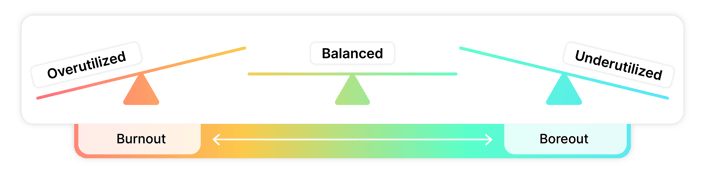
Burnout is often associated with clinicians being overworked, but the issue is more nuanced. There’s another side of the spectrum that’s discussed less often: feeling underutilized or undervalued. If technology ends up sidelining clinical expertise or reducing clinicians to task managers, it can create a different problem sometimes referred to as “boreout.”2
The healthiest environment sits between these extremes. When organizations design workflows that respect clinician expertise and use technology to reduce overwhelm, clinicians are more likely to remain engaged and effective in their work. Achieving that balance requires three elements working together: human clinical reasoning, supportive technology, and organizational support.
The Healthy Medium Between Burnout and Boreout
The Right Role for AI: Supporting Clinicians, Not Replacing Them
Some industry conversations are beginning to explore a more radical possibility: clinical AI systems operating with little or no human involvement.3 The appeal is understandable—automation promises scale and efficiency for organizations facing staffing shortages and operational pressures.
But healthcare is not purely procedural work. Care depends on context, trust, clinical judgment, and human connection. Removing clinicians from the loop risks more than workflow disruption. It risks undermining patient trust, oversimplifying complex clinical decisions, and diminishing the meaning clinicians derive from their work.
Healthcare organizations must strike a balance of using technology to support clinicians without replacing the expertise and judgment that define high-quality care.
Instead of asking “What can AI do?” try questions such as:
Does this reduce administrative burden?
Does it preserve clinician judgment?
Does it improve care quality?
Does it make clinicians want to stay?
Transparency Matters
As AI becomes more integrated into care delivery, transparency will also play an important role. Patients increasingly want to understand how technology supports their care. Clear communication about how AI tools assist clinicians rather than replace them helps reinforce trust and ensures patients remain confident in the care they receive.
AI Isn’t the Only Answer, But It’s Part of One
Clinician burnout isn’t caused by a single factor, and it won’t be solved by a single technology. But AI can play a meaningful role when it’s implemented thoughtfully. By reducing administrative burden, optimizing workflows, and supporting clinical decision-making, AI tools can help restore clinicians’ focus on delivering the best possible patient care.
The future of healthcare isn’t human versus AI. It’s human expertise supported by intelligent tools within organizations designed to help clinicians do their best work. And the organizations that strike that balance will be best positioned to build environments where clinicians want to stay.
References
https://jamanetwork.com/journals/jamanetworkopen/fullarticle/2839542
https://medcitynews.com/2026/02/nyu-langone-health-clinical-ai/
Meet the Author


Subscribe to Our Newsletter
Related Posts

July 28, 2026
Clinical Judgment in the Age of AI: Helping Clinicians Think at Their Best
By Sarah Jacob Singh

February 12, 2025
AI and Automation in Healthcare: Change Management Strategies for Success
By Medbridge

October 14, 2025
Artificial Intelligence in Occupational Therapy: Bridging Promise and Practice
By Sarah Lyon

February 11, 2025
AI PT: Integrating Artificial Intelligence into Physical Therapy Practice
By Medbridge