
Using the ABC Scale PDF to Strengthen Fall Risk Assessment and Prevention
Use balance confidence—not just performance—to guide smarter fall prevention. Learn how to apply the ABC Scale PDF to uncover hidden risk and strengthen real-world mobility outcomes.
January 21, 2026
8 min. read
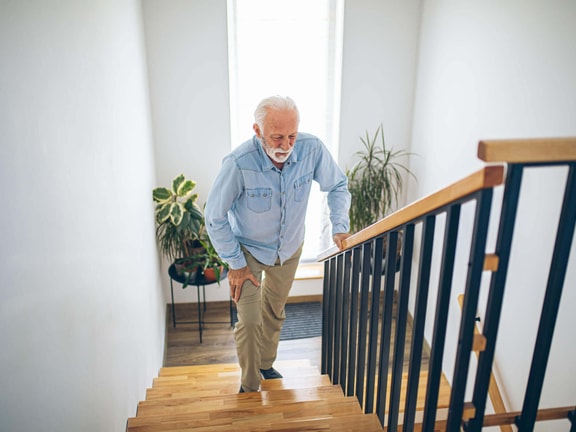
Falls are rarely caused by physical impairment alone. For many patients, reduced confidence in balance plays a significant role in limiting activity, altering movement patterns, and increasing fall risk over time. Tools like the Activities-specific Balance Confidence (ABC) Scale PDF help clinicians capture this often-overlooked psychological component of fall risk by measuring how confident a patient feels during everyday mobility tasks.
Balance confidence directly influences how patients move through their environment—whether they avoid stairs, hesitate during community ambulation, or restrict activity altogether. When fear of falling goes unrecognized, even well-designed balance and strengthening interventions may fall short of producing meaningful functional change.
That’s why patient-reported outcome measures like the ABC Scale play a critical role in modern fall prevention care—helping clinicians understand not just how a patient moves, but how confident they feel while doing it.
In this article, we’ll explain what the ABC Scale is, how clinicians use it in practice, and how to apply it effectively using our free downloadable ABC Scale PDF.
What is the ABC Scale?
The Activities-specific Balance Confidence (ABC) Scale is a validated self-report questionnaire that measures a patient’s confidence in maintaining balance while performing common daily activities.
Rather than assessing physical performance alone, the ABC Scale captures perceived balance confidence—helping clinicians identify fear of falling and activity avoidance that may not be apparent during standard balance or mobility testing. This makes it especially valuable for understanding how psychological factors influence real-world function and fall risk.
The ABC Scale includes:1
A 16-item questionnaire covering activities that range from basic household mobility to more demanding community ambulation
A 0 to 100 percent confidence rating for each activity
A simple scoring method that produces an average balance confidence score
Strong reliability and validity across adult and older adult populations
Because of its ease of use and strong evidence supporting its reliability and validity, the ABC Scale is widely used in outpatient rehabilitation, home health, skilled nursing, and community-based fall prevention programs.
Download the ABC Scale PDF
To support consistent, real-world use, we’ve created a free ABC Scale PDF that clinicians can use for screening, evaluation, progress tracking, and documentation.
The downloadable PDF includes the full 16-item questionnaire, clear administration and scoring instructions, and space for documentation, making it easy to integrate into everyday clinical workflows.
Activities-specific Balance Confidence (ABC) Scale PDF
Fill out a few quick details to access your free Activities-specific Balance Confidence (ABC) Scale PDF!
What’s included in the ABC Scale PDF
The ABC Scale PDF includes:
Clear administration instructions to support consistent use across clinicians
The full 16-item ABC Scale questionnaire, with space for patient confidence ratings
Built-in scoring guidance, including a worked example for quick reference
A dedicated scoring section for calculating total score and average balance confidence
Patient and clinician signature lines to support documentation and accountability
A clean, printable layout suitable for paper-based workflows across care settings
This format helps reduce variability in assessment, supports clearer documentation, and allows clinicians to focus on interpretation and intervention—rather than manual setup or calculation.
How to administer and score the ABC Scale
Using the ABC Scale is straightforward and typically takes five to ten minutes to complete, making it easy to incorporate into routine evaluations or follow-up visits. The ABC Scale PDF is designed to support consistent administration and scoring across clinicians and care settings.
Administration basics
Patients rate their confidence for each activity from 0 percent (no confidence) to 100 percent (complete confidence).
If a patient does not currently perform an activity, they estimate how confident they would feel performing it.
The scale may be self-administered or completed via clinician interview, depending on patient needs and setting.
Scoring steps
Add the confidence ratings for all 16 items.
Divide the total by 16.
The result represents the patient’s average balance confidence (percent).
Clinical interpretation
Scores below 67 percent are associated with increased fall risk.2
Lower scores reflect reduced balance confidence during daily activities.
Results should be interpreted alongside performance-based balance and mobility measures, such as gait or functional balance testing.
Results should be interpreted alongside performance-based balance and mobility measures, such as the Sitting Balance Scale, Berg Balance Test, or Functional Gait Assessment, to provide a more complete picture of fall risk.
Changes in score over time may reflect response to intervention, increased confidence, or emerging concerns.
When balance confidence matters most
The ABC Scale is most valuable when clinicians want to understand how confident a patient feels in real-world situations—not just how they perform during structured testing. Two patients may demonstrate similar strength, gait speed, or balance scores, yet move through daily life very differently based on confidence, fear of falling, and perceived safety.
Pairing patient-reported tools like the ABC Scale with a thorough head-to-toe assessment helps clinicians capture both functional performance and confidence-related barriers that influence fall risk. By capturing this patient-reported perspective, the ABC Scale helps clinicians uncover barriers to participation that may otherwise go unaddressed.
Common clinical use cases include:
Fall-risk screening for adults and older adults, particularly when fear of falling or activity avoidance is suspected
Baseline assessment during the initial evaluation to establish confidence-related limitations alongside physical impairments
Outcome tracking following balance, gait, or vestibular interventions to assess changes beyond physical performance
Discharge planning, especially for patients transitioning back to community mobility or complex environments
Patient education, helping individuals recognize activity-specific confidence gaps and engage more meaningfully in care planning
Because it is quick to administer and easy to interpret, the ABC Scale PDF fits seamlessly into routine clinical workflows—providing actionable insight without adding unnecessary documentation burden.
Benefits of a standardized ABC Scale PDF
Balance confidence is easy to overlook—but it often explains the gap between how a patient performs in the clinic and how they function in daily life. Without a standardized way to assess it, confidence-related risk factors may be inconsistently documented or missed altogether, especially when physical strength and balance appear adequate.
A standardized ABC Scale PDF gives clinicians a reliable, repeatable way to capture this information and integrate it into clinical reasoning. Rather than relying on informal questioning or subjective impressions, the ABC Scale provides a structured, evidence-based framework for assessing balance confidence across patients, visits, and care settings.
Using a standardized ABC Scale PDF supports more consistent, actionable care by enabling:
Clear documentation for evaluation, progress tracking, and discharge planning
Consistent administration across clinicians, disciplines, and care environments
Easier comparison of scores over time to monitor response to intervention
More meaningful conversations with patients about confidence-related barriers to mobility
Alignment with evidence-based fall prevention and outcome measurement practices
For organizations, standardized tools like the ABC Scale PDF also support quality initiatives and clinical accountability—without adding unnecessary administrative complexity.
A clinical example: when performance doesn’t tell the whole story
Consider a 72-year-old patient referred to outpatient therapy after a recent near-fall. During the evaluation, they demonstrate adequate lower extremity strength, safe gait speed, and good balance during in-clinic testing. On paper, their fall risk appears low.
However, when the clinician administers the ABC Scale, a different picture emerges. The patient reports low confidence when walking in crowded environments, navigating parking lots, and stepping onto escalators—situations they routinely avoid. Their overall ABC score falls below 67 percent, indicating increased fall risk driven not by physical limitation alone, but by fear and activity avoidance.
With this insight, the plan of care shifts. In addition to balance and strength training, the clinician incorporates graded exposure to community-level tasks, dual-task training, confidence-building strategies, and patient education focused on safe participation outside the clinic. Over time, improvements in ABC scores help guide progression and reinforce meaningful functional gains.
This is where patient-reported tools like the ABC Scale add value—revealing barriers that performance tests alone may miss and helping clinicians tailor interventions to real-world mobility demands.
Supporting fall prevention with the right tools
Assessing balance confidence is a critical first step, but reducing fall risk requires ongoing, targeted intervention. Once clinicians identify confidence-related barriers using tools like the ABC Scale, the next step is supporting patients with structured, progressive care that addresses both physical ability and fear of falling.
Medbridge Pathways helps extend fall prevention beyond the clinic with guided digital programs designed to improve balance, build confidence, and support safer mobility in daily life. These pathways combine progressive balance and dual-task exercises with patient education focused on real-world challenges—helping patients translate clinical gains into functional confidence at home and in the community.
Together, standardized assessment tools like the ABC Scale PDF and guided fall prevention pathways create a more complete, confidence-centered approach to fall prevention, supporting clearer clinical decisions, better patient engagement, and safer movement over time.
References
Powell LE, Myers AM. The Activities-specific Balance Confidence (ABC) Scale. J Gerontol A Biol Sci Med Sci. 1995 Jan;50A(1):M28-34. https://pubmed.ncbi.nlm.nih.gov/7814786/
Rehabilitation Measures Database. (n.d.). Activities-specific balance confidence scale. Shirley Ryan AbilityLab. https://www.sralab.org/rehabilitation-measures/activities-specific-balance-confidence-scale
Meet the Author


Subscribe to Our Newsletter
Related Posts

January 15, 2026
Sitting Balance Scale: A Practical Tool for Early Fall Risk Identification
By Medbridge

August 20, 2025
Evidence-Based Fall Prevention for Older Adults: From Screening to Strength
By Medbridge

June 30, 2025
Modified Falls Efficacy Scale Explained: Uses, Scoring, and Benefits
By Medbridge

September 8, 2025
Fall Prevention Awareness Month: Clinical Strategies for PTs and OTs
By Erika del Pozo and Medbridge