
Why Medbridge Is Making Big Bets On AI, Patient-Reported Outcomes, and Remote Therapeutic Monitoring in 2026
CPTO Sarah Jacob Singh breaks down Medbridge’s biggest bets for 2026—from Patient-Reported Outcomes to Remote Therapeutic Monitoring and AI—and what they mean for healthcare organizations navigating rising complexity and tighter margins.
December 22, 2025
6 min. read

As we approach the end of the year, most healthcare organizations find themselves caught in a familiar tension. Things are busier than ever, yet it’s also one of the few moments when we naturally step back, look back on the previous year, and take inventory of what’s working and what isn’t. It’s a season where we reflect on the struggles, celebrate the wins, and start charting the path toward a stronger year ahead.
It’s no different for the Medbridge team. This past year, our team was proud to produce 9,000+ new patient engagement resources, 75+ informative live webinars, and 50+ continuing education podcasts. We also launched new Pathways for Senior Care, Women’s Health, and Occupational Health and unified our suite of care products into a single, seamless experience with One Care.
We also ran into some familiar challenges that are widespread in the healthcare industry—providers are overwhelmed, patient needs are changing, and reimbursements are being cut, forcing organizations to deliver better outcomes with fewer resources. But with challenge comes opportunity, and this moment offers a chance to reimagine how we deliver care, measure progress, and support both patients and clinicians.
In 2026, we’re hoping to build on this growth so we can better face these persistent challenges that continue to be a thorn in the side of the healthcare industry year after year. To accomplish this, we’re making three big bets next year:
Thoughtfully integrated Artificial Intelligence (AI)
Independently, each is powerful. Together, they create something greater—helping Medbridge support teams in building not just more efficient workflows, but more impactful, scalable, and meaningful care experiences in 2026.
Why Patient-Reported Outcomes Are Becoming a New Currency of Care
For decades, healthcare measured success in terms of volume, such as visits, procedures, and units billed. But reimbursement models and patient expectations are changing fast. Today, success hinges on a different question: Is the patient actually getting better?
That’s why Patient-reported outcomes will begin to take on an even more important role in 2026. PROs provide clinicians with real insight into patients’ functional progress, symptoms, pain levels, quality of life, and daily limitations—things that traditional metrics simply don’t capture.
CMS is rapidly pushing the healthcare system toward measurable, outcomes-driven care. Patient-reported outcomes are now required for total joint replacements, and the new Ambulatory Specialty Care Model expands mandatory outcomes tracking across MSK conditions like low back pain.
But just as valuable are the mass quantities of data this will provide to help healthcare organizations make informed care decisions. With Medbridge, organizations can collect standardized outcomes directly within the Medbridge platform—giving actionable insights and data to demonstrate value to payers and patients.
Remote Therapeutic Monitoring: More Engagement, Better Results
Remote therapeutic monitoring has come a long way in the last several years, quietly becoming one of the most powerful engagement tools available. What started as a useful reimbursement tool now unlocks the ability to:
Keep patients engaged between visits
Give clinicians visibility into daily progress
Help identify setbacks early
Provide a billable framework for digital touchpoints
Strengthen the patient-provider relationship
And new federal rules announced this year have made RTM easier to deliver, easier to bill, and more accessible to far more patients than before.
If you haven’t heard the news, CMS just approved two new CPT codes, as well as new guidance from the 2026 AMA CPT Manual that indicates code 98975 can be reported after only two days instead of the previously required 16-day threshold. This potentially increases the number of reimbursable patients from about a quarter to 95 percent!
These new codes, combined with the lower threshold of 98975, will help establish the groundwork for the widespread adoption of remote therapeutic monitoring in physical therapy.
Medbridge’s RTM workflows are designed to be simple, scalable, and integrated with education, HEPs, reminders, and real-time data. The result? Patients stay active and accountable, and clinicians get continuous insights instead of episodic snapshots.
The Power of PROs + RTM Together
Patient-reported outcomes and remote therapeutic monitoring are exciting on their own, but when organizations use PROs and RTM together, they create a complementary structure that brings each to the next level.
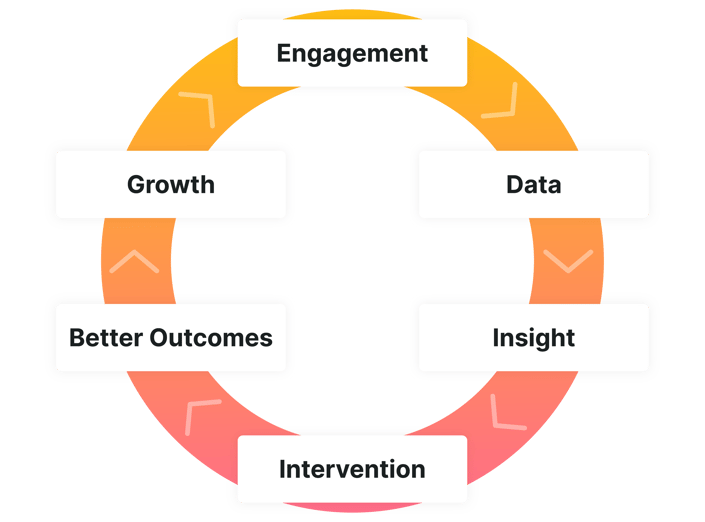
RTM drives continuous patient participation
PROs turn that engagement into measurable change
Clinicians get clearer data points
Leaders get visibility across sites and teams
Organizations demonstrate impact and ROI
RTM drives ongoing patient engagement, which in turn fuels more comprehensive PRO data, and keeps patients active between visits through exercises, education, and check-ins, which increases how often they share updates about their symptoms and function. This makes PRO collection easier, more consistent, and more accurate because patients are already interacting with the platform.
PROs then take all that engagement and turn it into meaningful insights. While RTM shows what patients are doing, PROs reveal whether it’s actually improving their pain, mobility, or daily function. Together, they give clinicians a complete picture of progress, help identify issues earlier, and provide the data needed to meet CMS requirements and succeed in value-based care models, all while reducing administrative burden through digital automation.
This isn’t just better care—it’s a better business model.
Where AI Fits In: Moving Beyond the Back Office
Much of today’s healthcare AI is focused on administrative automation—notetaking, billing, scheduling. It’s useful, but if we limit it to back-office tasks, we’re not thinking big enough. The real opportunity lies in moving beyond the back office and embedding AI into clinical workflows, thereby extending clinical capacity, improving access, and even supporting patient-facing care—while maintaining human oversight.
That’s why AI at Medbridge is being built to support three frontline use cases:
1. AI as a Clinical Co-Pilot
AI helps clinicians analyze patient trends, evaluate PRO data, identify risk, and make decisions faster and with more certainty.
2. AI as a Triage and Routing System
AI can guide patients to the right level of care—self-care, digital care, or in-person care—much earlier and much more accurately.
3. AI as a Personalized Patient Coach
Between visits, AI can keep patients motivated, supported, and on track by:
Answering questions
Delivering micro-coaching
Personalizing exercises
Monitoring symptoms
Flagging concerns before they escalate
This doesn’t replace clinicians—it amplifies them. By allowing AI to handle the repetitive work, clinicians can focus on human connection and complex decision-making.
The Future Medbridge Is Building
When you combine Medbridge’s PRO system, RTM workflows, and AI capabilities, you get something far greater than the sum of the parts.
The Medbridge approach offers a path forward by:
Making outcomes visible with PROs
Keeping patients connected to care with RTM
Amplifying clinicians and unlocking capacity with AI
In 2026 and beyond, this is how Medbridge will continue to help healthcare organizations move from being reactive to proactive, from episodic to continuous, and from volume-based to value-driven. Stay tuned for more updates, including a sneak peek at our upcoming Patient-Reported Outcomes roadmap!
And happy new year!
Meet the Author


Subscribe to Our Newsletter
Related Posts

February 11, 2025
AI PT: Integrating Artificial Intelligence into Physical Therapy Practice
By Medbridge

June 20, 2024
From Motion Capture to Patient Copilots: How AI is Expanding What's Possible in Digital MSK Care
By Sarah Jacob Singh

December 16, 2024
The Future of AI at Medbridge: A Q&A with Medbridge's Head of AI Paul Jaure
By Sarah Jacob Singh

December 18, 2025
Four Forces That Will Redefine Healthcare in 2026
By Donovan Campbell