
Remote Therapeutic Monitoring for Outpatient PT and OT
Presented by Rick Gawenda
This course will thoroughly explain the ten RTM CPT codes, including defining what a medical device is and how and when you can bill for each CPT code, and what you should document to support the billing of each CPT code. Case scenarios will be presented to assist participants in determining how the RTM codes can be utilized and billed correctly. The course will also provide 3 models of RTM implementation and will provide the benefits and possible cons for each of the 3 models. Finally, the course will provide participants with current payment and benefit issues that may impact reimbursement from an insurer and shift that cost to the patient.
Learning Objectives
- Distinguish the description of each of the ten RTM codes
- Select what type of device(s) must be used in order to bill CPT codes 98975–98978 and 98984–98986
- Determine what you should document to support the billing of each RTM CPT code
- Apply supervision requirements when RTM is provided by a therapist/therapy assistant
- Determine the frequency of billing each of the RTM CPT codes
- Select which CPT codes the de minimis standard and MPPR apply to
- Determine which RTM model is best for your practice or organization
- Analyze payment and benefit issues associated with RTM
Meet your instructor

Rick Gawenda
Rick Gawenda is founder and president of Gawenda Seminars & Consulting, Inc. He graduated in 1991 with a Bachelor of Science in physical therapy from Wayne State University in Detroit. Rick is director of finance for a physical therapist–owned private practice with multiple offices located in Southern California. In addition,…
Chapters & learning objectives

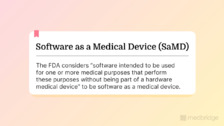
2. Medical Device and Software as a Medical Device
This chapter will explain what type of medical device must be used for RTM.
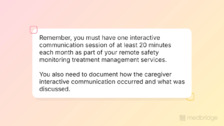
3. Documentation to Support the RTM CPT Codes
This chapter will explain the documentation required to support the billing of the RTM CPT codes.
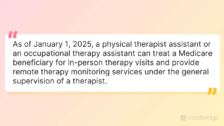
4. Supervision and Licensure
This chapter will teach participants the licensure and supervision requirements when providing RTM services.

5. Billing
This chapter will explain the frequency the RTM codes can be billed as well as claim form completion.

6. Billing Scenarios
This chapter will provide case scenarios to teach participants how to bill the RTM codes correctly.
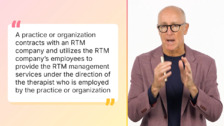
7. Models of RTM Implementation
This chapter will teach participants the benefits and possible cons of 3 different models of RTM implementation.

8. Payment and Benefit Issues
This chapter will empower learners to help clarify patient financial responsibility by understanding common payment issues with different insurance providers.
Frequently asked questions
Everything you need to know about Medbridge courses.
Who creates Medbridge courses?
We work with industry-leaders, top researchers, and consultants to build content roadmaps that are then structured into courses, filmed, and edited by our production team before being launched to our site.
How often does Medbridge release new courses?
New courses are added monthly and are automatically included in your subscription as they launch.
How often does Medbridge update courses?
Medbridge reviews its courses annually for relevance and to assess if content is up to date. Based on these reviews it may be determined that a course is out of date resulting in the course being re-filmed or retired, if the content is no longer needed (e.g. a replacement course already exists, the concepts are no longer best practice, etc.).
How many courses does Medbridge offer?
We have over 3,000 accredited courses and we are continually updating our library with new courses. Check our course library for the most up-to-date count for your discipline.
Are there any additional fees for taking a Medbridge course?
There are no additional fees for taking a Medbridge course, obtaining a course certificate of completion, earning CEUs as a subscriber, or accessing any of the additional tools your subscription may include.
Is there a limit to the number of courses I can take?
There is no limit to the number of courses you can take as a subscriber! As a subscriber to Medbridge, you have unlimited access to over 3,000+ accredited CE courses.
If you are a Premium subscriber, you also have unlimited access to our Patient Engagement Tools such as the Home Exercise Program, Patient Education Library, Orthopedic Exam Tests, and Manual Therapy Techniques. We have over 7,000 exercises and over 650+ videos and handouts of patient education resources with more exercises and patient education added to the library based on subscriber feedback, volume of request and specialities.
What is your refund policy?
You are eligible for a refund provided your request is received within 30 days of your subscription purchase and your account has no activity.