
Occupational Therapy Hand Exercises: An Evidence-Based Guide to Functional Recovery
March 2, 2026
7 min. read
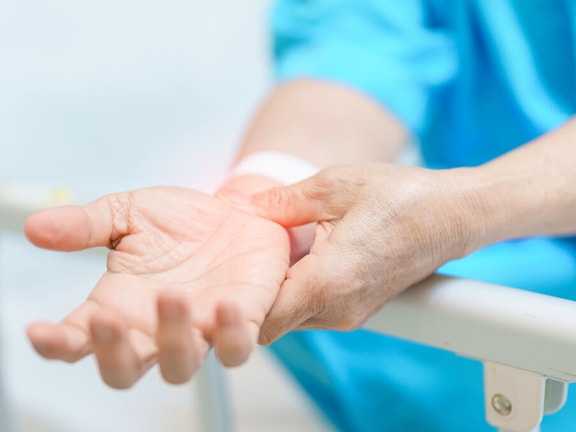
Hand function is the primary driver of independence. Small deficits in motion, strength, coordination, or sensation can have an outsized impact on daily routines, from buttoning a shirt to operating a vehicle. For this reason, occupational therapy hand exercises serve as a cornerstone of upper-extremity rehabilitation across various clinical settings and acuity levels.
1. Clinical Objectives of Occupational Therapy Hand Exercises
Hand exercise programs are structured to target specific performance drivers compromised by injury, surgery, or chronic conditions. By identifying the primary limiting factor, a clinician can select interventions that map directly to a patient’s goals.
Mobility and Tissue Gliding
Finger, thumb, and wrist range of motion (ROM) are necessary for grasp, release, and in-hand manipulation. When stiffness, edema, or scarring are present, exercises focus on maintaining joint play and preventing adhesions. In cases of nerve compression, such as carpal tunnel syndrome (CTS), specific movements aim to facilitate nerve and tendon excursion through the carpal canal¹².
Strength and Stability
Pinch and grip strength are required for heavy work tasks, home management, and tool use. However, strengthening is not just about raw power; it involves stabilizing the small joints of the hand—particularly the thumb CMC joint—to provide a steady base for precision tasks.
Coordination and Dexterity
Precision pinch, translation (moving an object from palm to fingertips), and rotation are the building blocks of fine motor control. Exercises in this category focus on the timing and sequencing of intrinsic muscle activation.
Symptom Management
Tailored exercise approaches can help manage pain and stiffness patterns. For inflammatory conditions like rheumatoid arthritis (RA), structured programs have shown improvements in hand function and strength outcomes when monitored for symptom response⁴⁵. For hand osteoarthritis (OA), recent systematic reviews indicate that exercise-based rehabilitation is associated with a reduction in stiffness in the immediate term⁶.
2. Core Categories of Hand-Based Interventions
The most successful clinical outcomes result from selecting a small set of exercises that match the impairment pattern and functional goal, then dosing them appropriately.
Range of Motion (ROM) and Joint Mobility
These drills target stiffness and movement hesitancy. Common options include:
Tendon Glide Positions: A sequence moving from a straight hand to a hook fist, tabletop, straight fist, and full fist³.
Isolated Joint Blocking: Stabilizing one joint to focus movement on the PIP or DIP joints.
Thumb Arcs: Moving the thumb through opposition and abduction to maintain the web space.
A practical approach is to keep ROM drills short and repeatable. Using brief holds and stopping short of forceful end-range is often preferred when joints are irritable. For those with arthritis, gentle movement is preferred over squeezing into a tight fist when pain is present⁷.
Tendon and Nerve Gliding
When symptoms suggest median nerve irritation or limited tendon excursion, gliding patterns support movement quality. The AAOS therapeutic exercise program for CTS utilizes a specific tendon gliding series with short holds and repeatable sequencing³. While some evidence on CTS reports mixed findings regarding the added benefit of glides over splinting alone, gliding remains a reasonable choice when it aligns with clinical findings, such as paresthesia provocation or localized stiffness¹².
Resistance and Loading
Strengthening is layered into the plan once motion is stable and the pain response is predictable.
Graded Resistance (Putty): Used for gross grasp, key pinch, and finger abduction.
Isometrics: High-value for painful joints or early loading where joint shear must be minimized.
Thumb Stabilization: Specific drills to strengthen the opponens pollicis and first dorsal interosseous to support the thumb base.
Task-Based Coordination
This category connects impairment-level work to real-world performance. Activities include:
Coin translation (moving coins from the palm to the index finger and thumb).
In-hand rotation (turning a pen or a key).
Tool simulation (using jars, buttons, or simulated keyboards).
Task-based practice allows a clinician to scale difficulty by adjusting object size, friction, or time demands rather than just adding weight or resistance.
3. Programming and Progression Strategies
A common pitfall in rehabilitation is prescribing too many exercises at once, which can hinder adherence. A streamlined plan is often more sustainable for the patient.
Anchor the Plan to a Functional Target
Start with a specific goal, such as "opening medication bottles" or "typing for 30 minutes without numbness." Use that goal to determine the priority:
If stiffness prevents a fist, prioritize mobility and gentle tendon excursion⁷.
If pain at the thumb base is the limit, prioritize CMC stabilization and isometric loading⁶.
If numbness is the primary complaint, focus on nerve gliding and postural education¹³.
Establish Clear Symptom Rules
Instead of general instructions, provide a decision framework for the patient:
Acceptable: Mild discomfort during the exercise that disappears shortly after completion.
Too High: Pain that increases during the session or lingers into the evening/next morning.
Adjustment: If a flare occurs, reduce the volume or resistance by 50% for 48 hours before gradually reintroducing the load⁵.
Track Relevant Outcomes
Measure progress using tools that reflect the patient’s specific needs. This might include grip dynamometry, but should also include functional timing (e.g., how long it takes to fasten five buttons) or subjective ratings of stiffness during morning routines.
4. Clinical Example: Managing Painful Hand Stiffness
Patient Scenario: Reports thumb base pain and general hand stiffness that interferes with household tasks and meal preparation. Morning stiffness lasts approximately 20 minutes.
Goal: Improve pinch strength and increase tolerance for sustained grasping during cooking.
Exercise Category | Specific Activity | Parameters |
Mobility | Gentle fist open/close (no forceful squeezing) | 10 reps, 2x daily |
Stability | Isometric key pinch (thumb to side of index finger) | 5s hold, 5 reps, 1x daily |
Coordination | Thumb opposition (touching each fingertip) | 5 cycles, 2x daily |
Functional Task | Jar opening simulation with a gripper | 5 attempts, 1x daily |
Progression: As the patient’s tolerance improves, the isometric pinch can transition to a dynamic pinch using light resistance putty. If pain increases after the session, the clinician may advise moving the thumb through a smaller arc of motion or reducing the hold time.
Occupational therapy hand exercises are most impactful when they are specific, evidence-based, and directly tied to the patient's daily life. By balancing mobility, nerve/tendon gliding, and graded strengthening, clinicians can help patients regain the precision and power needed for independence. Pair the exercise program with education on joint protection and activity modification to achieve the best results.
To support consistent clinical decision-making and patient education around hand rehabilitation, learn more about Medbridge’s Occupational Therapy Continuing Education.
References
Abdolrazaghi HA, et al. Effectiveness of Tendon and Nerve Gliding Exercises in Carpal Tunnel Syndrome (PMC). https://pmc.ncbi.nlm.nih.gov/articles/PMC10035085/
Kim SD, et al. Efficacy of tendon and nerve gliding exercises for carpal tunnel syndrome: a systematic review (PMC). https://pmc.ncbi.nlm.nih.gov/articles/PMC4563334/
American Academy of Orthopaedic Surgeons (AAOS). Therapeutic Exercise Program for Carpal Tunnel Syndrome (PDF). https://orthoinfo.aaos.org/globalassets/pdfs/a00789_therapeutic-exercise-program-for-carpal-tunnel_final.pdf
Lamb SE, et al. Exercises to improve function of the rheumatoid hand (SARAH trial). The Lancet (2015). https://www.thelancet.com/journals/lancet/article/PIIS0140-6736%2814%2960998-3/fulltext
Williams MA, et al. Exercise for rheumatoid arthritis of the hand (Cochrane review, PMC). https://pmc.ncbi.nlm.nih.gov/articles/PMC6513509/
JOSPT. Exercise-based rehabilitation for hand osteoarthritis: systematic review with meta-analysis (2024). https://www.jospt.org/doi/10.2519/jospt.2024.12241
Mayo Clinic. Hand exercises for people with arthritis (updated Jan 21, 2026). https://www.mayoclinic.org/diseases-conditions/arthritis/in-depth/arthritis/art-20546847
Meet the Author


Subscribe to Our Newsletter
Related Posts

February 24, 2023
Hand Therapy Exercises for 3 Common Diagnoses
By Nicki Boehm
January 10, 2025
Top 5 Exercises for Hip Osteoarthritis
By Medbridge
March 2, 2016
Best Tests for Carpal Tunnel Syndrome
By Chad Cook

March 19, 2025
Patient Engagement Best Practices for Lateral Elbow Pain: 10 Evidence-Based Strategies for Clinicians
By Medbridge