
Tummy Time: Clinical Foundations for Developmental Success
Transform tummy time from a stressful daily chore into a powerful developmental milestone for families. Use these evidence-based strategies and physiological frameworks to optimize infant motor outcomes and empower caregivers with actionable tools.
April 30, 2025
6 min. read
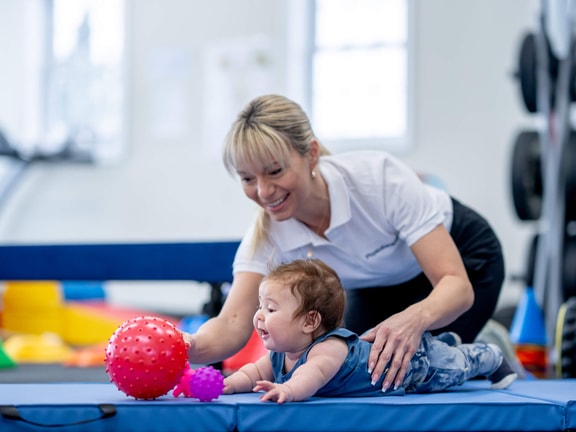
As a pediatric physical therapist, I recognize that tummy time can be one of the most challenging components of a new parent's daily routine. While it is often associated with infant frustration, clinicians view these sessions as an essential "first gym exercise" for developmental progress.
Parents often feel caught between the desire to meet milestones and the stress of managing all the new things that come with having an infant. The goal of this resource is to provide clinicians with the physiological framework of prone positioning and the evidence-based tools necessary to help caregivers transition this activity into a positive, developmental experience.
In this article, we’ll analyze the research behind prone positioning, explore its neuromuscular benefits, and provide strategies to facilitate a successful experience for both the clinician and the family.
What is tummy time?
Tummy time is the intentional placement of an infant on their stomach during supervised, waking hours. While it may look like simple play, it is a vital clinical intervention that initiates antigravitational extension—an infant’s first major milestone in overcoming gravitational forces.
Tummy time activates the muscles of the cervical, thoracic, and spinal extensors. This positioning is the primary driver for early postural control, providing the stability needed for the cephalocaudal progression (head-to-tail) of motor skills. Weight-bearing in prone also provides essential proprioceptive input (sensory awareness) to the shoulders and hands. From achieving head clearance to facilitating the lateral weight-shifts necessary for rolling, crawling, and eventually gait, tummy time builds the structural and neurological foundation for all future mobility.
The clinician’s role in caregiver education
Why must physical therapists prioritize this conversation? As clinicians, we serve as the bridge between research and the home environment. By educating caregivers on the why behind the what, we move the needle from simple compliance to therapeutic engagement.
Clinicians should discuss tummy time to:
Empower caregivers: Turning a stressful task into a bonding opportunity reduces parental anxiety.
Identify red flags: Early discussions allow therapists to screen for torticollis, hypertonicity, or significant developmental delays.
Graduated progressions: We provide the clinical "grading" (making the task easier or harder) that a standard handout cannot offer.
The science behind tummy time
A growing body of research highlights the critical role tummy time plays in infant development. A systematic review analyzed 16 studies involving over 4,000 infants and found that tummy time is associated with several key health outcomes:1
Improved gross motor skills: Facilitates the development of the trunk and neck muscles, enhancing the ability to lift the head, roll, and sit.
Reduced risk of positional plagiocephaly: Alleviates constant pressure on the occiput to help prevent flat spots on the back of the baby’s head.
Support for sensorimotor development: Physical activities during tummy time provide proprioceptive input through the arms and shoulders and foster early social-emotional bonding.
Recommended dosage and progression
The American Academy of Pediatrics (AAP) recommends starting tummy time as soon as your baby comes home from the hospital.2
Starting out: Aim for two to three sessions per day, lasting three to five minutes each.
Building endurance: Gradually increase the duration as your baby’s strength improves, working toward a total of 20–30 minutes daily by three months of age.
Clinical tip: These intervals can be accumulated throughout the day. Short and frequent sessions are often more effective for building tolerance than one long session.
Clinical strategies for caregiver success
When educating caregivers, clinicians should emphasize that prone positioning is a skill to be practiced, not a test to be passed. Therapists can suggest the following graded strategies:
Routine integration: Advise caregivers to link tummy time to an existing habit (e.g., after every diaper change) to promote neuromuscular adaptation.
Visual fixation: Encourage caregivers to lie down at the infant’s eye level. A familiar face is a powerful motivator for cervical extension and visual tracking.
Mechanical advantages: Suggest using a tummy time bolster (a small, firm pillow or rolled-up towel) under the infant’s chest. This shifts the fulcrum, making it easier to lift the head and clear the airway.
Sensory enrichment: Recommend placing high-contrast toys or mirrors within the visual field to encourage exploration and sustained head lift.
Modified prone (skin-to-skin): Suggest reclining with the infant on the caregiver’s chest. This provides vestibular and tactile soothing while still challenging the neck extensors against a lesser incline.
Task grading: If an infant becomes dysregulated, caregivers should be encouraged to stop and try again later. The goal is to avoid overstimulation and create positive sensorimotor associations.
Common challenges and solutions
Even with the best intentions, caregivers often encounter hurdles that can derail a consistent routine. Addressing these common barriers with clinical empathy and practical modifications is key to maintaining progress.
Managing excessive crying: Explain that resistance is often a sign of muscle fatigue. Clinicians should encourage caregivers to start with "micro-sessions" and use high-value rewards (voice, toys) to build tolerance.
Safe sleep habits: Reiterate that tummy time is strictly for awake and supervised periods. If the infant becomes drowsy, they must be moved to their back to adhere to AAP safe sleep guidelines.3
Gastroesophageal reflux (GERD): Prone positioning can be provocative for infants with reflux. Recommend waiting 30 minutes post-feeding and utilizing an inclined prone position to reduce gastric pressure.
Clinical monitoring: If an infant is unable to lift their head or demonstrates significant postural asymmetry, a formal evaluation by a pediatric physical therapist is necessary.
Building the foundation for lifelong health
Tummy time may seem like a small daily activity, but it serves as a massive catalyst for an infant’s strength and independence. By framing these sessions as purposeful play, clinicians can empower caregivers and set the stage for long-term developmental success.
It is important to remind families that every infant follows a unique developmental trajectory. Clinicians should encourage caregivers to celebrate incremental victories and maintain patience as the infant’s endurance improves. If milestones are not being met or if significant postural asymmetries persist, a formal evaluation by a pediatric physical therapist is the best path to providing personalized, targeted support.
References
1. Hewitt, L. et al. “Tummy Time and Infant Health Outcomes: A Systematic Review.” Pediatrics, 2020. PubMed ID: 32371428
2. McKenna, C., et al. "Tummy Time and Its Benefits for Infant Development: A Systematic Review." Pediatrics, 2020. PubMed ID: 32371428.
3. American Academy of Pediatrics. "Back to Sleep, Tummy to Play." HealthyChildren.org. 4. Colson, E. R., et al. "Positioning and SIDS: Current Evidence and Recommendations." Pediatrics, 2013.
Meet the Author


Subscribe to Our Newsletter
Related Posts

April 5, 2022
The Value of Pediatric PT and Telehealth: More Than Our Hands
By Sierra Christensen

April 28, 2026
When Everything Feels Urgent: How OTs Decide What Matters Most in Progressive Neuro Home Care
By Krista Covell-Pierson

May 19, 2026
Helping Patients Follow Aspiration Precautions: A 5-Pillar Framework for SLPs
By Medbridge

October 19, 2022
Strategies for Clinical Reasoning: Building the Therapeutic Alliance
By Eric Trauber