
When Everything Feels Urgent: How OTs Decide What Matters Most in Progressive Neuro Home Care
Effective neuro care requires looking past the diagnosis to the person behind it. Learn how to apply the PEO model in the home setting to manage complex symptoms and focus on the high-impact interventions your patients need most.
April 28, 2026
9 min. read
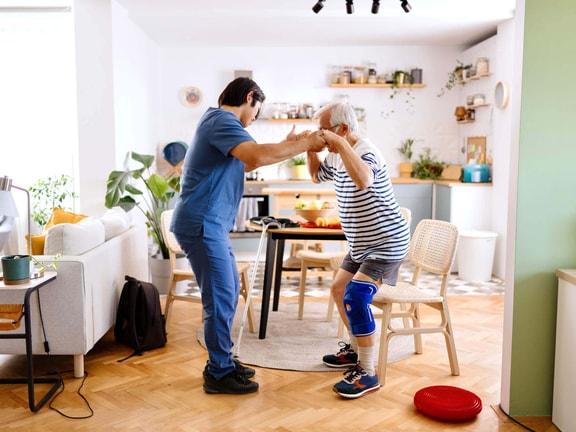
Walking into the home of a patient with a progressive neurological condition often feels like drinking from a firehose. Between the complex pathology of a diagnosis like ALS or Parkinson’s disease and the chaotic reality of a lived-in environment, it is easy for a clinician to feel overmatched. But as occupational therapy (OT) professionals, we are the designated experts in preserving function, promoting participation, and supporting the meaningful routines that define who our patients are.
In the home, we aren't just treating a set of symptoms. We are treating a unique person on their own turf. To succeed, we must move beyond the medical label and provide high-level, transformative care that evolves as the patient does.
Clinical reasoning: Treating the brain, not just the label
While we must do our "homework" to understand the trajectory of conditions like Progressive Supranuclear Palsy (PSP), Huntington’s Disease, or Guillain-Barré, the diagnosis itself does not define the patient. Research highlights that every human brain is different, making each person unique. Consequently, two patients with the same Multiple Sclerosis (MS) diagnosis will show up differently in their homes.
The PEO cornerstone
The Person-Environment-Occupation (PEO) model serves as our clinical cornerstone. In the home, the Environment isn't a simulated clinic kitchen. It is a space filled with the patient’s history, social calendar, and specific physical hurdles.
Person: We look at their life stage, roles, and current health status.
Environment: We assess the physical safety of the home alongside the cultural context of the family.
Occupation: We identify the meaningful activities, from grooming to community engagement, the person wants to reclaim.
The magic happens when we stop treating the impairment in a silo and start looking at how these three domains intersect to create a functional life.
Prioritizing the "firehose": Triage and red flags
One of the greatest challenges for home health OTs is the limited time per visit. You may not be able to assess every impairment during the initial evaluation. Instead, use clinical reasoning to prioritize based on red flags that require immediate mitigation:
Home safety: Are there immediate fall hazards or equipment failures that put the patient at risk today?
Medical instability: Is the patient physiologically or neurologically fluctuating in a way that requires physician notification?
Caregiver dynamics: Is there escalated stress, caregiver burnout, or signs of potential abuse in the home?
Severe depression: Mental health cannot be put on the back burner; it is a primary driver of functional decline.
Once red flags are managed, choose one to five focus areas based on what limits participation the most and what the patient values. Document the impairments you observed and simply note that further standardized assessments are needed at a future visit.
The home-friendly assessment toolkit
Choosing assessments for the home requires a balance of clinical rigor and portability. We need a "Mary Poppins bag" of tools that are easy to carry and provide immediate, actionable data.
1. Cognition: identifying the hidden barrier
Don't assume a patient’s forgetfulness is just a normal part of aging. It often signals a need for deeper investigation.
Saint Louis University Mental Status (SLUMS): This free tool is excellent for identifying mild cognitive impairment (MCI) or dementia.
Case note: One of my patients, Priscilla, had Parkinson’s symptoms and complained of difficulty with her thinking. She scored a 24 on the SLUMS, indicating a mild cognitive disorder. This explained why she struggled to follow the plots of movies (a meaningful activity she shared with her daughter) and why she was getting "goofed up" on her calendar.
Trail making tests A and B: These are supportive for identifying broader brain impairment and executive dysfunction.
2. Mobility and balance: the function of movement
While our physical therapist counterparts focus on gait, OTs focus on the purpose of the movement.
30-Second Sit-to-Stand Test: This assesses lower-body strength and functional endurance.
Timed Up and Go (TUG): A classic fall screen that is effective for patients whether they use an assistive device or not.
3. Fatigue: quantifying the invisible
Fatigue is a hallmark of progressive neuro conditions but is often under-addressed because it isn't visible. The Fatigue Severity Scale (FSS) is a free, nine-item questionnaire that measures the impact of fatigue on activities of daily living (ADLs). This tool provides the data needed to justify energy conservation training even when the patient appears physically strong.
Assessment tool | What it measures | Clinical why |
Saint Louis University Mental Status (SLUMS) | Cognitive status | Helps determine if instruction should be visual or verbal. |
Timed Up and Go (TUG) | Fall risk and mobility | Essential for safe ADL transitions, like getting to the bathroom. |
Fatigue Severity Scale (FSS) | Fatigue severity | Justifies the need for pacing and environmental modifications. |
Canadian Occupational Performance Measure (COPM) | Perceived performance | Anchors goals to patient-centered, meaningful priorities. |
Treatment intervention: the "dance" of patient and caregiver
If we aren't motivated by a task, we won't do it—and neither will our patients. For my patient Priscilla, the intersection of her cognitive decline and physical pain required a highly personalized approach. Treatments must be anchored to function and the patient's desired outcomes.
Routine-based cognition
Instead of just handing a patient a pillbox, build a kinesthetic routine. Priscilla struggled with medication management, so we anchored the task to an existing habit:
Visual: A note in the bathroom that said "Grab your medication."
Kinesthetic: She grabbed the meds while brushing her teeth and placed them on the seat of her walker.
Result: Eventually, the routine became automatic, and she became independent without needing the note.
Environmental empowerment
We must respect that we are guests in a patient's home. While we may want to roll up every throw rug, patients have the right to decide if they want to make changes—or not.
The negotiated fix: Instead of a total overhaul, look for high-impact, low-friction changes. Priscilla agreed to move furniture to improve walker clearance and to reduce the muscle spasms caused by poor positioning while socializing with family. She did not agree to move her decorative table that posed a safety hazard when she was getting in and out of her hallway closet.
Supporting the caregiver
Caregivers often over-function out of love, which can inadvertently lead to patient frustration or a decline in independence.
Coaching: We must teach caregivers how to prompt without taking over.
Education: I explained to Priscilla’s daughter that by allowing her mother to follow the medication routine independently, she was supporting her mother's value for self-reliance.
The roadmap: discharge and advocacy
In progressive neurological care, discharge shouldn't mean the end of support.
The "in and out" model
Normalize the idea that OT is a lifelong resource. As the disease progresses, the patient’s needs will change. Positioning ourselves as someone who can come "in and out" of their lives as needed reduces the psychological distress often felt at the end of a home health episode.
Community as your office
To support long-term success, you must know your local community.
Support groups: Encourage patients and caregivers to attend groups while you are still on the case so you can debrief with them afterward.
Specialized fitness: Refer patients to specific programs like Parkinson’s boxing classes or therapeutic massage.
Resources: Provide a list of podcasts (for example, Movers and Shakers for Parkinson's and Medbridge’s Innovative Aging for practical home-safety), or books that normalize the lived experience of the disease.
Advocacy and medical necessity
Insurance justification is a reality of our practice. When writing Letters of Medical Necessity, don't just describe what the patient can't do. Focus on the skilled medical need:
Document the specific risks (falls, hospital readmissions, or severe caregiver burnout) that will occur if occupational therapy is not provided.
Use strong, clinical language that frames OT as a medical necessity, similar to a drug prescription.
From clinical labels to human lives
As OT practitioners, we are the vehicles that help patients participate in everyday life. By using engagement, exploration, and empowerment, we can discover what matters to our clients and facilitate their participation in the activities that define them. By staying creative, remaining person-centered, and leveraging the unique environment of the home, we empower our patients to keep moving forward despite a progressive diagnosis.
Ready to fill your "Mary Poppins bag" with even more clinical magic? If you’re looking to sharpen your skills and bring more confidence to your home-based practice, I invite you to dive deeper into my OT in the Home series:
Guided Safety and Environmental Assessments: Learn to systematically evaluate the home for cognitive and functional risks beyond basic ADL checklists.
Foundations of Assistive Tech and Equipment: Navigate the clinical reasoning behind selecting and implementing high- and low-tech solutions.
Interventions for Low Vision: Master lighting optimization and contrast enhancement to reduce fall risks and improve participation.
Addressing Progressive Neurological Conditions: Navigate the "dance" of treating evolving diagnoses like ALS, MS, and Parkinson's.
Managing Chronic Pain and Fatigue: Implement evidence-based pacing and energy conservation strategies for patients with chronic conditions.
Pelvic Health Strategies for General Practitioners: Integrate bladder and bowel routines into functional home care to address often-overlooked health needs.
Addressing Depression, Anxiety, and Isolation: Gain the tools to recognize and treat mental health concerns that drive functional decline.
Reducing Caregiver Burden and Connecting Resources: Identify caregiver strain and connect families to sustainable community support.
Whether you are a new grad or a twenty-year veteran, these courses provide the roadmap to show up as the expert your patients deserve.
References
Stoffel, V. G. (2015). Engagement, exploration, empowerment. American Journal of Occupational Therapy, 69(6), 6906140010p1–8. https://pubmed.ncbi.nlm.nih.gov/26565090/
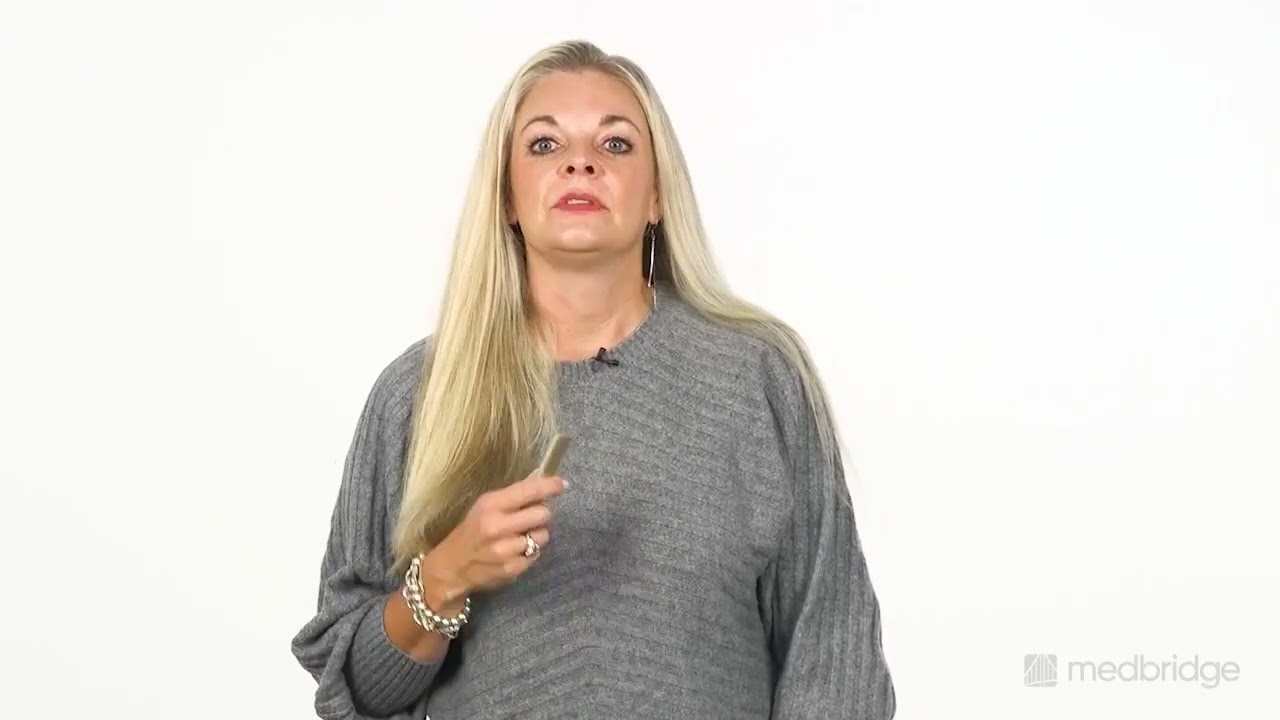
Below, watch Krista Covell-Pierson discuss cognition assessments to use in the home in this brief clip from her Medbridge course "OT in the Home: Addressing Progressive Neurological Conditions."
Meet the Author


Subscribe to Our Newsletter
Related Posts

October 24, 2022
Why Home Assessment Matters: The Evidence-Based Practice in Fall Prevention You're Missing
By Carolyn Sithong
.jpg)
April 27, 2026
The Real Reason Readmissions Persist (and What to Fix First)
By Colleen Morley

May 19, 2026
Helping Patients Follow Aspiration Precautions: A 5-Pillar Framework for SLPs
By Medbridge

October 19, 2022
Strategies for Clinical Reasoning: Building the Therapeutic Alliance
By Eric Trauber