
Contextual Factors and Patient Care Management
Presented by Chad E. Cook
This course explores the multifaceted role of contextual factors in patient care, moving beyond the specific effects of clinical interventions to examine how the healthcare journey itself shapes outcomes. While traditional medicine often focuses strictly on biological mechanisms, practitioners frequently encounter variability in treatment efficacy that cannot be explained by the intervention alone. This program addresses this gap by defining the components of the therapeutic encounter—including patient and clinician characteristics, relationship dynamics, and the clinical environment—and analyzing their impact on patient recovery. Participants will examine the neurobiological underpinnings of “contextual healing” and “contextual harm,” moving past the traditional placebo/nocebo labels to understand real physiological changes in the brain. Designed for a broad range of healthcare professionals including physical and occupational therapists, nurses, and physicians, this course provides evidence-based strategies to optimize the clinical context across various settings, from outpatient clinics to telemedicine. By integrating these factors intentionally, providers can mitigate “contextual errors” and enhance the overall therapeutic alliance to improve patient satisfaction and functional gains.
Learning Outcomes
- Define contextual factors, synonyms, and total treatment effects
- Infer the influence of contextual factors on patient outcomes
- Predict strategies for integrating contextual factors to optimize patient outcomes
- Recognize the best measures for assessing contextual factors
- Identify how much contextual factors typically influence overall clinical outcomes
- Clarify the context behind placebo and nocebo effects
- Outline the future study of contextual factors, including methodologies for measuring and designing studies to assess their impact
Meet your instructor

Chad E. Cook
Dr. Cook is a professor at Duke University with a Category A appointment in the Duke Clinical Research Institute and an adjunct appointment in the Department of Population Health Sciences. He is a clinical researcher, physical therapist, and profession advocate with a long history of clinical care excellence and service and…
Chapters & learning objectives

1. Defining Contextual Factors
This chapter establishes a foundational understanding of contextual factors by providing an international consensus definition and distinguishing them from specific treatment effects. It is essential for learners to recognize these factors as active components of every therapeutic encounter that can either add to or constitute the entirety of an intervention’s perceived benefit.
2. A Framework for Contextual Factors
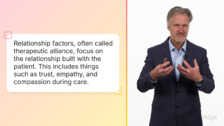
Learners will explore a detailed framework consisting of five primary domains: patient-related factors, clinician-related factors, relationship dynamics, the clinical environment, and treatment rituals. Understanding these categories is crucial for identifying the specific variables—such as patient expectations or clinician bias—that subtly yet significantly influence clinical success.
3. How Much of the Total Outcome Change Is Contextual Factors?
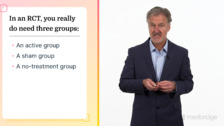
This chapter examines the complexities of quantifying treatment outcomes by differentiating between total outcome change, natural history, and specific treatment effects. This analysis is important because it highlights the ongoing debate regarding the true proportion of nonspecific effects and the role of moderating factors in individualizing patient care.

4. Measuring Contextual Factors
This section introduces various tools and frameworks used to evaluate contextual factors while addressing the significant challenges of measurement, such as ceiling effects and fragmented data. Clinicians must recognize these limitations to understand why contextual factors often remain an enigma and why a single universal measurement tool does not currently exist.
5. Biopsychosocial Effects of Contextual Factors
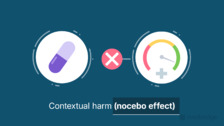
This chapter delves into the neurobiology of contextual healing and harm, identifying specific brain regions like the prefrontal cortex and amygdala that respond to therapeutic cues. Understanding these mechanisms is important because it proves that placebo and nocebo responses are not “imaginary” but are grounded in measurable physiological changes and interindividual variability.

6. Optimizing Outcomes
The final chapter provides practical, evidence-based strategies for integrating contextual factors into daily practice, such as upskilling communication and aligning treatment rituals with patient values. Implementing these strategies is critical for maximizing treatment efficacy and improving the patient experience through intentionality and a focus on the broader context of care.
Frequently asked questions
Everything you need to know about Medbridge courses.
Who creates Medbridge courses?
We work with industry-leaders, top researchers, and consultants to build content roadmaps that are then structured into courses, filmed, and edited by our production team before being launched to our site.
How often does Medbridge release new courses?
New courses are added monthly and are automatically included in your subscription as they launch.
How often does Medbridge update courses?
Medbridge reviews its courses annually for relevance and to assess if content is up to date. Based on these reviews it may be determined that a course is out of date resulting in the course being re-filmed or retired, if the content is no longer needed (e.g. a replacement course already exists, the concepts are no longer best practice, etc.).
How many courses does Medbridge offer?
We have over 3,000 accredited courses and we are continually updating our library with new courses. Check our course library for the most up-to-date count for your discipline.
Are there any additional fees for taking a Medbridge course?
There are no additional fees for taking a Medbridge course, obtaining a course certificate of completion, earning CEUs as a subscriber, or accessing any of the additional tools your subscription may include.
Is there a limit to the number of courses I can take?
There is no limit to the number of courses you can take as a subscriber! As a subscriber to Medbridge, you have unlimited access to over 3,000+ accredited CE courses.
If you are a Premium subscriber, you also have unlimited access to our Patient Engagement Tools such as the Home Exercise Program, Patient Education Library, Orthopedic Exam Tests, and Manual Therapy Techniques. We have over 7,000 exercises and over 650+ videos and handouts of patient education resources with more exercises and patient education added to the library based on subscriber feedback, volume of request and specialities.
What is your refund policy?
You are eligible for a refund provided your request is received within 30 days of your subscription purchase and your account has no activity.