
Esophageal Dysphagia Part 4: Belching and Rumination Disorders
Presented by Joy E. Gaziano
Traditionally, dysphagia management has been dichotomized into oropharyngeal and esophageal phases. Professional education has been discipline-specific, with little emphasis on disorders of the esophagus in speech-language pathology (SLP) training. Belching and rumination disorders are amenable to behavioral therapy, and SLPs who are trained to treat this population can play a critical role in their successful management.
Mastery of this course content should aid clinicians in identifying the clinical presentations of belching and rumination disorders. Clinicians will have a working knowledge of instrumental testing for these diagnoses, as well as the medical and surgical management options. Finally, the course should assist clinicians in expanding the populations they serve to include belching and rumination by offering assessment and behavioral treatment paradigms for these disorders.
Learning Objectives
- Delineate a framework for classifying belching and rumination disorders
- Distinguish clinical characteristics of aerophagia and supragastric belching disorders, and incorporate them into an effective assessment and treatment paradigm
- Distinguish the clinical characteristics of rumination disorder, and incorporate them into an effective assessment and treatment paradigm
- Integrate clinical and instrumental findings in a case study to formulate a plan of care for individuals with belching and rumination disorders
Meet your instructor

Joy E. Gaziano
Joy E. Gaziano is a medical speech pathologist and board-certified specialist in swallowing and swallowing disorders (BCS-S) through ASHA. She has served the USF Center for Swallowing Disorders for more than 30 years, focusing on the management of complex upper aerodigestive disorders. She has an active clinical practice,…
Chapters & learning objectives

1. Framework for Classifying Belching and Rumination Disorders
This chapter develops a framework for classifying belching and rumination disorders by contrasting the mind–body dualism philosophy with the biopsychosocial model of illness. It explains the Rome Foundation classification system for functional gastrointestinal disorders and introduces a new terminology—disorders of gut–brain interaction (DGBI).

2. Assessment and Treatment of Belching Disorders
This chapter outlines the clinical characteristics of aerophagia and belching disorders and incorporates an assessment and treatment paradigm to effectively manage them. It includes patient symptom reports, quality-of-life (QOL) impacts, assessment options, and medical management options. Behavioral management options by an SLP or health psychologist are also outlined, with the intent to permit the SLP to assume a supportive role in managing patients with these disorders.
3. Assessment and Treatment of Rumination Disorder
This chapter outlines the clinical characteristics of rumination disorder and incorporates an assessment and treatment paradigm to effectively manage it. Content includes patient symptom reports, QOL impacts, assessment options, and medical management options. Behavioral management options by an SLP or health psychologist are also outlined with the intent to permit the SLP to assume a supportive role in managing patients with rumination disorder. A case study will synthesize the patient history and presenting complaints, SLP and medical assessments, treatment plan development, and outcomes.
More courses in this series

Esophageal Dysphagia Part 1: Anatomy, Physiology, and Assessment
Joy E. Gaziano
Esophageal Dysphagia Part 2: Esophageal Disorders and Their Management
Joy E. Gaziano
Esophageal Dysphagia Part 3: Implementing an Esophageal Screen in the MBSS
Joy E. Gaziano
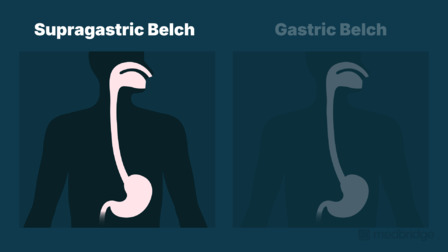
Esophageal Dysphagia Part 4: Belching and Rumination Disorders
Joy E. Gaziano
Esophageal Dysphagia Part 5: GERD Concepts for the SLP
Joy E. Gaziano
Frequently asked questions
Everything you need to know about Medbridge courses.
Who creates Medbridge courses?
We work with industry-leaders, top researchers, and consultants to build content roadmaps that are then structured into courses, filmed, and edited by our production team before being launched to our site.
How often does Medbridge release new courses?
New courses are added monthly and are automatically included in your subscription as they launch.
How often does Medbridge update courses?
Medbridge reviews its courses annually for relevance and to assess if content is up to date. Based on these reviews it may be determined that a course is out of date resulting in the course being re-filmed or retired, if the content is no longer needed (e.g. a replacement course already exists, the concepts are no longer best practice, etc.).
How many courses does Medbridge offer?
We have over 3,000 accredited courses and we are continually updating our library with new courses. Check our course library for the most up-to-date count for your discipline.
Are there any additional fees for taking a Medbridge course?
There are no additional fees for taking a Medbridge course, obtaining a course certificate of completion, earning CEUs as a subscriber, or accessing any of the additional tools your subscription may include.
Is there a limit to the number of courses I can take?
There is no limit to the number of courses you can take as a subscriber! As a subscriber to Medbridge, you have unlimited access to over 3,000+ accredited CE courses.
If you are a Premium subscriber, you also have unlimited access to our Patient Engagement Tools such as the Home Exercise Program, Patient Education Library, Orthopedic Exam Tests, and Manual Therapy Techniques. We have over 7,000 exercises and over 650+ videos and handouts of patient education resources with more exercises and patient education added to the library based on subscriber feedback, volume of request and specialities.
What is your refund policy?
You are eligible for a refund provided your request is received within 30 days of your subscription purchase and your account has no activity.