
Foundations of Neurodiversity-Affirming Practice
Presented by endever* corbin and Amy L. Donaldson

Description
This course addresses the historical disconnect between traditional clinical practices and the lived experiences of autistic peopleby advocating for a paradigm shift toward neurodiversity-affirming care. Many healthcare providers rely on a "clinician-as-expert" model that often views disability as a deficit to be fixed, which can inadvertently marginalize patients and limit their autonomy. By examining the evolution of disability models—from medical to social and biopsychosocial—participants will learn to recognize how their own conceptualizations of disability impact service provision and patient agency. The course further explores the importance of identity-affirming language, the "Double Empathy Problem," and the necessity of presuming competence in all communicators. This training is designed for speech-language pathologists, educators, and healthcare professionals working in outpatient clinics, schools, and diverse clinical settings. Through case-based activities and self-reflection, learners will gain practical strategies for strengths-based documentation and collaborative partnership with the autistic community.
Instructors
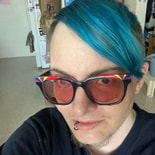
endever* corbin
Hi, I’m endever*! Lowercase please, and the star is silent. My pronouns are they/them/theirs/themself or xe/xem/xyrs/xemself. I’m autistic! At this point, I’m mostly nonspeaking. I most often use a symbols-based AAC device to communicate when offline, plus I type, sign, letterboard, make mouth sounds, etc. I also use hearing…

Amy L. Donaldson, Ph.D., CCC-SLP
Amy L Donaldson, Ph.D., CCC-SLP is a Professor in the Department of Speech & Hearing Sciences at Portland State University. Using a participatory research framework, she is interested in examining communication choice, access, and agency, as well as social interaction and relationship development in partnership with the…
Learning Objectives
- Contrast the Medical, Social, and Biopsychosocial models of disability and their impact on the autistic person’s access, agency, and self-determination, as well as the professional’s service provision.
- Apply neurodiversity-affirming language and classification alternatives, such as "Support Needs," in clinical documentation.
- Analyze the "Double Empathy Problem" and its role in mutual communication breakdowns between neurotypes.
- Plan strengths-based intervention goals that prioritize self-advocacy and quality of life over normalization.
- Implement strategies to respect bodily autonomy and privacy, including the ethical management of "harmless stimming" and sensitive clinical information.
Agenda
All times in Eastern Time.
- 6:00pm–6:30pm
- Chapter 1: The Impact of Disability Models
- 6:30pm–6:50pm
- Chapter 2: Neurodiversity and Autistic Identity
- 6:50pm–7:05pm
- Chapter 3: Communication Myths and Double Empathy Problem
- 7:05pm–7:10pm
- Break
- 7:10pm–7:25pm
- Question and Answer Session
Medbridge is committed to accessibility for all of our subscribers. If you are in need of a disability-related accommodation, please contact [email protected] . We will process requests for reasonable accommodation and will provide reasonable accommodations where appropriate, in a prompt and efficient manner.
Details
- July 6, 2026
- 6:00pm-7:25pm EDT
-
- PTs/PTAs, Intermediate
- OTs/OTAs, Intermediate
- ATs, Advanced
- SLPs, Intermediate
- Nurses, Intermediate
- Register soon to secure your spot!
Register for Webinar
July 6, 2026
6:00pm-7:25pm EDT
Register for Webinar
* Available July 6
Disclaimer
Amy Donaldson and endever* corbin, instructors for this educational event, receive compensation from Medbridge for this course. No one with the ability to control content has relevant relationship(s) to disclose, with the exception of Amy Donaldson, who has a relationship with Portland State University, and endever* corbin, who has relationships with Smartbox and In Reach Speech, which were mitigated.
Accreditation
Requirements
"Live" CEUs
Even if this webinar is accredited for your discipline and location, it may not count as a
“Live” CEU.
Approved Status applies to “Live” requirement for: AR, DC, FL, IL, IN, KY, NE, NJ, NC, OK, TN, TX, VA DE, FL, KS, NY, TN, AOTA BOC, FL CA, CT, ME, MS, ASHA"Live" CEUs
PT/PTA
OT/OTA
AT
SLP
Check Accreditation
How to Prepare
- Review our tips for a successful webinar experience
- Test your computer