
Using Aquatic Therapy to Support Children With Obesity and Deconditioning
Learn how aquatic therapy helps children with obesity and deconditioning move with less pain, build endurance, and regain confidence in physical activity. Plus, find out how the pool helps turn small wins into lasting engagement.
January 21, 2026
8 min. read
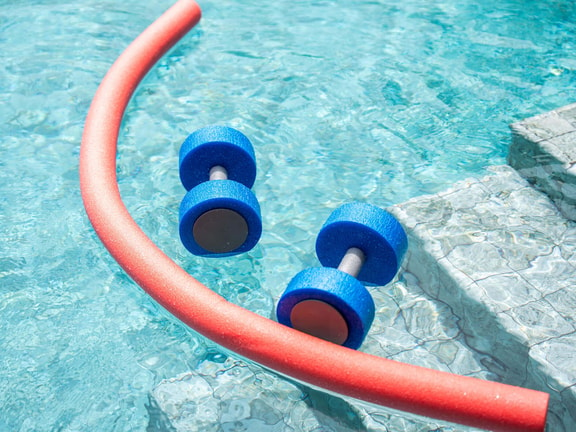
Working with children who struggle with obesity and deconditioning is becoming an increasingly familiar part of pediatric practice. These are often the kids who want to move, but whose bodies make movement feel difficult, uncomfortable, or discouraging. Families arrive hopeful, yet overwhelmed. Clinicians want to help, but many therapists feel unsure how to make exercise truly accessible when traditional approaches don’t seem to work.
Over time, aquatic therapy has become one of the most reliable ways to bridge that gap. Not because it makes therapy easier—but because it accommodates the child so their body can handle exercise in a safe and motivating way!
Why this matters in everyday practice
Pediatric obesity is rarely just about weight. It affects endurance, participation, self-confidence, and long-term health in ways that touch nearly every aspect of a child’s life. For children with physical, cognitive, or developmental disabilities, those challenges multiply. Research consistently shows that these children are at significantly higher risk for obesity and related secondary conditions than their typically developing peers.1,2
Therapists are uniquely positioned to make a difference in this aquatic medium. We understand movement. We understand safety, and we often spend more consistent time with families than many other providers. Yet even with that advantage, addressing conditioning and intensity in this population can feel daunting—especially when land-based exercise leads to increased pain, fatigue, or discouragement before meaningful progress can begin.
Many clinicians recognize the importance of physical activity but struggle with the same questions: How much is safe? How much is enough? And how do you build endurance when the child can barely tolerate a few minutes of movement without discomfort?
These uncertainties are common, and they are exactly why rethinking how and where children move becomes so important.
Rethinking exercise tolerance
Early in practice, it’s natural to focus on movement quality. Proper alignment, efficient patterns, and safe technique matter deeply. But experience adds another layer of understanding—children who are obese or deconditioned don’t just need better movement. They need opportunities to build stamina, strength, and confidence in their bodies.
The real barrier is rarely motivation. Most children want to move. The challenge is that on land, movement often hurts, joints ache, kids become short of breath, and fatigue sets in quickly. When every attempt at exercise feels like failure, kids disengage—and families lose hope that activity can ever feel positive.
Over time, this cycle becomes self-reinforcing. Less movement leads to more deconditioning, which makes movement feel even harder. Breaking that cycle requires more than encouragement. It requires an environment that changes how movement feels from the very first session.
That’s where aquatic therapy begins to shift expectations.
Why aquatic therapy changes the experience of movement
The water offers something many of these children haven’t experienced in a long time: the chance to move without feeling “discouraged” by their bodies.
Buoyancy reduces joint stress, allowing children to move without pain. Resistance creates natural strengthening and cardiovascular challenge without the sense of overload that often accompanies land-based training. The pool becomes a place where effort feels possible instead of overwhelming.
In pediatric aquatic therapy, this often translates into something powerful—children discovering abilities they didn’t know they had. A child who struggles to jog on land finds they can move continuously in the water. A child who avoids exercise begins to look forward to sessions because movement finally feels successful.
Research continues to support what many clinicians have observed for years. Aquatic-based exercise, including higher-intensity activity, has been shown to improve cardiovascular health, body composition, and overall fitness in children and adolescents with obesity and disabilities.3,4,5 Just as importantly, these environments often improve engagement, confidence, and willingness to participate—outcomes that are harder to measure but no less clinically meaningful.
The children we can’t forget
Children with disabilities face layered barriers to physical activity. Beyond physical limitations, there are social and environmental factors (access to safe spaces, transportation, financial resources, and family support) that shape what is realistic for families.
For some, traditional gym-based exercise isn’t an option. For others, community sports feel inaccessible or intimidating. In these contexts, aquatic therapy isn’t merely an alternative to land-based care. It becomes one of the few settings where meaningful exercise feels safe, achievable, and even enjoyable.
This isn’t about replacing traditional therapy approaches. It’s about expanding the toolbox. When clinicians expand the environments in which children can move, more children gain access to experiences that support their health—not just physically, but also emotionally and socially.
When movement finally feels like success
There are moments in the pool that stay with you. A child who once avoided activity starts to run, jump, and work hard without pain. A parent watches their child succeed and sees possibility where frustration used to live. These moments may not show up immediately on standardized outcome measures, but they change everything about engagement and participation.
Sometimes the most meaningful changes aren’t the ones anyone sets out to measure. One child I worked with had never stayed dry through the night. After months of consistent movement in the pool, her mother mentioned—almost in passing—that nighttime accidents had stopped. Continence was never a therapy goal. But improving endurance, postural control, and overall confidence in her body changed more than anyone expected.
Stories like that are reminders of how interconnected everything is. When children begin to feel capable in movement, the effects often reach far beyond fitness. Confidence builds. Willingness grows. And once kids experience success instead of repeated struggle, their relationship with physical activity starts to shift in lasting ways.
Building off early success
Once clinicians start seeing what’s possible in the water, the next questions come quickly:
How much intensity is safe for this child?
How do you progress without overwhelming them?
How do medical considerations—such as asthma, orthopedic issues, or fatigue—factor into conditioning?
How do families support this work outside of therapy so progress continues?
These are not simple questions. They require clinical reasoning, evidence, and thoughtful reflection. They also highlight an important reality: success in aquatic therapy isn’t just about being in the pool. It’s about making informed decisions that strike a balance between safety, challenge, and long-term goals.
This is where many clinicians begin looking for deeper guidance. Not just ideas, but frameworks for decision-making that help turn observation into action.
Looking ahead
Pediatric obesity and deconditioning are not problems with quick solutions. They develop over time, and meaningful change also takes time. But when children are given environments where movement feels successful, the trajectory of their health—and often their confidence—begins to shift.
One adolescent I worked with eventually reached a point where therapy wasn’t the only place movement happened. When her family moved to an apartment complex with a pool, she started going on her own during lunch breaks. What began as supported therapy became part of her routine. That shift mattered just as much as any clinical outcome, and it signaled that movement had become part of her life, not just her treatment plan.
Aquatic therapy continues to show what many clinicians already believe: children are capable of far more than we often assume when they’re supported in the right environment. While this article focuses on obesity and deconditioning, the principles that make aquatic therapy effective—using water to support movement, build confidence, and expand what feels possible—apply across a wide range of clinical presentations.
For therapists who want to go deeper, my Medbridge courses build on these ideas and connect them to broader clinical decision-making in aquatic therapy. Whether working with children who have neurological, orthopedic, sensory, or cardiopulmonary challenges, understanding how to use water principles intentionally can shape outcomes in powerful ways. This work is about using the aquatic environment thoughtfully to support function, participation, and long-term engagement in movement.
Introduction to Water Principles for Effective Aquatic Therapy
Aquatic Therapy to Address Obesity and Deconditioning in Pediatrics
Clinical Decision-Making in Pediatric Aquatic Therapy: Case Studies
References
Maïano C, Hue O, Morin AJ, Moullec G. Prevalence of overweight and obesity among children and adolescents with intellectual disabilities: a systematic review and meta-analysis. Obes Rev. 2016 Jul;17(7):599-611. https://pubmed.ncbi.nlm.nih.gov/27171466/
Rimmer JH, Yamaki K, Lowry BM, Wang E, Vogel LC. Obesity and obesity-related secondary conditions in adolescents with intellectual/developmental disabilities. J Intellect Disabil Res. 2010 Sep;54(9):787-94. https://pubmed.ncbi.nlm.nih.gov/20630017/
Eddolls WTB, McNarry MA, Stratton G, Winn CON, Mackintosh KA. High-Intensity Interval Training Interventions in Children and Adolescents: A Systematic Review. Sports Med. 2017 Nov;47(11):2363-2374. https://pubmed.ncbi.nlm.nih.gov/28643209/
Lopes, Maria de Fatima & Bento, Paulo & Leite, Neiva. (1989). High intensity interval training program in the aquatic environment (HIITAQ) in obese teens. Journal of Physical Education. 32. 10.4025/jphyseduc.v32i1.3238. https://www.researchgate.net/publication/357473001_High_intensity_interval_training_program_in_the_aquatic_environment_HIITAQ_in_obese_teens
Poon ET, Wongpipit W, Sun F, Tse AC, Sit CH. High-intensity interval training in children and adolescents with special educational needs: a systematic review and narrative synthesis. Int J Behav Nutr Phys Act. 2023 Feb 9;20(1):13. https://pubmed.ncbi.nlm.nih.gov/36759853/
Below, watch Kathleen Dickinson discuss the causes of obesity in children in this brief clip from her Medbridge course "Aquatic Therapy to Address Obesity and Deconditioning in Pediatrics."

Meet the Author


Subscribe to Our Newsletter
Related Posts

July 8, 2019
Pediatric Aquatic Therapy: Understanding the 7 Principles of Water
By Kiki Dickinson

May 7, 2019
3 Healthy Activities to Help Children Unplug and Reconnect to Nature
By Jenny L. Clark

April 5, 2022
The Value of Pediatric PT and Telehealth: More Than Our Hands
By Sierra Christensen

December 27, 2021
6 Strategies for Keeping Children Engaged During Virtual Speech and Language Sessions
By Julie Sovinsky