
ADRD 4-Hour Overview: Strategies for Specialized Dementia Care Settings
Presented by Kim Tate
This course provides a high-level framework for healthcare professionals to manage Alzheimer’s disease and related dementias (ADRD) within specialized care environments, with a focus on the neurological basis of behavioral changes. As cognitive decline progresses, providers in settings such as memory care units, assisted living, and adult day centers must navigate increasingly complex symptoms that impact communication, independence, and daily safety. This course addresses these clinical challenges by equipping nurses and administrators with advanced person-centered strategies, including the distinction between validation therapy and reality orientation. Participants will explore how to manage medical complexities, such as nutrition risks and polypharmacy, while ensuring continuity of care during vulnerable transitions between settings. By emphasizing the integration of individualized care plans with professional caregiver well-being, the curriculum provides the essential tools needed to deliver ethical, compassionate, and high-quality dementia care across the entire disease continuum.
This 4-hour course is specifically designed and approved to fulfill the Florida ADRD training requirements for Assisted Living Facilities.
Learning Outcomes
- Differentiate Alzheimer’s disease and related dementias (ADRD) and recognize how they differ from normal aging
- Compare the common characteristics, symptoms, and challenges associated with ADRD across the disease continuum and recognize how these changes impact daily functioning, communication, and independence
- Apply advanced communication strategies to reduce distress, specifically distinguishing between validation therapy and reality therapy and determining when to utilize each approach
- Assess common sources of stress experienced by professional and family caregivers and identify strategies and resources that support caregiver well-being
- Identify common medications, nutrition concerns, and health-related changes in individuals living with ADRD and describe appropriate observation, documentation, and reporting processes based on role and care setting
- Analyze the importance of continuity of care during transitions between care setting
Meet your instructor

Kim Tate
Kim Tate is a registered nurse with more than three decades of healthcare experience. She is a passionate clinical leader who strives to deliver quality care and positive patient outcomes. She has a bachelor of science in nursing, with a proven track record of facilitating and leading the effectiveness of clinical programs,…
Chapters & learning objectives

1. Understanding Alzheimer’s and Related Dementias Through a Person-Centered Lens
This chapter defines the significant types of dementia, such as Alzheimer’s and frontotemporal dementia, and explains how neurological changes contribute to altered reasoning and behavior. Providers need to distinguish these conditions from normal aging to build a foundation of emotional safety and trust from the very first interaction.

2. Characteristics of ADRD and Impact Across the Disease Continuum
This section examines the progression of ADRD from preclinical stages to severe decline, highlighting how symptoms like impaired judgment and language difficulties evolve over time. Understanding these stage-specific changes is vital for caregivers to anticipate emerging needs and adjust care strategies to maintain the resident’s dignity and safety.

3. Communicating With Purpose: Building Trust and Connection
Participants will learn to adapt their communication styles and strategies to address both receptive and expressive challenges by utilizing techniques such as active listening and the “calm leads to calm” principle. Mastering validation therapy to meet emotional needs rather than arguing over facts is critical for reducing distress and fostering meaningful connections as verbal abilities decline.

4. Caring for the Caregiver: Understanding and Managing Stress
This chapter identifies the unique physical, emotional, and financial stressors faced by professional and family caregivers, emphasizing the early recognition of burnout and compassion fatigue. Prioritizing caregiver well-being through healthy boundaries and support resources is a professional responsibility that directly supports consistent and high-quality dementia care.
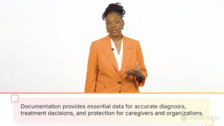
5. Health Awareness in ADRD Care: Medications, Nutrition, and Recognizing Changes
This section focuses on the caregiver’s critical role in monitoring FDA-approved ADRD medications and recognizing subtle signs of malnutrition or dehydration that may present as behavioral shifts. Accurate observation and objective documentation are vital for preventing medical complications and ensuring that clinical decisions are based on the individual’s baseline function.

6. Integrating Person-Centered ADRD Care Across Settings
The final chapter analyzes the risks associated with care transitions and the importance of maintaining continuity by ensuring detailed information sharing among home, facility, and hospice settings. Learning to support emotional safety through routine preservation and the introduction of familiar objects is essential for reducing disorientation and ensuring a seamless experience during transitional care.



Frequently asked questions
Everything you need to know about Medbridge courses.
Who creates Medbridge courses?
We work with industry-leaders, top researchers, and consultants to build content roadmaps that are then structured into courses, filmed, and edited by our production team before being launched to our site.
How often does Medbridge release new courses?
New courses are added monthly and are automatically included in your subscription as they launch.
How often does Medbridge update courses?
Medbridge reviews its courses annually for relevance and to assess if content is up to date. Based on these reviews it may be determined that a course is out of date resulting in the course being re-filmed or retired, if the content is no longer needed (e.g. a replacement course already exists, the concepts are no longer best practice, etc.).
How many courses does Medbridge offer?
We have over 3,000 accredited courses and we are continually updating our library with new courses. Check our course library for the most up-to-date count for your discipline.
Are there any additional fees for taking a Medbridge course?
There are no additional fees for taking a Medbridge course, obtaining a course certificate of completion, earning CEUs as a subscriber, or accessing any of the additional tools your subscription may include.
Is there a limit to the number of courses I can take?
There is no limit to the number of courses you can take as a subscriber! As a subscriber to Medbridge, you have unlimited access to over 3,000+ accredited CE courses.
If you are a Premium subscriber, you also have unlimited access to our Patient Engagement Tools such as the Home Exercise Program, Patient Education Library, Orthopedic Exam Tests, and Manual Therapy Techniques. We have over 7,000 exercises and over 650+ videos and handouts of patient education resources with more exercises and patient education added to the library based on subscriber feedback, volume of request and specialities.
What is your refund policy?
You are eligible for a refund provided your request is received within 30 days of your subscription purchase and your account has no activity.