
Child Abuse Recognition and Reporting in Pennsylvania (2026)
Presented by Antonio Garcia
The main objective of this introductory-level course is to provide professionals who interact with children and families the information and resources needed to recognize and report suspected cases of abuse. Through lecture, panels, and case studies, participants will be able to define different categories of abuse as described by Pennsylvania Department of Human Services, recall indicators of and risk factors for abuse, and know procedures and practices for reporting alleged incidents of abuse. In turn, participants will be able to help child welfare agencies achieve their primary goal of protecting children from harm and ongoing trauma.
Please allow at least 10 days from completion to receive a PA Department of State status update from Medbridge. To ensure your completion can be reported to the state, we cannot submit your course if your profile is not updated with the following information before you start:
- Exact first and last name as it appears on your PA license or application
(i.e. If your license reads "Katherine," do not enter "Kate" or "Kathy." Do not include professional credentials such as PT, DPT, OT, SLP, RN, or AT.) - Date of birth
(i.e. Enter as MM/DD/YYYY — e.g. 04/15/1982. Must match exactly what the state has on file.) - Last 4 digits of your Social Security Number
(i.e. Enter only the last 4 digits — e.g. 1234. Do not enter your full SSN.) - Pennsylvania license number in the correct format
(i.e. Enter the full license number exactly as shown on your license — e.g. PT123456L. Do not add dashes, spaces, or extra characters. If unsure, look up your license at PA State License Search: https://www.pals.pa.gov)
Please update your profile BEFORE completing the course. Refer to the PA Child Abuse Course FAQ in the knowledge base for further details.
Meet your instructor

Antonio Garcia
Dr. Antonio Garcia’s research is informed by his experience as a former Child Protective Services worker and supervisor in Washington State. Having broad interdisciplinary training in psychology, Spanish, social work, and services research, he is committed to effectively engaging community stakeholders to shrink the child…
Chapters & learning objectives

1. Defining Child Abuse and Neglect
A brief history of child welfare and how the state of Pennsylvania handles or triages different types of cases will be discussed in Chapter 1. As mandated reporters, participants will learn what abuse entails and the different types of abuse to screen for. This chapter will also cover exclusions to abuse—or types of incidents that would not be considered abuse. The information will help provide participants the knowledge and self-efficacy to report suspected abuse.

2. Recognizing Indicators and Risk of Child Abuse and Neglect
Chapter 2 will focus on recognizing indicators and risk of child abuse and neglect. While interacting with children and families, knowing indicators will increase participants’ confidence in knowing when to make a report to the child abuse hotline. Ms. Jessica Merson, a current Department of Human Services worker in the state of Pennsylvania, will join the conversation to share some of her experiences regarding her efforts to ensure child safety, permanency, and well-being. This chapter contains an addendum covering Act 54 of 2018 updates, including mandatory notification of substance exposed infants by health care providers and creation of a plan of safe care.

3. Panel Convenes to Recognize Indicators and Risk Factors of Child Abuse and Neglect
Chapter 3 connects the dots between what we learned in Chapters 1 and 2 by showcasing what typically happens behind the scenes when a report is made to the hotline. A panel of child welfare experts will be asked to assess an alleged report of abuse and neglect, and weigh in on the following: 1) indicators of child abuse and neglect, and 2) risk factors that suggest abuse may occur in the future.

4. Reporting Suspected Cases of Child Abuse and Neglect
This chapter focuses on what to do when reporting is warranted due to the presence of indicators and risk factors for child abuse and neglect. Differences between permissive versus mandated reporters, whether or not suspected abuse should be reported during privileged communications, and the process for reporting will be discussed.

5. Illustrating the Reporting Process
In Chapter 5, participants will have an opportunity to gain insight into what information is needed to make a report of suspected abuse online. Information gathered from the case study introduced in Chapter 3 will be used to illustrate the reporting process.
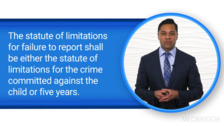
6. Protections, Penalties, and Rights as Mandated Reporters
Participants have learned how to screen for indicators and risk factors for abuse, and know how to report those concerns when abuse or neglect is suspected. This last chapter focuses on protections and rights for mandated reporters, and penalties for not reporting abuse. As a mandated reporter, it is imperative to know what your rights and responsibilities are.
Frequently asked questions
Everything you need to know about Medbridge courses.
Who creates Medbridge courses?
We work with industry-leaders, top researchers, and consultants to build content roadmaps that are then structured into courses, filmed, and edited by our production team before being launched to our site.
How often does Medbridge release new courses?
New courses are added monthly and are automatically included in your subscription as they launch.
How often does Medbridge update courses?
Medbridge reviews its courses annually for relevance and to assess if content is up to date. Based on these reviews it may be determined that a course is out of date resulting in the course being re-filmed or retired, if the content is no longer needed (e.g. a replacement course already exists, the concepts are no longer best practice, etc.).
How many courses does Medbridge offer?
We have over 3,000 accredited courses and we are continually updating our library with new courses. Check our course library for the most up-to-date count for your discipline.
Are there any additional fees for taking a Medbridge course?
There are no additional fees for taking a Medbridge course, obtaining a course certificate of completion, earning CEUs as a subscriber, or accessing any of the additional tools your subscription may include.
Is there a limit to the number of courses I can take?
There is no limit to the number of courses you can take as a subscriber! As a subscriber to Medbridge, you have unlimited access to over 3,000+ accredited CE courses.
If you are a Premium subscriber, you also have unlimited access to our Patient Engagement Tools such as the Home Exercise Program, Patient Education Library, Orthopedic Exam Tests, and Manual Therapy Techniques. We have over 7,000 exercises and over 650+ videos and handouts of patient education resources with more exercises and patient education added to the library based on subscriber feedback, volume of request and specialities.
What is your refund policy?
You are eligible for a refund provided your request is received within 30 days of your subscription purchase and your account has no activity.