
Clinical Reasoning and Motor Learning: Dressing, Toileting, Bathing
Presented by Angie Reimer
This course applies clinical reasoning and motor learning principles to essential self-care tasks—dressing, toileting, and bathing—within neurorehabilitation. These activities are more than daily routines; they are critical opportunities to foster independence, self-efficacy, and neuroplastic recovery. Using a structured four-step framework, clinicians will learn to analyze task demands, assess individual impairments and assistance levels, modify environmental factors, and layer evidence-based motor learning strategies to design meaningful, progressive interventions. Through real patient videos, therapists will work through the framework in action—observing, reasoning, and applying strategies to rebuild daily function through purposeful, patient-centered practice. This course is designed for occupational and physical therapists working with individuals recovering from neurological injury or living with neurological conditions.
Learning Outcomes
- Apply a four-step clinical reasoning framework to evaluate and guide intervention planning for self-care and mobility tasks in neurorehabilitation
- Examine how patient presentation (assist level, impairments, cognitive/affective factors) influences strategy selection to maximize therapeutic engagement and occupational participation
- Analyze environmental and task demands that constrain or facilitate motor performance, adapting interventions across acute, postacute, home health, and outpatient settings
- Choose appropriate motor learning strategies to support neuroplasticity and maximize participation in daily activities and functional mobility
- Plan progressive, task-oriented treatment sequences that address both upper and lower extremity control, dynamic balance, and activity tolerance within daily living activities
Meet your instructor

Angie Reimer
Dr. Reimer received both her bachelor of science degree in health sciences and master’s degree in occupational therapy from the University of Findlay and her doctorate in occupational therapy from Indiana University. She boasts more than 20 years of clinical experience with geriatric and neurologically impaired populations,…
Chapters & learning objectives
1. Dressing
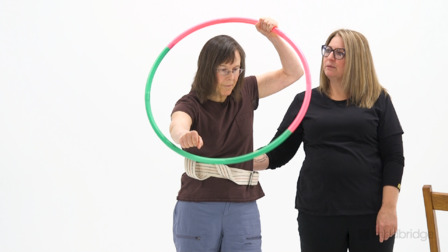
This chapter examines dressing as a high-impact self-care task that challenges balance, coordination, reach, strength, and cognitive sequencing. Beyond its physical demands, dressing is deeply tied to autonomy, identity, and social participation—making it an ideal foundation for function-based neurorehabilitation. Using the clinical reasoning framework, clinicians will learn to analyze movement patterns, assess postural control and limb use, introduce task-specific cues, and apply strategies such as amplitude training, external focus, and graded challenge to build power, precision, and confidence in both upper and lower body dressing.
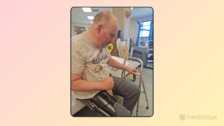
2. Toileting
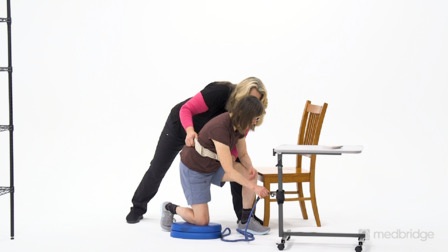
Toileting is a pivotal activity of daily living that directly impacts safety, autonomy, and dignity. This chapter breaks down the key movement components—such as sit-to-stand transitions, weight shifting, and postural control—and demonstrates how to strengthen them through part-task practice and targeted motor learning strategies. Using the clinical reasoning framework, clinicians will learn to integrate external cues, resistance, and graded challenge to enhance anterior and lateral stability, promote efficient transfers, and reduce fall risk while restoring confidence and independence in this essential daily task.
3. Bathing
Bathing represents a physically and cognitively demanding task that challenges postural control, dynamic balance, and adaptability within complex environments. This chapter guides clinicians in applying motor learning strategies—such as error augmentation, reactive balance training, and graded environmental challenge—to enhance safety, stability, and recovery responses during bathing transfers. Through progressive practice and real-world task integration, therapists will learn to foster confidence, resilience, and independence with task completion.
Frequently asked questions
Everything you need to know about Medbridge courses.
Who creates Medbridge courses?
We work with industry-leaders, top researchers, and consultants to build content roadmaps that are then structured into courses, filmed, and edited by our production team before being launched to our site.
How often does Medbridge release new courses?
New courses are added monthly and are automatically included in your subscription as they launch.
How often does Medbridge update courses?
Medbridge reviews its courses annually for relevance and to assess if content is up to date. Based on these reviews it may be determined that a course is out of date resulting in the course being re-filmed or retired, if the content is no longer needed (e.g. a replacement course already exists, the concepts are no longer best practice, etc.).
How many courses does Medbridge offer?
We have over 3,000 accredited courses and we are continually updating our library with new courses. Check our course library for the most up-to-date count for your discipline.
Are there any additional fees for taking a Medbridge course?
There are no additional fees for taking a Medbridge course, obtaining a course certificate of completion, earning CEUs as a subscriber, or accessing any of the additional tools your subscription may include.
Is there a limit to the number of courses I can take?
There is no limit to the number of courses you can take as a subscriber! As a subscriber to Medbridge, you have unlimited access to over 3,000+ accredited CE courses.
If you are a Premium subscriber, you also have unlimited access to our Patient Engagement Tools such as the Home Exercise Program, Patient Education Library, Orthopedic Exam Tests, and Manual Therapy Techniques. We have over 7,000 exercises and over 650+ videos and handouts of patient education resources with more exercises and patient education added to the library based on subscriber feedback, volume of request and specialities.
What is your refund policy?
You are eligible for a refund provided your request is received within 30 days of your subscription purchase and your account has no activity.