
Clinical Reasoning and Motor Learning: Higher-Level Mobility
Presented by J.J. Mowder-Tinney and Angie Reimer
This course empowers rehabilitation professionals to apply clinical reasoning and motor learning strategies to complex, real-world functional mobility challenges. Building on the foundational concepts from the first two courses, this final installment integrates higher-level tasks—such as floor-to-chair transfers, backward walking, stair and curb negotiation, reaching, carrying, and dual-tasking—into meaningful, effective treatment. A wide range of actual patient videos is used throughout to demonstrate decision-making in real time, culminating in a full-case video that brings all elements together. Using the four-step clinical reasoning framework, clinicians will learn to assess the person, task, and environment to choose targeted strategies that support engagement, adaptability, and functional carryover. Designed for occupational and physical therapists across inpatient, outpatient, and home health settings, this course provides practical tools to promote independence, safety, and confidence through function-driven interventions.
Learning Outcomes
- Apply a four-step clinical reasoning framework to guide intervention planning for functional mobility training (e.g., floor transfers, carrying/reaching, dual-tasking, and stairs)
- Differentiate how patient presentation (e.g., strength, balance, cognition, affect, and fear of falling) influences strategy selection for complex mobility activities
- Analyze environmental factors (e.g., surface height, distractions, equipment, and space constraints) that constrain or enhance motor performance during advanced functional mobility training
- Select appropriate motor learning strategies—including error augmentation, external cues, intensity, and autonomy—to maximize therapeutic engagement and functional carryover
- Design patient-centered, task-specific interventions that integrate variability, salience, and dual-task challenge to promote independence and community participation
Meet your instructors

J.J. Mowder-Tinney
Dr. J.J. Mowder-Tinney holds a bachelor of science degree in psychology from the University of Colorado Boulder, a master of science in physical therapy from the University of Miami, and a doctorate in physical therapy from Nova Southeastern University. With nearly three decades of diverse clinical experience, her expertise…

Angie Reimer
Dr. Reimer received both her bachelor of science degree in health sciences and master’s degree in occupational therapy from the University of Findlay and her doctorate in occupational therapy from Indiana University. She boasts more than 20 years of clinical experience with geriatric and neurologically impaired populations,…
Chapters & learning objectives
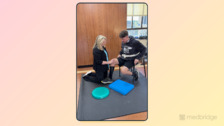
1. Floor Transfers
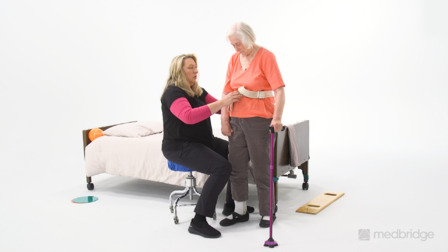
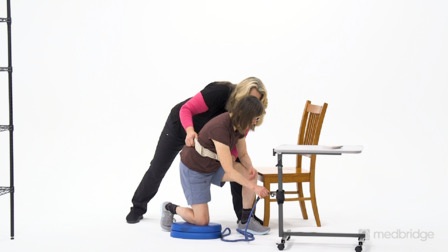
This chapter addresses one of the most critical yet undertrained functional skills—getting up from the floor. Emphasis is placed on breaking the task into clear, achievable part-task components to build strength, coordination, and confidence before integrating the full sequence. Participants will learn how to assess and modify task demands, environmental setup, and individual factors to support performance, using strategies such as purposeful repetition and error augmentation. Floor-to-chair transfers are essential for fall recovery and community safety, making them a vital component of neurologic rehabilitation.
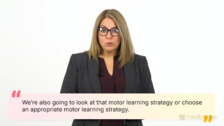
2. Carrying and Reaching Tasks
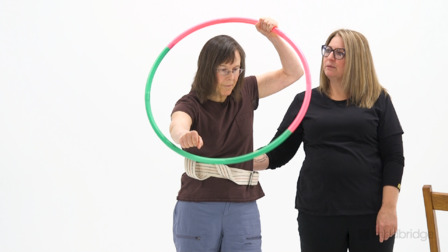
Reaching and carrying are fundamental components of daily life that engage dynamic balance, coordination, and postural control. This chapter examines how to integrate these movements into meaningful routines—such as laundry, bending, and squatting—to promote motor control, functional strength, and fall reduction. Through task-specific, personalized training, clinicians will learn strategies to enhance patient motivation, engagement, and independence in real-world contexts.
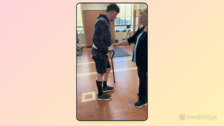
3. Stairs/Backward Walking Variability
This chapter focuses on mobility tasks that require advanced motor planning and adaptability. Backward walking, stair navigation, and curb negotiation challenge the neuromuscular system in ways that forward walking does not, making them important to introduce early and often to prepare patients for the demands of real-world community mobility. These tasks occur frequently in daily life, and practicing them proactively is essential for building balance, symmetry, and confidence outside the clinic. Clinicians will learn to assess performance, modify challenges, and apply high repetition, task-specific interventions to improve community ambulation and reduce fall risk.
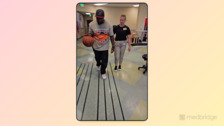
4. Cognitive Motor Dual-Tasking
Dual-task training integrates motor and cognitive demands to enhance attention, adaptability, and movement efficiency. This chapter explores how to embed cognitive challenges within meaningful functional routines to advance both motor control and executive function. By integrating all prior components into an intervention that addresses both motor and cognitive functions, clinicians will apply the clinical reasoning framework across an entire session—demonstrating how salience, variability, and autonomy transform repetition into lasting, real-world independence.
Frequently asked questions
Everything you need to know about Medbridge courses.
Who creates Medbridge courses?
We work with industry-leaders, top researchers, and consultants to build content roadmaps that are then structured into courses, filmed, and edited by our production team before being launched to our site.
How often does Medbridge release new courses?
New courses are added monthly and are automatically included in your subscription as they launch.
How often does Medbridge update courses?
Medbridge reviews its courses annually for relevance and to assess if content is up to date. Based on these reviews it may be determined that a course is out of date resulting in the course being re-filmed or retired, if the content is no longer needed (e.g. a replacement course already exists, the concepts are no longer best practice, etc.).
How many courses does Medbridge offer?
We have over 3,000 accredited courses and we are continually updating our library with new courses. Check our course library for the most up-to-date count for your discipline.
Are there any additional fees for taking a Medbridge course?
There are no additional fees for taking a Medbridge course, obtaining a course certificate of completion, earning CEUs as a subscriber, or accessing any of the additional tools your subscription may include.
Is there a limit to the number of courses I can take?
There is no limit to the number of courses you can take as a subscriber! As a subscriber to Medbridge, you have unlimited access to over 3,000+ accredited CE courses.
If you are a Premium subscriber, you also have unlimited access to our Patient Engagement Tools such as the Home Exercise Program, Patient Education Library, Orthopedic Exam Tests, and Manual Therapy Techniques. We have over 7,000 exercises and over 650+ videos and handouts of patient education resources with more exercises and patient education added to the library based on subscriber feedback, volume of request and specialities.
What is your refund policy?
You are eligible for a refund provided your request is received within 30 days of your subscription purchase and your account has no activity.