
Front Desk Impact on Patient and Business Success in Healthcare Practices
Presented by Jerry Durham
The front desk is often the first and most crucial point of contact in a healthcare practice, playing a significant role in shaping patient experiences and driving business success. Despite this, its impact is frequently overlooked. This course is designed to empower front desk professionals with the skills and strategies needed to enhance patient engagement, build trust, and create seamless workflows. Participants will learn how to optimize the pre-arrival process, execute effective first phone calls, understand patient expectations, and ensure a smooth transition into the agreed-upon plan of care. This course is ideal for front desk team members, practice managers, and healthcare professionals in outpatient settings, offering actionable insights to improve both patient outcomes and operational efficiency.
Learning Objectives
- Define the critical role of front desk staff in shaping both patient success and practice success
- Identify effective communication techniques to create positive first impressions and build patient trust from the initial interaction
- Recognize key workflow strategies that enhance front desk operations and contribute to a smooth patient experience
- Identify relationship-building techniques that foster patient loyalty and strengthen long-term patient–provider relationships
- Highlight improvements to front desk practices that make a measurable impact on patient outcomes and business success
To elevate healthcare outcomes and operational excellence, Course 1: Patient and Practice Success in Healthcare Begins at the Front Desk is designed for leadership and front-desk teams, while Course 2: Front Desk Impact on Patient and Business Success in Healthcare Practices focuses specifically on empowering front-desk staff.
Meet your instructor

Jerry Durham
Jerry Durham is a speaker, author, and consultant with a singular passion for leveraging the entire practice team to improve patient outcomes while driving revenue through better sales processes. With 32 years in physical therapy and healthcare, along with 20+ years as a business owner, Jerry has honed his expertise in…
Chapters & learning objectives

1. The Pre-arrival Process
A patient’s journey begins long before they step into the clinic, and the pre-arrival process is critical to ensuring they show up prepared and engaged. This chapter highlights the front desk’s role in optimizing workflows, reducing no-shows, and enhancing patient commitment. Participants will learn key strategies for managing patient communication, setting expectations, and creating a structured pre-arrival experience that leads to successful treatment outcomes.

2. The First Phone Call
The first phone call is the foundation of the patient-provider relationship and sets the tone for the entire care journey. This chapter explores best practices for creating a smooth and engaging phone experience that builds trust, manages expectations, and increases the likelihood of patient arrival. Through effective communication techniques and structured intake processes, front desk professionals will gain the confidence to convert inquiries into committed patients.

3. What the Healthcare Consumer Wants
Today’s healthcare consumers have evolving expectations and seek personalized, value-driven experiences. This chapter delves into understanding patient motivations, needs, and concerns, allowing front desk professionals to tailor interactions that align with patient goals. Participants will learn how to foster engagement, increase patient satisfaction, and enhance their practice’s reputation by delivering a patient-centered approach.
4. Owning the Pre-arrival to the Agreed-Upon Plan of Care Process
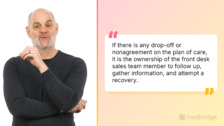
Ensuring patients follow through with their care plans requires a well-defined process that spans from initial contact to completed treatment. This chapter focuses on coordinating the patient journey, tracking key metrics, and maintaining accountability within the front desk team. By mastering these strategies, front desk professionals can directly contribute to higher patient retention, reduced cancellations, and overall practice growth.

Frequently asked questions
Everything you need to know about Medbridge courses.
Who creates Medbridge courses?
We work with industry-leaders, top researchers, and consultants to build content roadmaps that are then structured into courses, filmed, and edited by our production team before being launched to our site.
How often does Medbridge release new courses?
New courses are added monthly and are automatically included in your subscription as they launch.
How often does Medbridge update courses?
Medbridge reviews its courses annually for relevance and to assess if content is up to date. Based on these reviews it may be determined that a course is out of date resulting in the course being re-filmed or retired, if the content is no longer needed (e.g. a replacement course already exists, the concepts are no longer best practice, etc.).
How many courses does Medbridge offer?
We have over 3,000 accredited courses and we are continually updating our library with new courses. Check our course library for the most up-to-date count for your discipline.
Are there any additional fees for taking a Medbridge course?
There are no additional fees for taking a Medbridge course, obtaining a course certificate of completion, earning CEUs as a subscriber, or accessing any of the additional tools your subscription may include.
Is there a limit to the number of courses I can take?
There is no limit to the number of courses you can take as a subscriber! As a subscriber to Medbridge, you have unlimited access to over 3,000+ accredited CE courses.
If you are a Premium subscriber, you also have unlimited access to our Patient Engagement Tools such as the Home Exercise Program, Patient Education Library, Orthopedic Exam Tests, and Manual Therapy Techniques. We have over 7,000 exercises and over 650+ videos and handouts of patient education resources with more exercises and patient education added to the library based on subscriber feedback, volume of request and specialities.
What is your refund policy?
You are eligible for a refund provided your request is received within 30 days of your subscription purchase and your account has no activity.