
Running With a Prosthesis
Presented by Alicia White
Returning to running after limb loss presents unique biomechanical, physiological, and psychological challenges that require a specialized and collaborative rehabilitation approach. This course explores the clinical decision-making, training strategies, and prosthetic considerations needed to safely initiate and progress running with a prosthesis. Participants will learn how to assess readiness for running, implement pre-running strengthening and agility drills, analyze prosthetic running biomechanics, and integrate practical tools to optimize performance and minimize injury risk. The course also offers insight into managing sweat and skin tolerance—common but often overlooked barriers to success. This content is essential for rehabilitation professionals working with individuals with lower limb amputations in outpatient, sports medicine, or return-to-activity settings.
Learning Objectives
- Recommend the most appropriate running prosthesis based on individual performance factors and contextual demands
- Assess individuals with limb absence to determine readiness and safety for initiation of prosthetic running training
- Evaluate prosthetic running gait to promote injury prevention and long-term functional participation in meaningful physical activity
- Design a pre-running conditioning program with a focus on optimizing prosthetic use and reducing injury risk
- Collaborate with the prosthetist and the individual to support optimal prosthetic running patterns and participation outcomes
- Develop a prosthetic running program tailored to the individual’s goals and needs while integrating strategies for injury prevention and sustained engagement in physical activity
Meet your instructor

Alicia White
Dr. Alicia White graduated from Baldwin Wallace University in 2004 with a degree in athletic training. She continued her studies at the University of Miami, where she earned a doctorate in physical therapy in 2007. Dr. White worked at the Center for the Intrepid in San Antonio, Texas, for 10 years, treating high-level…
Chapters & learning objectives
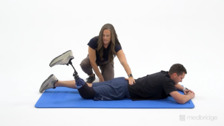
1. Preprosthetic Running
This chapter focuses on preparing individuals for the demands of prosthetic running. It reviews essential readiness indicators such as wound healing, skin tolerance, prosthetic gait quality, and cardiopulmonary clearance. Emphasis is placed on core and hip strengthening, posterior chain activation, agility training, and patient education to build trust in the prosthesis and reduce the risk of injury during the transition to running.

2. Running With a Prosthesis
Clinicians will learn how to evaluate and guide prosthetic running patterns by understanding the key biomechanical principles specific to running with a prosthesis. Topics include identification of the prosthetic “sweet spot,” alignment for optimal propulsion, and typical deviations caused by improper limb configuration. The chapter includes progressive running drills and training strategies to promote safe movement patterns and foster confidence in prosthetic use during high-impact activity.
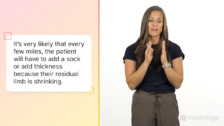
3. Tips and Tricks for Success
This chapter addresses the practical, often individualized, challenges that can hinder progress in prosthetic running—particularly sweat management and equipment-related barriers. Strategies include hydration tactics, antiperspirant use, and advanced options such as laser hair removal and Botox. The chapter also introduces adaptive tools such as running belts, sweat towels, and musical cues to support performance, comfort, and adherence to training programs.
More courses in this series
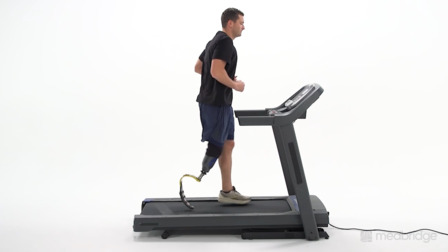
Running With a Prosthesis
Alicia White
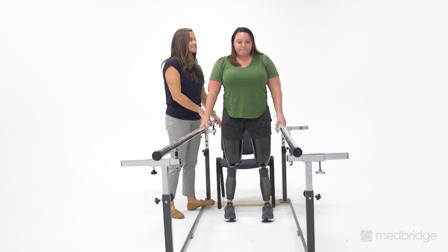
Ambulating With Bilateral Lower Extremity Prosthetic Limbs
Alicia White
Frequently asked questions
Everything you need to know about Medbridge courses.
Who creates Medbridge courses?
We work with industry-leaders, top researchers, and consultants to build content roadmaps that are then structured into courses, filmed, and edited by our production team before being launched to our site.
How often does Medbridge release new courses?
New courses are added monthly and are automatically included in your subscription as they launch.
How often does Medbridge update courses?
Medbridge reviews its courses annually for relevance and to assess if content is up to date. Based on these reviews it may be determined that a course is out of date resulting in the course being re-filmed or retired, if the content is no longer needed (e.g. a replacement course already exists, the concepts are no longer best practice, etc.).
How many courses does Medbridge offer?
We have over 3,000 accredited courses and we are continually updating our library with new courses. Check our course library for the most up-to-date count for your discipline.
Are there any additional fees for taking a Medbridge course?
There are no additional fees for taking a Medbridge course, obtaining a course certificate of completion, earning CEUs as a subscriber, or accessing any of the additional tools your subscription may include.
Is there a limit to the number of courses I can take?
There is no limit to the number of courses you can take as a subscriber! As a subscriber to Medbridge, you have unlimited access to over 3,000+ accredited CE courses.
If you are a Premium subscriber, you also have unlimited access to our Patient Engagement Tools such as the Home Exercise Program, Patient Education Library, Orthopedic Exam Tests, and Manual Therapy Techniques. We have over 7,000 exercises and over 650+ videos and handouts of patient education resources with more exercises and patient education added to the library based on subscriber feedback, volume of request and specialities.
What is your refund policy?
You are eligible for a refund provided your request is received within 30 days of your subscription purchase and your account has no activity.