
Postpartum Pelvic Girdle Pain: Evidence-Based Screening and Treatment Guidelines
Postpartum pelvic girdle pain doesn’t need to derail recovery. Learn how to apply CPG-backed tests, education, and exercises to help your patients move confidently again.
November 19, 2025
13 min. read
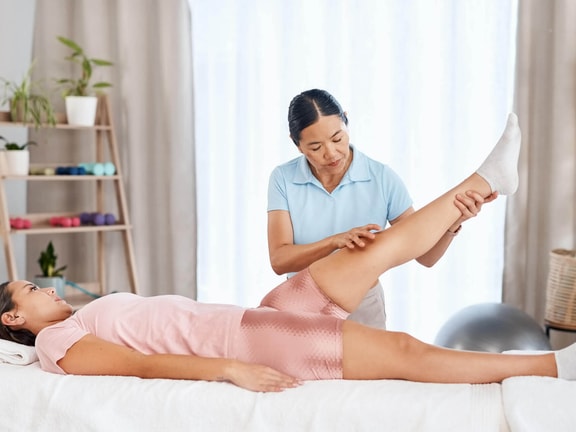
Pelvic girdle pain in the postpartum population is a common yet often underestimated condition—one that can affect mobility, confidence, and participation in daily life. While mild discomfort after childbirth is typical, some individuals experience persistent pain that limits walking, standing, or caregiving during a critical stage of recovery.
The APTA Academy of Pelvic Health’s Clinical Practice Guideline (CPG) for Pelvic Girdle Pain in the Postpartum Population defines this condition as pain between the posterior iliac crest and gluteal fold, often near the sacroiliac joint or pubic symphysis. Symptoms may start during pregnancy or appear after delivery, and for some patients, they can persist months—or even years—beyond the immediate postpartum period.
This article helps you translate the CPG’s recommendations into practical strategies for real-world care. You’ll learn how to screen, assess, and treat pelvic girdle pain using a biopsychosocial lens—empowering your patients to move with confidence and return fully to their lives.
From guidelines to guided pathways
Clinical guidelines provide the “why” and “what” of evidence-based care. Medbridge Pathways delivers the “how.” Our Women’s Health Pathways include dedicated digital programs for Postpartum Posterior Pelvic Girdle Pain and Anterior (Pubic Bone) Pelvic Girdle Pain, each designed to align with the APTA Pelvic Health CPG.
Every program blends in-clinic care with structured digital sessions that reinforce education, movement retraining, and progressive strengthening between visits. As you move through this article, you’ll see how key CPG recommendations are directly reflected in these pathway designs—from early pelvic floor activation to functional childcare tasks.
If you’re interested in implementing or scaling pelvic health services at your organization, download our free guide: A New Blueprint to Develop Impactful Hybrid Pelvic Health Programs Using Pathways.
A New Blueprint to Develop Impactful Hybrid Pelvic Health Programs Using Pathways
Submit a few brief details to unlock your free Blueprint for Impactful Hybrid Pelvic Health Programs PDF!
Risk factors: identifying patients at higher risk
To prevent persistent postpartum pelvic girdle pain, start by recognizing who’s most at risk. Early identification allows you to screen proactively, set expectations, and tailor prevention strategies during pregnancy and recovery.
History of pain: A prior history of low back or pelvic girdle pain—either before or during pregnancy—is the most consistent predictor of postpartum recurrence. If a patient reports past pain, consider early referral to physical therapy to reduce future flare-ups.
Delivery and physical factors: Cesarean birth, multiparity, higher pre-pregnancy body mass index, and early postpartum pain with rolling or weight-bearing can all increase mechanical strain on the pelvic joints.
Psychosocial and lifestyle contributors: Depressive symptoms, fear-avoidance behavior, and reduced physical activity play a measurable role in recovery. Encourage healthy movement habits and address work or caregiving demands that may prolong pain.
Screening and systems review: looking beyond the pelvic girdle
To manage pelvic girdle pain successfully, start with a systems review that considers the whole person, including physical, hormonal, and psychosocial factors. The CPG highlights three key areas to include in your evaluation:1
Mood and psychosocial health
Depression and anxiety can heighten pain perception and reduce participation.
Screen each patient using a validated tool such as the Edinburgh Postnatal Depression Scale (EPDS).
Refer immediately for any indication of suicidal ideation or severe depressive symptoms.
Even mild mood changes warrant communication with a behavioral health or primary care provider to improve adherence and recovery.
Pelvic floor and musculoskeletal screening
Postpartum individuals often experience muscle impairments in the pelvic floor, abdominals, hips, and back.
Screen for urinary or fecal incontinence, abdominal wall weakness, and pain with transitional movements.
Refer to a pelvic health physical therapist when incontinence or coordination issues are present.
Neurologic and skeletal considerations
Although less common, nerve injury or bone compromise can mimic or complicate pelvic girdle pain.
Screen for pudendal or lumbosacral nerve involvement and pain relieved by rest, which may indicate stress fracture.
Refer for imaging when symptoms include inability to bear weight, sudden-onset pelvic pain, or neurologic changes.
By taking this whole-body view, you’ll identify contributing factors early and ensure safe, targeted care.
Examination: key tests and measures
Accurate diagnosis of postpartum pelvic girdle pain requires a focused, evidence-based exam. The guideline outlines core measures to confirm diagnosis and guide clinical decision-making.
Clinical presentation
Start by asking where, when, and how the pain occurs. Most patients describe discomfort near the sacroiliac joints or pubic symphysis, aggravated by rolling in bed, walking, or single-leg loading. These patterns help distinguish pelvic girdle pain from lumbar or hip conditions.
Validated outcome measures
Use standardized tools to assess disability and monitor progress:1
Pelvic Girdle Questionnaire (PGQ): condition-specific and recommended for pregnancy- and postpartum-related pain.
Oswestry Disability Index (ODI): reliable for tracking lumbopelvic dysfunction in postpartum populations.
Quebec Back Pain Disability Scale (QBPDS): can supplement the ODI, but is less validated for use in postpartum populations.
Administering one or more of these scales during the initial evaluation provides a standardized way to track improvement and justify clinical decision-making.
Provocation and functional tests
Pain provocation testing helps confirm pelvic girdle involvement and load transfer dysfunction.
Posterior Pelvic Pain Provocation (P4) test: Apply downward pressure through the flexed hip while the patient lies supine; pain reproduction in the gluteal or posterior pelvic area suggests SI joint involvement.1
Active Straight Leg Raise (ASLR) test: Assess load transfer by asking the patient to raise one leg while supine; increased difficulty or pain compared to the opposite side indicates impaired force closure of the pelvis.1
Flexion, Abduction, and External Rotation (FABER) test: Position the patient’s leg in a figure-four; pain in the posterior pelvis or groin may indicate SI joint or pubic symphysis dysfunction.1
Use a cluster of tests rather than one in isolation, noting pain reproduction, asymmetry, and compensation.
Muscle function and load transfer
Observe how the patient controls movement and transfers load through the pelvis. Assess strength, endurance, and coordination of the pelvic floor, hip extensors, and trunk stabilizers. Pain during single-leg stance or transitional movement often reveals deficits that can be addressed through exercise.
Prognosis: timing and predictors of recovery
Postpartum recovery looks different for every patient, but the CPG highlights consistent patterns that can inform prognosis and patient education.
Start early: Patients who begin therapy within the first three months postpartum see faster, more meaningful improvements.1 Even brief education and gentle movement early on can prevent chronic pain.
Track change: Use the PGQ or ODI tools to monitor progress. Higher baseline scores often mean more room for improvement once impairments are addressed.
Plan for variability: Some individuals experience intermittent pain up to two years postpartum, especially if psychosocial stressors are present.1 Early identification and interdisciplinary collaboration reduce this risk.
Early intervention, consistent tracking, and interdisciplinary collaboration all support positive outcomes. Clear expectations and small, measurable goals help patients stay motivated through recovery. Digital tools such as Medbridge Pathways can also support recovery by reinforcing home exercise adherence and giving clinicians added visibility into a patient’s progress between visits.
Evidence-based interventions for postpartum pelvic girdle pain
Once you’ve identified postpartum pelvic girdle pain, effective management depends on education, movement, and multimodal support.
The CPG outlines a range of evidence-based interventions; however, we will focus on those with the strongest (A-level) and best-practice (P-level) recommendations to help you translate the research into effective, patient-centered care.
Patient education and body mechanics
(A-level recommendation)
Patient education is the cornerstone of managing postpartum pelvic girdle pain. Patients benefit from understanding the normal physiologic changes that occur after pregnancy, what symptoms are typical, and how to move safely as they recover.
Provide clear, actionable guidance on:
Posture and body mechanics for lifting, childcare, and daily tasks.
Pain neuroscience education to help patients understand that movement supports healing, not harm.
Load management and pacing, reinforcing that gradual activity—not rest—is key to recovery.
Early sessions in the Postpartum Pelvic Girdle Pain Pathways reflect these same principles, offering brief, actionable modules on pelvic anatomy, posture, body mechanics, and early load tolerance. Patient education videos included within the pathway, such as Baby Lifting Tips, Baby Carrying Tips, What’s Going on With My Body?, and What’s Pelvic Girdle Pain?, help patients understand their symptoms, move with greater confidence, and stay engaged between clinic visits.
Exercise prescription
(A-level recommendation)
Exercise is strongly supported as a primary treatment for postpartum pelvic girdle pain. Focus on muscle performance—especially in the pelvic floor, back extensors, and hip musculature—to restore functional load transfer and improve movement control.
Key principles include:
Begin with gentle stabilization and motor control exercises.
Progress gradually to strengthening and endurance-based programs.
Incorporate pelvic floor retraining for patients with coordination deficits or incontinence.
Modify or pause exercises that reproduce pain, and reintroduce them as tolerance improves.
Exercise remains the cornerstone of rehabilitation and functional recovery, even as research continues to explore its direct relationship to pain reduction.
The Postpartum Posterior Pelvic Girdle Pain Pathway follows this same progression—building from early pelvic floor and trunk activation to targeted hip strengthening and real-world childcare tasks. The following exercises, drawn directly from the pathway, support the CPG’s A-level focus while offering both foundational and functional strengthening options.
Supine pelvic floor contraction
Quadruped pelvic floor contraction with opposite arm and leg lift
Bird dog
Pelvic belts
(A-level recommendation)
Pelvic belts can help improve comfort and stability when used alongside other interventions. They should never replace exercise or education, but can serve as a short-term aid—especially in early recovery when pain limits standing, walking, or caregiving tasks.
Encourage patients to:
Use the belt intermittently during functional activities rather than continuously.
Pair belt use with stabilization and movement retraining for best results.
Manual therapy
(A-level recommendation)
When combined with exercise, manual therapy can offer short-term improvements in pain and function. However, it is no more effective than stabilization exercise alone for long-term outcomes.
Use gentle mobilization techniques for patients with high irritability or movement fear to help reduce sensitivity and restore motion confidence. Integrate manual therapy as a supportive, not primary, intervention.
Functional and ergonomic training
(P-level recommendation)
Functional retraining is considered best practice for improving confidence and real-world performance. Emphasize functional carryover by integrating:
Transitional movements like sit-to-stand, rolling, or single-leg loading.
Lifting and carrying strategies for childcare or daily routines.
Activity of daily living and return-to-work training that challenges balance and load transfer.
These tasks reinforce pelvic stability, retrain motor control, and prepare patients to safely resume their daily roles. Baby-inclusive functional exercises—such as the Mini Lunge with Baby in a Front Pack Carrier and the Supine Bridge With Baby—are woven throughout the Postpartum Pelvic Girdle Pain Pathways to help patients practice real-world childcare demands safely and confidently.
Supine bridge with baby
Mini lunge with baby in front pack carrier
Multimodal and biopsychosocial integration
(P-level recommendation)
Comprehensive care for postpartum pelvic girdle pain must address both physical and psychosocial domains. Combine movement retraining with strategies that build resilience and self-efficacy.
Educate patients on pacing, pain expectations, and stress management.
Encourage discussion around sleep quality, fatigue, and emotional changes.
Collaborate across disciplines—pelvic health, mental health, and obstetric care—to support a cohesive recovery experience.
This integrated approach reflects the holistic reality of postpartum rehabilitation, improving both outcomes and patient satisfaction. Pathways reinforce this approach by incorporating pacing guidance, breathing strategies, and pain education to help patients build confidence, reduce fear of movement, and stay engaged between visits.
Case example: postpartum pelvic girdle pain in practice
Three weeks after delivery, a 33-year-old patient presented with sharp posterior pelvic and pubic symphysis pain that limited bed mobility, walking, and infant care. The therapist noted pain reproduction on the P4 and ASLR tests, along with weakness in the pelvic floor and hip stabilizers.
The patient reported fear of movement and reduced confidence caring for her baby. Screening with the Edinburgh Postnatal Depression Scale indicated mild depressive symptoms, prompting coordination with behavioral health for comprehensive support. The Pelvic Girdle Questionnaire was administered at baseline to measure disability and track progress throughout care.
These findings confirmed a diagnosis of postpartum pelvic girdle pain with load-transfer impairment—appropriate for conservative, evidence-based management.
What care looks like with Pathways
For this patient, the clinician would assign the Postpartum Posterior Pelvic Girdle Pain program within Pathways to complement in-clinic therapy and extend evidence-based care between visits. Digital sessions reinforce education, graded movement practice, and progressive strengthening while supporting adherence and confidence during early postpartum recovery.
Phase 1: Getting started with confidence
The patient begins with foundational education and early activation exercises designed to reduce fear, improve awareness, and support safe movement. Modules like What’s Going On With My Low Back Pain?, Should I Move When I’m in Pain?, and Baby Carrying Tips help normalize symptoms and reinforce safer childcare mechanics. Early exercises—such as supine diaphragmatic breathing, pelvic tilts, and pelvic muscle energy techniques—focus on calming the system, reconnecting with the core, and reintroducing load transfer without exacerbating pain.
Phase 2: Building awareness and managing discomfort
As symptoms begin to settle, the program shifts toward gentle deep-core engagement and coordinated movement to help restore stability and improve load sharing across the pelvis. This aligns directly with the CPG’s emphasis on improving performance of the pelvic floor, back flexors, and hip extensors.
Phase 3: Improving posture and movement for daily activities
Next, the program progresses into foundational strengthening with controlled movements that build hip extensor and deep-core capacity—such as bridges, core bracing variations, and early glute activation work. These exercises target the hip extensors, trunk stabilizers, and deep core, all essential for restoring pelvic stability and functional tolerance during daily caregiving tasks.
Phase 4 and beyond: Functional retraining and confidence building
In the final stage, the focus shifts to full-body coordination, balance, and single-leg control to support everyday demands like carrying a baby, navigating stairs, and managing household activities. These progressions reinforce durable pelvic stability and prepare patients for a safe return to higher-level activities, consistent with CPG recommendations.
Throughout the process, the therapist monitors progress through the Medbridge platform—tracking adherence, updating exercises, and offering timely feedback. This connected model reduces common barriers to postpartum rehabilitation and supports a clear, measurable return to confident movement.
Key takeaways for clinicians
Pelvic girdle pain in the postpartum period is common—but with early identification, evidence-based care, and the right digital tools, recovery can be efficient, empowering, and sustainable. By pairing CPG-informed care with Medbridge Pathways, clinicians can extend guidance beyond the clinic and help patients rebuild strength and confidence through every phase of recovery.
In summary:
Screen early and address psychosocial as well as physical factors.
Combine education and exercise as first-line interventions.
Use validated measures to guide care and track progress.
Leverage digital tools like Pathways to promote connected, consistent recovery.
References
American Physical Therapy Association. (n.d.). Clinical practice guidelines for pelvic girdle pain in the postpartum population. https://www.apta.org/patient-care/evidence-based-practice-resources/cpgs/clinical-practice-guidelines-for-pelvic-girdle-pain-in-the-postpartum-population
Meet the Author


Subscribe to Our Newsletter
Related Posts
August 23, 2015
Pregnancy-Related Pelvic Girdle Pain
By Michelle Lyons
November 20, 2025
Pelvic Pain ICD-10: Clinical Documentation and Care Planning
By Medbridge

February 13, 2026
Closing the Six-Week Gap in Postpartum Care: Why Birth Recovery Needs a Standard of Care
By Kandis Daroski

August 9, 2021
Addressing Pelvic Floor Dysfunction: 5 Steps for Getting Started
By Krista Covell-Pierson