
Real-World Mobility Gains: A Four-Step Framework for Intentional Neuro Rehab
Move beyond repetitive exercises and make every intervention count. Learn how assessing the task, person, environment, and motor learning strategy can help turn neuro rehab into meaningful, real-world mobility gains.
May 18, 2026
9 min. read

As clinicians, we all know the buzzwords: intensity, repetition, and salience. We’ve read the papers on neuroplasticity, and we know that high-dose training is the gold standard. But the reality of a busy Tuesday morning in the clinic is often different. The challenge isn't knowing what the principles are, but figuring out how to operationalize them when you have forty minutes, a patient who is fearful of falling, and a therapy gym full of distractions.
In our experience, the bridge between evidence-based theory and a patient’s actual independence is intentional clinical reasoning. We need to move away from abstract exercise labels and ground every single repetition in functional relevance.
To do this, we look at real-world applications through the lens of a four-step framework designed to sharpen how you apply motor learning to complex tasks like floor transfers, stairs, and dual-tasking.
The four-step clinical reasoning framework
When we approach complex mobility, we don’t want our treatments to be random. They need to be measurable, intentional, and adaptable. We use this four-step process to structure our sessions:
Identify the task: What functional activity are we actually addressing? Every rep needs a purpose the patient recognizes from their daily life.
Assess the person: Look beyond simple impairments. What is their learning style and primary limiter? Is it a force problem (strength), a postural control problem, a coordination issue, or a sensory deficit?
Assess the environment: We don’t just document the environment, we use it. A chair, a resistance band, or even the height of a surface can either support a movement or provide the necessary challenge to drive motor unit activation.
Choose the Motor Learning Strategy (MLS): This is where you layer in the specific principles (such as error augmentation, autonomy, or external cues) that will optimize learning and carryover.
To see this framework in action, let's look at how it applies to specific high-level mobility challenges using real-world patient scenarios.
Floor transfers: building confidence from the ground up
Falls are common after a stroke, and nearly half of survivors cannot get up without assistance, even if they aren’t injured. This inability leads to medical complications and a profound loss of independence. Interestingly, the Timed Up and Go (TUG) test is a strong predictor of floor-rise ability because both rely heavily on anti-gravity leg strength.1
When we assessed Chris, a patient three months post-CVA (stroke), his floor-to-chair transfer looked functional at first glance. However, closer observation revealed he was getting held up by his right ankle. He was stuck on his metatarsal heads (the ball of the foot), lacking the range to get his heel down and generate the power needed for a smooth transition to standing.
Contrast this with James, who was three years post-brain injury. James struggled with the weight shift onto his right hip. His glutes would give out, and he lacked the extensor power (muscle strength used to straighten the joints) to move from half-kneeling to standing.
The strategy: scaling the challenge
If a patient is struggling, don’t be afraid to “raise the floor.” For James, we adjusted the environment by using a chair to effectively raise the floor height, allowing him to practice the power production of the stand without the full demand of a floor-level start. By breaking these tasks into parts and utilizing high repetition, we maintain salience—because for these patients, getting off the floor is a critical goal for safety and confidence.
Reaching and carrying: the mechanics of self-efficacy
Reaching and carrying are often dismissed as simple upper-body tasks, but they are actually whole-body challenges that demand balance, timing, and problem-solving. Success in these tasks restores a sense of control over daily life.2
Take Johnny, who was recovering from a spinal cord injury. His goal was to return to his job in hospital laundry services, making laundry a highly salient (meaningful) task. During our initial assessment, we noticed Johnny was grabbing the washer, dryer, and doorways for stability. His movement was almost entirely lateral (side-to-side), as he lacked the anterior-posterior (A-P) weight shift (the ability to move the center of mass forward and backward) required for safe bending and reaching.
The strategy: adding error to improve control
To address his posterior loss of balance, we used error augmentation. We looped a resistance band around his waist and safely pulled him further into his error (backwards) as he practiced a hip hinge. This forces the central nervous system to wake up, feel the mistake, and self-correct.
The result? When we removed the band, his nervous system reacted better. He showed more power, better speed, and significantly less instability. By moving from part-task (the hinge) to whole-task (laundry), we turned repetition into relevance.
Stairs, curbs, and backward walking: unmasking deficits
Forward walking on a level surface can often hide significant gait deficits. If you want to see what is really going on with a patient’s motor control, have them walk backward.
Backward walking unmasks hidden gait deficits such as slower speed, shorter steps, and increased double support (time spent with both feet on the ground). It reveals impaired mechanics like limited hip and knee motion or altered ankle use that might be missed during forward ambulation.3 For James, walking backward unmasked his visual dependence and fear. He used his cane not for strength, but for sensory input, using the tool to feel his environment because he couldn't see where he was going.
Stairs and curbs require even greater coordination and power. Curbs are particularly critical because they are an unavoidable daily task that lacks the "environmental facilitator" of a railing. We saw that James's ankle-foot orthosis (a brace used to support the foot and ankle) limited his ability to point his toe down during descent. This required him to go even lower on his stance leg to reach the ground safely.
The strategy: using variability to drive adaptability
We often use weighting to exaggerate the need for knee flexion (bending the knee) during the swing phase of walking. By adding seven or eight pounds to a patient’s leg, you create an error that the cerebellum must adjust for. This reinforces increased descending input and improves motor unit output once the weight is removed.
Dual-tasking: training the brain for the real world
Real life is rarely a single task. If a patient stops walking when you ask them a question, that is a red flag for dual-tasking deficits and a higher risk for falls.
When we added a cognitive load (carrying a full glass of water) to our patient’s walking, his gait speed dropped from 0.52 meters per second to a much slower pace, displaying decreased self-confidence. He became more visually dependent, staring at the water rather than the environment.
To bridge this gap, we matched the challenge to his history. He had played basketball for years, so we introduced dribbling. Dribbling a ball isn't just about fun; it builds rhythm, coordination, and timing. Initially, the quality of both walking and dribbling decreased, when combined. However, by practicing in this salient, high-challenge environment, we saw improvements in his reciprocal gait (the natural arm-swing and leg-step rhythm) and automaticity.
Putting it all together: the functional circuit
The ultimate goal of clinical reasoning is to connect these individual skills into a functional flow. For our patient Amy, we designed a circuit that integrated multiple high-level mobility elements:
Circuit element | Clinical reasoning goal |
Kneeling and rotating on chair | Prep for floor transfers and hip dissociation |
Dog leash "tugging" | External error augmentation and reactive balance |
Water bottle reach and pour | Dynamic balance, A-P weight shift, and fine motor |
Card sorting task | Cognitive-motor dual-tasking and intensity |
We used a deck of cards to provide autonomy (giving the patient control over the task) and cognitive challenge. A red card meant one task, a black card meant another, and the number on the card dictated the repetitions. This type of circuit doesn't just build strength; it builds a brain that can handle the complexity of real life.
From repetition to relevance: the path to independence
Higher-level mobility training isn't about doing harder exercises. It’s about doing smarter ones. By identifying the specific limiters in the person, adjusting the environment to find the perfect challenge, and layering on motor learning strategies like error and salience, we can move our patients toward true independence.
The next time you’re in the clinic, ask yourself: Is this repetition just a movement, or is it a meaningful step toward the patient’s real life?
If you are ready for a deep dive into neuroplasticity and the clinical reasoning framework, check out our Medbridge courses:
Building Better Brains: Everyday Strategies to Spark Neuroplasticity (Recorded Webinar) – Learn practical ways to apply neuroplasticity principles through creative, functional interventions and documentation strategies that support engagement and carryover across care settings.
Clinical Reasoning and Motor Learning: Bed Mobility, Transfers, Walking – Learn to apply a structured four-step clinical reasoning framework to foundational mobility tasks, focusing on maximizing functional carryover through evidence-informed interventions.
Clinical Reasoning and Motor Learning: Dressing, Toileting, Bathing – Apply motor learning principles to essential self-care routines to foster independence and self-efficacy through purposeful, patient-centered practice.
Clinical Reasoning and Motor Learning: Higher-Level Mobility – Integrate complex challenges like floor transfers, backward walking, and dual-tasking into meaningful treatment to promote confidence and community participation.
References
Davis, A., Klima, D., Leonard, A., & Miller, S. (2023). Floor-to-stand performance among people following stroke. Physical Therapy, 103. https://www.researchgate.net/publication/373821374_Floor-to-Stand_Performance_Among_People_Following_Stroke
Keyser, J., Medendorp, W. P., & Selen, L. P. J. (2017). Task-dependent vestibular feedback responses in reaching. Journal of Neurophysiology, 118(1), 84–92. https://pmc.ncbi.nlm.nih.gov/articles/PMC5494373/
Hawkins, K. A., Balasubramanian, C. K., Vistamehr, A., Conroy, C., Rose, D. K., Clark, D. J., & Fox, E. J. (2019). Assessment of backward walking unmasks mobility impairments in post-stroke community ambulators. Topics in Stroke Rehabilitation, 26(5), 382–388. https://pubmed.ncbi.nlm.nih.gov/31081491/
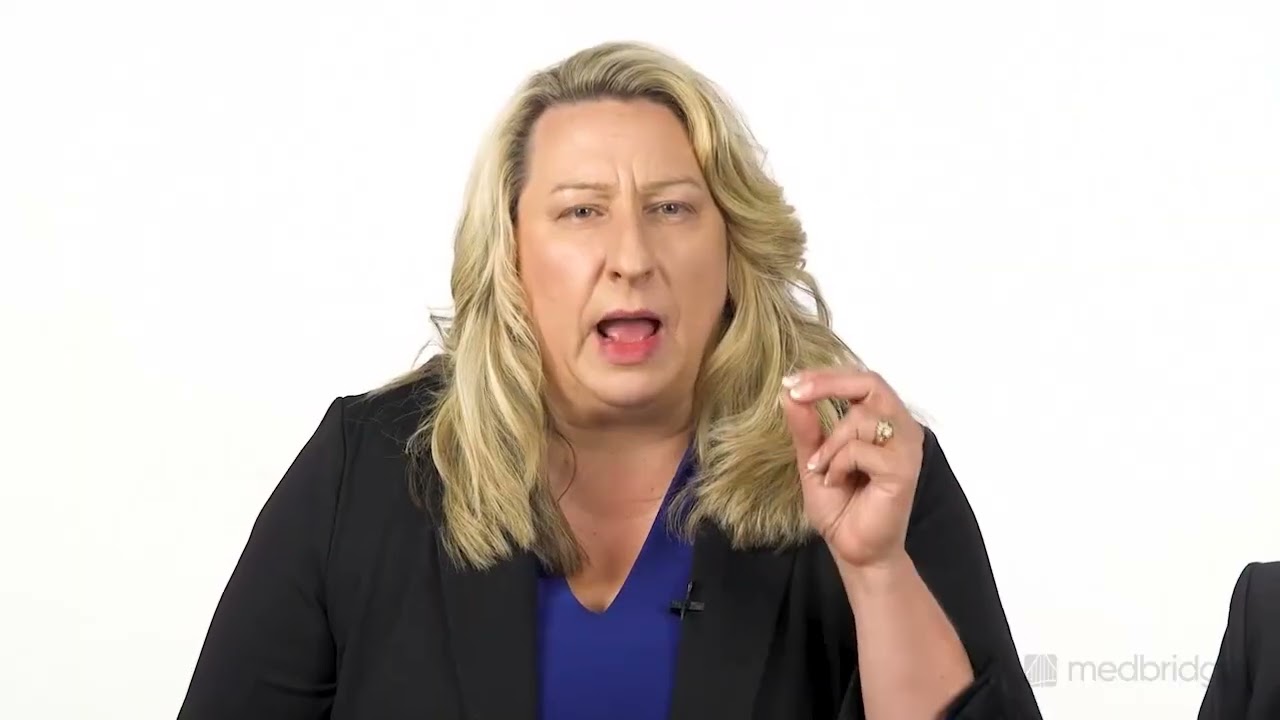
Below, watch J.J. Mowder-Tinney discuss assessing the environment using the four-step clinical framework in this brief clip from her and Angie Reimer’s Medbridge course, "Clinical Reasoning and Motor Learning: Higher-Level Mobility."
Meet the Authors



Subscribe to Our Newsletter
Related Posts
May 20, 2026
The Intentional HEP: 5 Task-Based Strategies That Improve Neuro Rehab Carryover
By Medbridge

August 20, 2025
Evidence-Based Fall Prevention for Older Adults: From Screening to Strength
By Medbridge

July 15, 2026
The Biggest Mistake in Assistive Technology Evaluations Starts with the Wrong Question
By Donna Case
April 28, 2026
When Everything Feels Urgent: How OTs Decide What Matters Most in Progressive Neuro Home Care
By Krista Covell-Pierson