Why Your Dementia Patients Fall at Night and What to Do About It
A practical framework that helps home health clinicians prevent nighttime falls in patients with dementia through pattern recognition, caregiver training, and early intervention.
October 26, 2026
4 min. read

Most falls in patients with dementia do not happen during supervised physical therapy sessions. They tend to happen during unobserved, unstructured moments, often at night, when cognition, environment, and physiological needs intersect.
In home health and hospice, clinicians see patients during scheduled visits, so continuous monitoring isn’t practical. Fall prevention has to rely on a different model, one grounded in pattern recognition, caregiver engagement, and rapid clinical response.
Falls in dementia are rarely random. They are often preceded by changes in behavior and function that a caregiver can notice and report. Recognizing and acting on these early signals is one of the best opportunities clinicians have to prevent a fall.
This article presents a practical framework built for home health clinicians caring for patients with cognitive impairment.
Limitations of Traditional Fall Risk Tools in Home Health
Standardized tools such as the Timed Up and Go (TUG), Berg Balance Scale, and Morse Fall Scale provide structured assessments, but they have clear limits in dementia care:
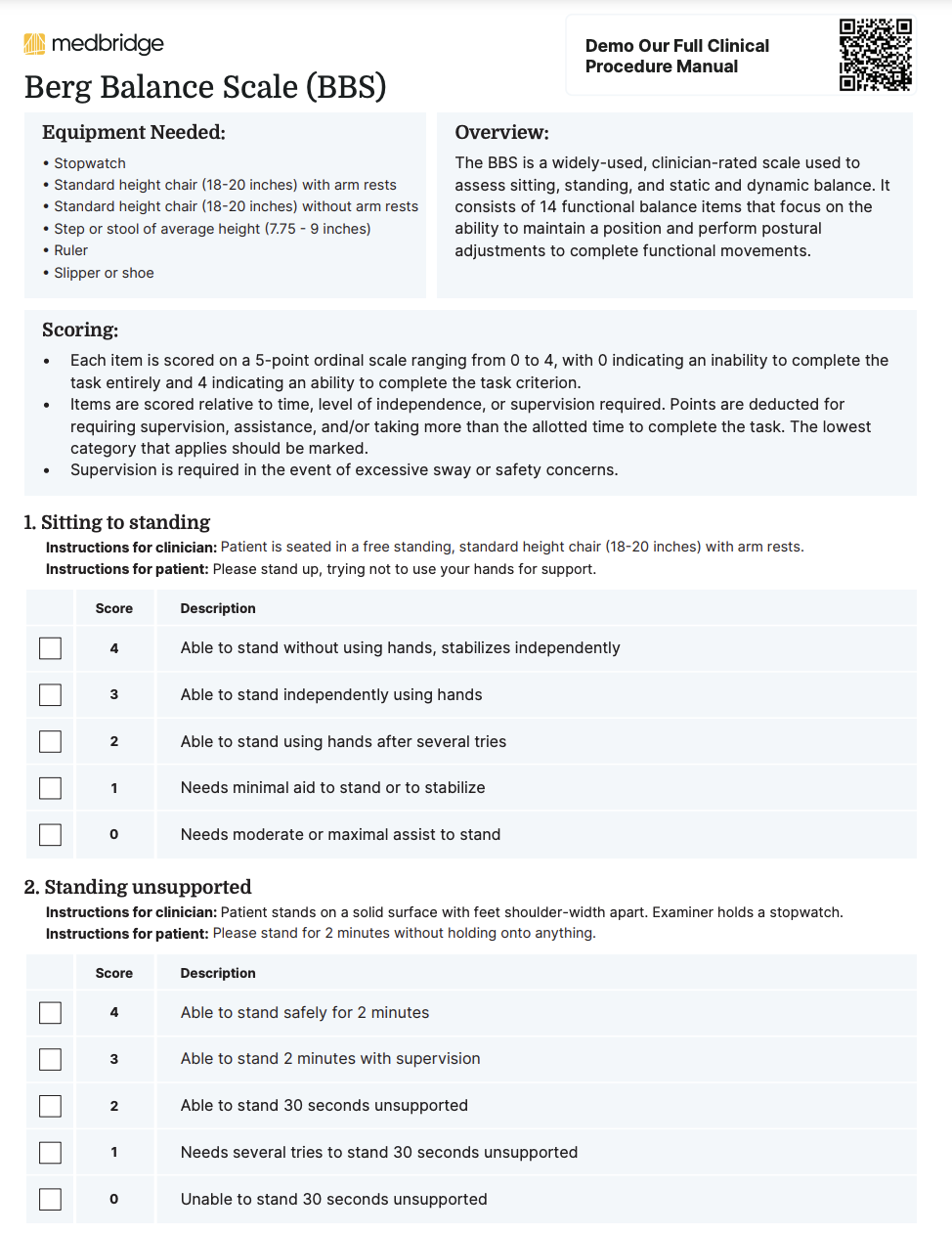
They capture performance at a single point in time rather than behavior in daily life.
They do not reflect fluctuations in cognition and function.
They emphasize historical risk over immediate changes.
They don’t translate directly into strategies a caregiver can use.
At home, where supervision is inconsistent, these limits matter even more.
Practice Tip: In dementia, a stable fall risk score does not mean stable fall risk.
Understanding Dynamic Fall Risk in Dementia
Fall risk in dementia comes from several factors that interact with each other:
Cognitive fluctuations (confusion, delirium, sundowning)
Physiological triggers (toileting urgency, dehydration, pain)
Environmental variables (lighting, layout, obstacles)
Medication timing and fatigue.
Together, these factors create a risk profile that shifts constantly, and a single assessment can’t capture it. Clinicians need an approach that tracks patterns over time.
Practice Tip: The most important predictor of a fall is often a recent change in behavior, not baseline impairment.
The Recognize, Interpret, Act Framework
This framework gives home health clinicians a structured, practical way to respond to changing fall risk:
Recognize: Identify early warning signs.
Interpret: Determine their clinical significance.
Act: Put targeted interventions in place right away.
The model puts clinical reasoning and caregiver collaboration ahead of reliance on technology.
Step 1: Recognize Early Warning Signs
Common early indicators include:
Increased nighttime waking or wandering
Frequent attempts to stand without assistance
A subtle decline in gait stability
Increased agitation or restlessness
Near falls or instability reported by the caregiver
These signs often come hours to days before a fall.
Practice Tip: Treat every near fall as a critical warning, not a minor incident.
Step 2: Interpret the Change
Clinicians have to decide whether a change is a passing variation or a meaningful decline. Key considerations:
Is the change new or progressive?
Are there contributing factors, such as an infection or a medication change?
Does this change increase immediate risk?
This is the step where clinical reasoning does work that a checklist can’t.
Practice Tip: In higher-functioning patients, even a small decline can signal a sharp rise in risk.
Step 3: Act with Targeted Interventions
Interventions should be simple, practical, and easy to start right away:
Nighttime waking → bedside commode, night lighting, scheduled toileting
Gait instability → assistive device reassessment, clutter reduction
Unsafe transfers → caregiver cueing strategies
Agitation → structured routines, calming strategies
Timeliness matters more than complexity.
Practice Tip: The best intervention is the one a caregiver can carry out consistently.
Case Example
An 82-year-old woman with moderate (stage 5) Alzheimer’s disease who was receiving home health physical therapy presented with increased nighttime waking and multiple near falls.
Using the Recognize, Interpret, Act framework:
Recognize: The caregiver reported more activity at night.
Interpret: The clinician identified a pattern pointing to rising fall risk.
Act: The team added a bedside commode, night lighting, scheduled toileting, and caregiver cueing.
Outcome: No falls over 30 days, less nighttime activity, and a more confident caregiver.
Clinical and System Level Impact
Adopting this framework can lead to:
Improved Patient Outcomes:
Reduced fall incidence and injury risk
Improved safety and independence
Improved Caregiver Outcomes:
Increased confidence
Reduced anxiety and burden
Improved System Outcomes:
Fewer hospitalizations
Improved quality metrics
Stronger alignment with value-based care
Implications for Clinical Practice
This approach reflects a broader shift in rehabilitation toward dynamic, patient-centered care. Clinicians who reason from patterns and bring caregivers into the plan are better prepared for the complexity of dementia care at home.
As more care moves into the home, practical frameworks like this one, which work across an entire caseload, will become essential.
Conclusion
Falls in dementia are often predictable when clinicians focus on patterns rather than isolated assessments. By recognizing early warning signs, interpreting changes carefully, and acting quickly, clinicians and caregivers can work together to reduce fall risk for patients with dementia living at home.
Meet the Author