
Lateral Knee Pain: Differential Diagnosis and Management
Presented by Dan Rhon
Lateral knee pain can arise from a variety of disorders, the most common being overuse injury, frequently observed in runners, cyclists, and other active populations. Most often attributed to iliotibial band friction syndrome (ITBFS), lateral knee pain can stem from multiple mechanical, anatomical, and training-related factors. This course provides a structured approach to understanding the anatomy and biomechanics of the lateral knee, identifying risk factors, conducting effective clinical assessments, and guiding evidence-informed, conservative treatment. Through clinical reasoning, special test demonstrations, and discussion of current best practices, learners will gain practical tools for differential diagnosis and management. This course is designed for physical therapists, athletic trainers, and rehabilitation professionals working in outpatient orthopedic and sports medicine settings.
Learning Outcomes
- Analyze the mechanisms contributing to common overuse injuries of the lateral knee, including the flexion–extension mechanics of the iliotibial band
- Categorize the key components of the subjective examination
- Determine the essential elements of a comprehensive knee physical examination and associated differential diagnoses
- Examine the evidence supporting exercise therapy in the management of lateral knee pain disorders
Meet your instructor

Dan Rhon
Dr. Dan Rhon is a clinician, active researcher, and assistant professor at Baylor University in Texas. He received an MPT and DSc through Baylor University and then a DPT through Temple University. He attended a manual therapy clinical fellowship at Brooke Army Medical Center in Texas, is a fellow in the American Academy of…
Chapters & learning objectives

1. Basic Anatomy and Biomechanics of the Lateral Knee Complex
This chapter explores the structure and function of the iliotibial band (ITB) and its interaction with surrounding musculature and bony landmarks. Understanding the biomechanical role of the ITB during movement is essential for identifying the sources of lateral knee pain and guiding clinical decisions.

2. Epidemiology and Etiology of Lateral Knee Pain
Clinicians will examine the prevalence, risk factors, and proposed mechanisms behind lateral knee pain, including ITBFS. This chapter discusses potential contributors such as compression of underlying structures, anatomical variations, and training errors, helping clinicians better profile at-risk individuals.
3. Subjective Evaluation
This chapter outlines the essential components of a thorough subjective assessment, emphasizing the patient’s description of symptom behavior, aggravating and easing factors, and training history. A well-structured subjective exam lays the groundwork for an accurate clinical hypothesis.
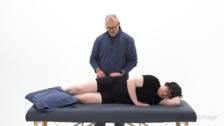
4. Objective Evaluation
In this chapter, learners will review physical examination techniques used to identify lateral knee pain, including the Noble test, Renne test, and Ober test. The focus is on reproducing the patient’s symptoms, assessing contributing movement patterns, and ruling out adjacent joint involvement to support a comprehensive differential diagnosis.

5. Overview of Best Evidence for Nonsurgical Management
This chapter presents current evidence and expert recommendations for conservative care of lateral knee pain, including strategies such as stretching, strengthening, manual therapy, and load management. While high-level evidence remains limited, clinicians will learn how to apply foundational rehabilitation principles to guide recovery and return to activity.
More courses in this series

Meniscus Injuries: Evaluation and Treatment Strategies
Dan Rhon

Lateral Knee Pain: Differential Diagnosis and Management
Dan Rhon
Muscle Impairments in Knee Disorders: Assessment and Care
Dan Rhon
Anterior Knee Pain: Assessment and Management Approaches
Dan Rhon
Knee Ligament Injuries: Evaluation and Rehabilitation
Dan Rhon
Frequently asked questions
Everything you need to know about Medbridge courses.
Who creates Medbridge courses?
We work with industry-leaders, top researchers, and consultants to build content roadmaps that are then structured into courses, filmed, and edited by our production team before being launched to our site.
How often does Medbridge release new courses?
New courses are added monthly and are automatically included in your subscription as they launch.
How often does Medbridge update courses?
Medbridge reviews its courses annually for relevance and to assess if content is up to date. Based on these reviews it may be determined that a course is out of date resulting in the course being re-filmed or retired, if the content is no longer needed (e.g. a replacement course already exists, the concepts are no longer best practice, etc.).
How many courses does Medbridge offer?
We have over 3,000 accredited courses and we are continually updating our library with new courses. Check our course library for the most up-to-date count for your discipline.
Are there any additional fees for taking a Medbridge course?
There are no additional fees for taking a Medbridge course, obtaining a course certificate of completion, earning CEUs as a subscriber, or accessing any of the additional tools your subscription may include.
Is there a limit to the number of courses I can take?
There is no limit to the number of courses you can take as a subscriber! As a subscriber to Medbridge, you have unlimited access to over 3,000+ accredited CE courses.
If you are a Premium subscriber, you also have unlimited access to our Patient Engagement Tools such as the Home Exercise Program, Patient Education Library, Orthopedic Exam Tests, and Manual Therapy Techniques. We have over 7,000 exercises and over 650+ videos and handouts of patient education resources with more exercises and patient education added to the library based on subscriber feedback, volume of request and specialities.
What is your refund policy?
You are eligible for a refund provided your request is received within 30 days of your subscription purchase and your account has no activity.