
Muscle Impairments in Knee Disorders: Assessment and Care
Presented by Dan Rhon
Muscle impairments are a significant yet often underappreciated factor in knee disorders and recovery. This course explores the critical role of muscular strength, coordination, and neuromuscular control in knee joint function, offering evidence-based insights into the physiological, biomechanical, and cognitive aspects of muscle performance. Participants will learn how to assess and address deficits in strength, flexibility, and control across both open- and closed-chain movements, with special focus on the quadriceps. This course also integrates principles of neurocognitive rehabilitation and aging-related muscle changes. Ideal for physical therapists, athletic trainers, and rehab professionals, this course provides a foundational approach to optimizing muscle function in patients with knee pain, injury, or postsurgical limitations.
Learning Outcomes
- Analyze the role that muscles play in the functional performance of the knee complex
- Distinguish the physiological and neurological components required for healthy muscle function
- Examine the influence of lower extremity muscle function on overall health
- Determine the essential elements of a proper assessment of lower extremity muscle function
Meet your instructor

Dan Rhon
Dr. Dan Rhon is a clinician, active researcher, and assistant professor at Baylor University in Texas. He received an MPT and DSc through Baylor University and then a DPT through Temple University. He attended a manual therapy clinical fellowship at Brooke Army Medical Center in Texas, is a fellow in the American Academy of…
Chapters & learning objectives
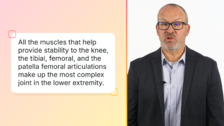
1. Anatomy and Function of the Knee-Stabilizing Muscles
This chapter introduces the major muscle groups that stabilize the knee, including flexors, extensors, and those influencing varus/valgus and translational control. A foundational understanding of how these muscles work in synergy—and are influenced by adjacent joints—is essential for rehabilitation planning.

2. Optimal Physiological Function of Muscle
Clinicians will explore the requirements for healthy muscle function, including load, nutrition, hormonal influences, and age-related changes. This chapter also introduces the “repetition continuum” and emphasizes the lifelong role of resistance training in maintaining strength and metabolic function.

3. Functional Implications of Common Muscle Impairments of the Knee
Focusing primarily on quadriceps insufficiency, this chapter explains how muscle weakness, motor control deficits, and joint mechanics contribute to instability, dysfunction, and joint degeneration. It also reviews open- versus closed-chain exercise principles and the synergistic role of the hip and calf muscles in knee function.
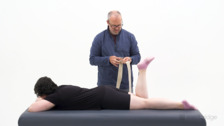
4. Assessment of Muscle Impairments Related to Knee Disorders
This chapter outlines a comprehensive approach to muscle function assessment, including strength, flexibility, dynamic control, and neurocognitive integration. Emphasis is placed on using both open- and closed-chain testing to guide treatment and track progress objectively.
More courses in this series

Meniscus Injuries: Evaluation and Treatment Strategies
Dan Rhon
Lateral Knee Pain: Differential Diagnosis and Management
Dan Rhon
Muscle Impairments in Knee Disorders: Assessment and Care
Dan Rhon
Anterior Knee Pain: Assessment and Management Approaches
Dan Rhon
Knee Ligament Injuries: Evaluation and Rehabilitation
Dan Rhon
Frequently asked questions
Everything you need to know about Medbridge courses.
Who creates Medbridge courses?
We work with industry-leaders, top researchers, and consultants to build content roadmaps that are then structured into courses, filmed, and edited by our production team before being launched to our site.
How often does Medbridge release new courses?
New courses are added monthly and are automatically included in your subscription as they launch.
How often does Medbridge update courses?
Medbridge reviews its courses annually for relevance and to assess if content is up to date. Based on these reviews it may be determined that a course is out of date resulting in the course being re-filmed or retired, if the content is no longer needed (e.g. a replacement course already exists, the concepts are no longer best practice, etc.).
How many courses does Medbridge offer?
We have over 3,000 accredited courses and we are continually updating our library with new courses. Check our course library for the most up-to-date count for your discipline.
Are there any additional fees for taking a Medbridge course?
There are no additional fees for taking a Medbridge course, obtaining a course certificate of completion, earning CEUs as a subscriber, or accessing any of the additional tools your subscription may include.
Is there a limit to the number of courses I can take?
There is no limit to the number of courses you can take as a subscriber! As a subscriber to Medbridge, you have unlimited access to over 3,000+ accredited CE courses.
If you are a Premium subscriber, you also have unlimited access to our Patient Engagement Tools such as the Home Exercise Program, Patient Education Library, Orthopedic Exam Tests, and Manual Therapy Techniques. We have over 7,000 exercises and over 650+ videos and handouts of patient education resources with more exercises and patient education added to the library based on subscriber feedback, volume of request and specialities.
What is your refund policy?
You are eligible for a refund provided your request is received within 30 days of your subscription purchase and your account has no activity.