
Making Sense of Executive Functions: What’s Missing From Our Explanations?
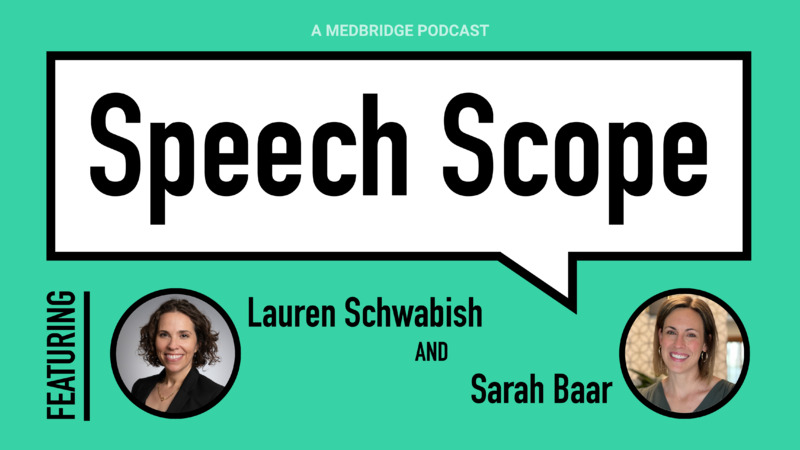
Presented by Sarah Baar and Lauren Schwabish
Audio Runtime: 52 Minutes; Learning Assessment Time: 21 Minutes
Lauren Schwabish, MS, CCC-SLP, a person-centered neuro SLP and private practice owner, joins host Sarah Baar at the 2025 American Speech-Language-Hearing Association (ASHA) Convention to unpack one of the trickiest topics in cognitive rehab—executive functions. With real questions and reflections from fellow SLPs, Sarah and Lauren delve into what executive functions truly are and how to discuss them in terms our clients can understand. Together, we explore how analogies, self-awareness, and health literacy can transform therapy into a more empowering and effective experience. If you’ve ever struggled to explain or treat executive dysfunction, this episode is for you.
Learning Objectives
- Analyze the evidence around how executive function challenges present in individuals with neurological conditions and their implications for therapy across care settings
- Determine the situations in which health literacy–informed communication strategies and person-centered executive function interventions provide the most benefit for improving self-awareness and therapy engagement
- Solve patient case scenarios involving executive dysfunction by applying functional assessment, strategic analogies, and structured feedback techniques to facilitate client insight and progress toward therapy goals
This is an audio-only course. Additional materials are available for download within the course. To receive continuing education credit, complete the course and the accompanying quiz.
Meet your instructors

Sarah Baar
Sarah Baar is a speech-language pathologist in Grand Rapids, Michigan. She has had the opportunity to work in many settings across the care continuum, including acute care, acute rehab, home and community, and outpatient therapy, and has been involved in various leadership projects. In 2016, she started the Honeycomb Speech…

Lauren Schwabish
Lauren Schwabish is the owner of Neuro Speech Services, a private practice based in Northern Virginia specializing in person-centered assessment and treatment of cognitive-communicative disorders related to stroke, brain injury, mild cognitive impairment, ADHD, and other neurologic and neurodegenerative conditions. Lauren…
Chapters & learning objectives
1. Making Sense of Executive Functions: What’s Missing From Our Explanations?
Join Sarah Baar and neuro SLP Lauren Schwabish at the 2025 ASHA Convention as they explore how to demystify executive functions for clients using real-world examples, practical strategies, and person-centered insights you can use right away.
More courses in this series

Is the Clock Drawing Test Still Relevant? Then What?
Sarah Baar and Samantha McDaniel

Severe Global Aphasia: Where Do I Start?
Sarah Baar and Treasyri Williams Wood

INCOG 2.0: How to Manage Cognitive Communication and Social Cognition
Sarah Baar and Penny Welch-West

My Aging Client Loses Their Train of Thought in Conversation—What Can I Do?
Sarah Baar and Alyssa Lanzi

How Can SLPs Think More Broadly About Decisions in Dysphagia Management?
Sarah Baar and Tim Stockdale

Is There Reason to Hope With PPA?
Sarah Baar and Lisa Wauters

What Is an SLP’s Role Related to Home Programs for People With Aphasia?
Sarah Baar and Sarah E. Wallace
Working Memory: How Can I Address This in a Meaningful Way?
Sarah Baar and Lauren Schwabish

What Should SLPs Know About Cancer-Related Cognitive Impairment?
Sarah Baar and Patricia Geels

How Can SLPs and ATCs Work Together for Sports Concussion Management?
Sarah Baar and Tabia Pope

How Can We Help Patients With Functional Voice Disorders Find Their Voice Again?
Sarah Baar and Adam T. Lloyd

How Can Respiratory Muscle Training Impact Neurodegenerative Diseases?
Sarah Baar and Brooke Richardson

AI Speech Therapy: What Ethical Considerations Should I Think About?
Sarah Baar and Nina Benway

Return to Work and TBI: How Can SLPs Help?
Sarah Baar and Peter Meulenbroek

Dysarthria and Life Participation: Where Do I Begin?
Sarah Baar and Carolyn Baylor

Palliative or Just Good Care? Where Does SLP Fit In?
Sarah Baar, Marta Kazandjian, and Cynthia X. Pan
What Is Proactive Dysphagia Treatment for Head and Neck Cancer?
Sarah Baar and Brooke McGivern
What’s the Colorado Motor Speech Framework, and How Do I Use It?
Sarah Baar and Allison Hilger
Dysphagia Decisions: What’s In and What’s Out?
Phyllis M. Palmer, Sarah Baar, and Aaron H. Padilla
Anosognosia: What Are Key Clinical Assessment Considerations for SLPs?
Sarah Baar and Allison Mezo
Anosognosia: What Are Key Clinical Treatment Considerations for SLPs?
Sarah Baar and Allison Mezo
Making Sense of Executive Functions: What’s Missing From Our Explanations?
Sarah Baar and Lauren Schwabish
Improving Conversation in Aphasia: What Is “ECoLoGiC-Tx” All About?
Sarah Baar and Marion Leaman
Surviving the ICU: How Can Communication Reduce PICS?
Sarah Baar and Vanessa Abraham

Future-Ready SLPs: How Can Clinicians Embrace AI and Digital Innovation?
Sarah Baar and Rinki Varindani Desai

Facial Nerve Paralysis: How Can Therapists and Surgeons Collaborate?
Sarah Baar, G. Nina Lu, and Emily Wilson
My Client Doesn’t Want to Do Therapy: Where Do I Begin? (Live Podcast Recording)
Sarah Baar and Treasyri Williams Wood
Dysphagia Mythbusting: How Do We Facilitate QoL With Compromise?
Sarah Baar and Amber Heape
Dysphagia Management and Cough Rehab: How Can SLPs Assess and Treat?
Sarah Baar and James Curtis
Beyond 92507: How Can Medical SLPs Prepare for the 2027 Coding Transition?
Sarah Baar and Heather M. Scheer
Voice Banking and Cloning: How Can We Help Clients Maintain Their Identity?
Sarah Baar and Abygail Marx
Strength vs. Skill for Dysphagia (Re)hab: How Do We Choose? (Live Podcast Recording)
Sarah Baar and James Curtis
Frequently asked questions
Everything you need to know about Medbridge courses.
Who creates Medbridge courses?
We work with industry-leaders, top researchers, and consultants to build content roadmaps that are then structured into courses, filmed, and edited by our production team before being launched to our site.
How often does Medbridge release new courses?
New courses are added monthly and are automatically included in your subscription as they launch.
How often does Medbridge update courses?
Medbridge reviews its courses annually for relevance and to assess if content is up to date. Based on these reviews it may be determined that a course is out of date resulting in the course being re-filmed or retired, if the content is no longer needed (e.g. a replacement course already exists, the concepts are no longer best practice, etc.).
How many courses does Medbridge offer?
We have over 3,000 accredited courses and we are continually updating our library with new courses. Check our course library for the most up-to-date count for your discipline.
Are there any additional fees for taking a Medbridge course?
There are no additional fees for taking a Medbridge course, obtaining a course certificate of completion, earning CEUs as a subscriber, or accessing any of the additional tools your subscription may include.
Is there a limit to the number of courses I can take?
There is no limit to the number of courses you can take as a subscriber! As a subscriber to Medbridge, you have unlimited access to over 3,000+ accredited CE courses.
If you are a Premium subscriber, you also have unlimited access to our Patient Engagement Tools such as the Home Exercise Program, Patient Education Library, Orthopedic Exam Tests, and Manual Therapy Techniques. We have over 7,000 exercises and over 650+ videos and handouts of patient education resources with more exercises and patient education added to the library based on subscriber feedback, volume of request and specialities.
What is your refund policy?
You are eligible for a refund provided your request is received within 30 days of your subscription purchase and your account has no activity.