
OT in the Home: Foundations of Assistive Tech and Equipment
Presented by Krista Covell-Pierson
With the rapid evolution of assistive technology (AT), occupational therapy practitioners must be equipped to integrate both high- and low-tech solutions into home-based care. This course introduces foundational concepts in AT and durable medical equipment (DME) relevant to home settings, guiding clinicians through the process of evaluation, selection, funding, implementation, and collaboration with suppliers. Through the lens of occupational therapy frameworks such as PEO and MOHO, learners will explore how to address common challenges related to mobility, cognition, home management, and safety using a range of supportive technologies. The course provides clinical reasoning tools, real-world treatment examples, and guidance on goal writing to ensure successful and meaningful outcomes for clients. This course is intended for occupational therapy practitioners working in home health, community-based practice, or outpatient services where home safety and function are a priority.
Learning Objectives
- Identify at least three categories of assistive technology and equipment commonly used in home-based occupational therapy practice
- Recognize key factors in evaluating a client's home environment to determine appropriate low-tech and high-tech supports
- List important considerations for collaborating with suppliers, vendors, and Assistive Technology Professionals (ATPs) in the selection and provision of assistive devices
- Select assistive technology solutions that support participation in occupations such as bathing, dressing, communication, and meal preparation within the home environment
Meet your instructor

Krista Covell-Pierson
Krista Covell-Pierson is the owner and founder of Covell Care and Rehabilitation, an innovative mobile outpatient practice designed to help adults and older adults live safer, more independent, and engaged lives at home and in their communities. She developed this one-of-a-kind model from the ground up, integrating…
Chapters & learning objectives
1. Why Should OTPs Consider Assistive Technology Recommendations at Home?
This chapter introduces the scope and evolution of AT and the growing expectations for OT involvement in its recommendation and training. It explores how AT supports participation across life areas and diagnoses and why its integration into home-based care is essential. Key frameworks are introduced to support a holistic, client-centered approach.
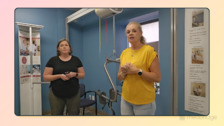
2. Where to Start With AT at Home?
This chapter reviews categories of AT across functional domains including self-care, mobility, cognition, and fatigue management, highlighting both high-tech and low-tech solutions. Practical guidance is provided for evaluating the home, modifying the OT toolkit, and identifying funding sources. Clinicians are encouraged to ask targeted questions to align interventions with client priorities and available resources.
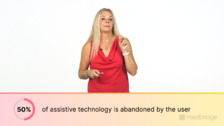
3. Assessments to Use in the Home
In this chapter, learners are introduced to assessment tools such as the Matching Person & Technology Model and Functional Mobility Assessment, which align with WHO’s ICF framework. These tools help guide clinical decision-making for AT and DME use. The chapter also outlines key steps for collaborating with suppliers and determining fit, funding, and functional outcomes.
4. Treatment Interventions for Safety and Implementation
This chapter presents a practical approach to integrating AT into treatment, including strategies for clinical reasoning, documentation, and training. Through detailed case examples, learners will examine how to scale interventions from low to high tech across mobility, cognition, and complex seating. The chapter also clarifies the roles of OTPs versus suppliers to support efficient, client-focused care.
5. Where Do We Go From Here?
The final chapter focuses on discharge planning, client education, and continuity of care. Learners will explore how to leave patients with clear guidance on device use, maintenance, and follow-up. The chapter also emphasizes professional growth, interprofessional collaboration, and staying current in the fast-moving field of assistive technology.
More courses in this series

OT in the Home: Guided Safety and Environmental Assessments
Krista Covell-Pierson
OT in the Home: Foundations of Assistive Tech and Equipment
Krista Covell-Pierson
OT in the Home: Interventions for Low Vision
Krista Covell-Pierson
OT in the Home: Addressing Progressive Neurological Conditions
Krista Covell-Pierson
OT in the Home: Managing Chronic Pain and Fatigue
Krista Covell-Pierson

OT in the Home: Pelvic Health Strategies for General Practitioners
Krista Covell-Pierson

OT in the Home: Addressing Depression, Anxiety, and Isolation
Krista Covell-Pierson

OT in the Home: Reducing Caregiver Burden and Connecting Resources
Krista Covell-Pierson
Frequently asked questions
Everything you need to know about Medbridge courses.
Who creates Medbridge courses?
We work with industry-leaders, top researchers, and consultants to build content roadmaps that are then structured into courses, filmed, and edited by our production team before being launched to our site.
How often does Medbridge release new courses?
New courses are added monthly and are automatically included in your subscription as they launch.
How often does Medbridge update courses?
Medbridge reviews its courses annually for relevance and to assess if content is up to date. Based on these reviews it may be determined that a course is out of date resulting in the course being re-filmed or retired, if the content is no longer needed (e.g. a replacement course already exists, the concepts are no longer best practice, etc.).
How many courses does Medbridge offer?
We have over 3,000 accredited courses and we are continually updating our library with new courses. Check our course library for the most up-to-date count for your discipline.
Are there any additional fees for taking a Medbridge course?
There are no additional fees for taking a Medbridge course, obtaining a course certificate of completion, earning CEUs as a subscriber, or accessing any of the additional tools your subscription may include.
Is there a limit to the number of courses I can take?
There is no limit to the number of courses you can take as a subscriber! As a subscriber to Medbridge, you have unlimited access to over 3,000+ accredited CE courses.
If you are a Premium subscriber, you also have unlimited access to our Patient Engagement Tools such as the Home Exercise Program, Patient Education Library, Orthopedic Exam Tests, and Manual Therapy Techniques. We have over 7,000 exercises and over 650+ videos and handouts of patient education resources with more exercises and patient education added to the library based on subscriber feedback, volume of request and specialities.
What is your refund policy?
You are eligible for a refund provided your request is received within 30 days of your subscription purchase and your account has no activity.