
Simple Fall Prevention: What Interventions Work Without Wi-Fi or Apps?
Presented by Carol Chiang
Audio Runtime: 53 Minutes; Learning Assessment Time: 21 Minutes
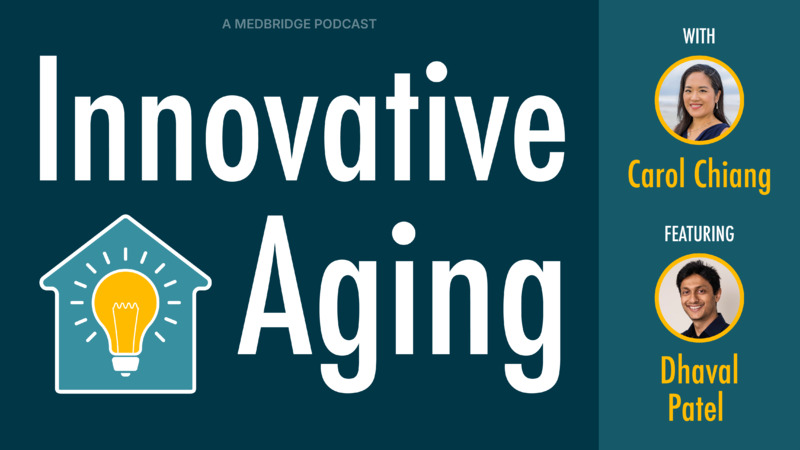
Dhaval Patel, former Apple engineer and founder of Lotus, joins host Carol Chiang to explore fall prevention strategies that don’t rely on apps, Wi-Fi, or complex installations. Carol and Dhaval dig into why tech doesn’t always equal accessibility—and how simple, portable tools can still make a powerful impact on safety and independence. Together, they uncover which interventions are a fit for real-life aging adults, whether you're working in the home, clinic, or community. Tune in to learn how you can match the right tech to the right patient—without adding frustration or hassle.
Guest Bio: Dhaval Patel, a former Apple engineer, is the founder and CEO of Lotus. An electrical and aerospace engineer, he holds Bachelor‘s and Master‘s degrees from Georgia Tech. After over eight years at Apple managing a division for iPhone, Apple Watch, and AirPods, he set out to solve a personal challenge—being born with "twisted knees," a condition shared with his brother. His solution, the Lotus Ring, is a wearable that controls home objects by simply pointing, without an app, rewiring, or Wi-Fi. On this episode, he joins host Carol Chiang to discuss making technology easy for patients, matching solutions to individuals, and how evidence-based tools can prevent falls, improve quality of life, and foster independence and dignity. Lotus is now a VC-backed startup supported by leaders including the former CIO of NVIDIA and Stanford, a former NFL player, and AARP.
Disclosure: Our guest today is affiliated with a company that develops technology in the area we’re discussing. While we won’t be endorsing any specific product, listeners should be aware of this connection as part of our commitment to transparency.
Learning Outcomes
- Analyze the evidence around the limitations of Wi-Fi-dependent smart home technology in fall prevention and independence support
- Determine the situations in which simple, portable, and privacy-respecting assistive technologies provide the most benefit for individuals at risk of falls
- Solve patient case scenarios involving fall risk reduction by applying human-centered, behavior-conserving interventions that increase environmental control and reduce caregiver burden
This is an audio-only course. Additional materials are available for download within the course. To receive continuing education credit, complete the course and the accompanying quiz.
Meet your instructor

Carol Chiang
Carol Chiang is a globally recognized aging-in-place expert, occupational therapist, Parkinson’s advocate, and host of Innovative Aging, a Medbridge podcast exploring cutting-edge innovations in aging. With more than 27 years of clinical experience, Carol is known for blending practicality with compassion, focusing on…
Chapters & learning objectives
More courses in this series
How Do We Have a Proactive Conversation About Grab Bars?
Carol Chiang
Toilet Safety: The Missing Link for Social Engagement and Happiness?
Carol Chiang
Dressing With Dignity: Can Adaptive Apparel Promote ADL Success?
Carol Chiang
Dementia Care Reimagined: Can Difficult Behaviors Be Controlled Without Medication?
Carol Chiang
Kitchen Safety Strategies: How Can Technology Support Aging Adults?
Carol Chiang
Future of Fall Prevention: Can Objective Data Empower Clients?
Carol Chiang
Assisted Bathing: How Can We Promote Modesty, Comfort, and Cooperation?
Carol Chiang
Simple Fall Prevention: What Interventions Work Without Wi-Fi or Apps?
Carol Chiang
Live Virtual Travel: Can It Drive Motivation, Interest, and Engagement?
Carol Chiang
Science Friction: Can Bed Mobility Be Easier for Patients and Caregivers?
Carol Chiang
Tremor Management: Can Social Isolation Be Reduced With Earthquake Tech?
Carol Chiang
Aging in Place: Is the PEO Model the Key to Success? (Live Podcast Recording)
Carol Chiang and Pamela E. Toto
Aging in Place: How Do We Navigate the Reimbursement Gap?
Carol Chiang
Cognitive Impairment and Phones: Can Simplified Devices Prolong Connection?
Carol Chiang
Frequently asked questions
Everything you need to know about Medbridge courses.
Who creates Medbridge courses?
We work with industry-leaders, top researchers, and consultants to build content roadmaps that are then structured into courses, filmed, and edited by our production team before being launched to our site.
How often does Medbridge release new courses?
New courses are added monthly and are automatically included in your subscription as they launch.
How often does Medbridge update courses?
Medbridge reviews its courses annually for relevance and to assess if content is up to date. Based on these reviews it may be determined that a course is out of date resulting in the course being re-filmed or retired, if the content is no longer needed (e.g. a replacement course already exists, the concepts are no longer best practice, etc.).
How many courses does Medbridge offer?
We have over 3,000 accredited courses and we are continually updating our library with new courses. Check our course library for the most up-to-date count for your discipline.
Are there any additional fees for taking a Medbridge course?
There are no additional fees for taking a Medbridge course, obtaining a course certificate of completion, earning CEUs as a subscriber, or accessing any of the additional tools your subscription may include.
Is there a limit to the number of courses I can take?
There is no limit to the number of courses you can take as a subscriber! As a subscriber to Medbridge, you have unlimited access to over 3,000+ accredited CE courses.
If you are a Premium subscriber, you also have unlimited access to our Patient Engagement Tools such as the Home Exercise Program, Patient Education Library, Orthopedic Exam Tests, and Manual Therapy Techniques. We have over 7,000 exercises and over 650+ videos and handouts of patient education resources with more exercises and patient education added to the library based on subscriber feedback, volume of request and specialities.
What is your refund policy?
You are eligible for a refund provided your request is received within 30 days of your subscription purchase and your account has no activity.