
Speech Treatment Post Deep Brain Stimulation in Parkinson’s Disease
Presented by Cynthia M. Fox
The LSVT LOUD was developed and patented as a licensed technology trademarked as the LSVT LOUD®. Because there are no other similar products available, this course will only cover information that pertains to the effective and safe use of the above-named product(s).
This presentation will focus exclusively on and will not include information other similar or related products.
Financial: Cynthia Fox is an employee and Cofounder of LSVT Global, Inc. She received a lecture honorarium from LSVT Global, Inc. and has financial interest in the company. There is no financial interest beyond the production of this course.
Angela Halpern is an employee of LSVT Global, Inc. She received a lecture honorarium from LSVT Global, Inc. There is no financial interest beyond the production of this course.
Elina Tripoliti received a lecture honorarium from LSVT Global, Inc. There is no financial interest beyond the production of this course.
Non-Financial: Cynthia Fox Nonfinancial relationships include a preference for the LSVT LOUD as a treatment technique and has no other competing non-financial interests or relationships with regard to the content presented in this course. Non-financial: Angela Halpern has a preference for the LSVT LOUD as a treatment technique and has no other competing non-financial interests or relationships with regard to the content presented in this course.
Non-financial: Elina Tripoliti has a preference for the LSVT LOUD as a treatment technique and has no other competing non-financial interests or relationships with regard to the content presented in this course.
Deep brain stimulation (DBS) surgery is an effective treatment for select motor symptoms in people with Parkinson’s disease (PD). Unfortunately, speech and voice symptoms are not consistently improved post DBS surgery, and in some cases are worsened. Understanding the impact of DBS on speech and effective speech treatment approaches has the potential to improve communication outcomes for people post DBS. This course will briefly describe DBS surgery for PD, inform participants about voice and speech changes often encountered in individuals post DBS, and describe research on the impact of electrode placement of DBS targeting the subthalamic nucleus (DBS-STN) on voice and speech in people with PD. Research on the longitudinal effects of DBS-STN on speech and voice and how speech treatment (LSVT LOUD) may improve communication post DBS-STN will be explored. Finally, additional treatment options that may maximize speech and communication for patients post DBS-STN will be reviewed.
Meet your instructor
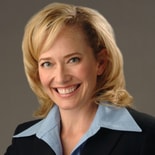
Cynthia M. Fox
Cynthia Fox, PhD, CCC-SLP, received her doctorate degree in speech and hearing sciences from the University of Arizona, Tucson. Her training focused in the areas of neuroscience and motor control. She is an expert on rehabilitation, neuroplasticity, and the role of exercise in the improvement of function consequent to neural…
Chapters & learning objectives

1. Deep Brain Stimulation and Its Impact on Speech in People With Parkinson’s Disease
This chapter briefly describes DBS surgery and the impact it can have on speech and voice in people with PD. This information provides a basis for what we can do as SLPs to treat speech disorders post DBS surgery.

2. Deep Brain Stimulation and Its Impact on Speech in People With Parkinson’s Disease: Expert Interview
Building on the descriptions provided in chapter 1, this chapter explores the impact of DBS of the subthalamic nucleus (DBS-STN) in greater detail through an expert interview with Dr. Elina Tripoliti. Dr. Tripoliti shares her research and clinical experience from being part of a leading DBS-STN speech research team at the National Hospital for Neurology and Neurosurgery, Unit of Functional Neurosurgery, Queen Square, London, UK. She describes the impact of medial versus lateral electrode placement and longitudinal effects of DBS-STN on speech, and highlights emerging advances in DBS-STN that may improve speech outcomes in the future.

3. Speech Treatment (LSVT LOUD) and DBS
The broad role of speech rehabilitation for people post DBS-STN is highlighted, focusing on both pre DBS-STN and post DBS-STN goals. LSVT LOUD treatment concepts are introduced as an example of an evidence-based speech treatment for people with Parkinson's disease. The use of LSVT LOUD pre DBS-STN is introduced. Current research on the use of LSVT LOUD with people post DBS-STN is discussed.

4. Maximizing LSVT LOUD Delivery to Enhance Outcomes for Patients Post DBS
To provide the best speech treatment outcomes possible for people post DBS-STN, the "dos and don’ts" for maximizing treatment outcomes with LSVT LOUD will be explored. This chapter will feature an expert interview with Angela Halpern, MS, CCC-SLP, chief clinical officer for LSVT LOUD, where she reviews strategies for maximizing treatment outcomes across LSVT LOUD exercises and explains general treatment tips for maximizing treatment outcomes post DBS-STN.

5. LSVT LOUD Plus
This final chapter will describe additional behavioral treatments to improve communication after LSVT LOUD and DBS-STN. These include additional behavioral treatment cues, device-based options, and general communication strategies that may improve communication post DBS-STN.
More courses in this series

Speech Treatment Post Deep Brain Stimulation in Parkinson’s Disease
Cynthia M. Fox

Interprofessional Practice for Parkinson's: LSVT BIG and LSVT LOUD
Cynthia M. Fox, Laura Gusé, and Erica Vitek

Sensory Recalibration for Improving Speech in Parkinson’s Disease
Cynthia M. Fox

A Primer in a Parkinson's-Specific Occupational Therapy Program
Erica Vitek

Childhood Motor Speech Disorders: Neuroplasticity and LSVT LOUD
Cynthia M. Fox
Frequently asked questions
Everything you need to know about Medbridge courses.
Who creates Medbridge courses?
We work with industry-leaders, top researchers, and consultants to build content roadmaps that are then structured into courses, filmed, and edited by our production team before being launched to our site.
How often does Medbridge release new courses?
New courses are added monthly and are automatically included in your subscription as they launch.
How often does Medbridge update courses?
Medbridge reviews its courses annually for relevance and to assess if content is up to date. Based on these reviews it may be determined that a course is out of date resulting in the course being re-filmed or retired, if the content is no longer needed (e.g. a replacement course already exists, the concepts are no longer best practice, etc.).
How many courses does Medbridge offer?
We have over 3,000 accredited courses and we are continually updating our library with new courses. Check our course library for the most up-to-date count for your discipline.
Are there any additional fees for taking a Medbridge course?
There are no additional fees for taking a Medbridge course, obtaining a course certificate of completion, earning CEUs as a subscriber, or accessing any of the additional tools your subscription may include.
Is there a limit to the number of courses I can take?
There is no limit to the number of courses you can take as a subscriber! As a subscriber to Medbridge, you have unlimited access to over 3,000+ accredited CE courses.
If you are a Premium subscriber, you also have unlimited access to our Patient Engagement Tools such as the Home Exercise Program, Patient Education Library, Orthopedic Exam Tests, and Manual Therapy Techniques. We have over 7,000 exercises and over 650+ videos and handouts of patient education resources with more exercises and patient education added to the library based on subscriber feedback, volume of request and specialities.
What is your refund policy?
You are eligible for a refund provided your request is received within 30 days of your subscription purchase and your account has no activity.