
Pain Science for the SLP
Presented by Claire Ligon

Description
This course provides a comprehensive foundation in modern pain science specifically tailored for speech-language pathologists. Many clinicians encounter patients presenting with complex symptoms such as odynophonia, odynophagia, globus sensation, and laryngeal hypersensitivity, yet standard education often lacks instruction on the neurobiological drivers behind these complaints. By integrating the revised International Association for the Study of Pain (IASP) definition of pain, learners will explore the critical distinction between nociception and the personal, multidimensional experience of pain. The curriculum deconstructs the trigeminocervical complex and the central cortical processing pathways that influence sensory perception in the head and neck. Clinicians will examine the molecular and neurochemical mediators responsible for peripheral and central sensitization, leading to nociplastic changes and cortical reorganization. This transition from acute to chronic pain states is analyzed through a neuroimmune lens to illustrate how long-standing discomfort becomes an inaccurate measure of tissue health. Participants will gain the knowledge necessary to analyze psychosocial factors and reframe patient experiences using science-based education.
Instructor
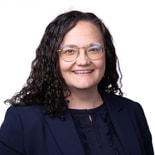
Claire Ligon, MEd, CCC-SLP
Claire Ligon is an Assistant Professor in the Johns Hopkins Department of Otolaryngology–Head and Neck Surgery. She earned her Bachelor of Science in Biochemistry and Molecular Biology from the University of Richmond and her Master of Education in Speech-Language Pathology from the University of Virginia. She completed her…
Learning Objectives
- Integrate updated pain science understanding of the definition of pain into the understanding of clinical presentations of patients with voice and laryngeal pain.
- Analyze the psychosocial realities of patients with voice and swallowing pain to inform client-centered treatment planning.
- Deconstruct the basic components of the pain system to identify specific neurophysiological drivers in an SLP context.
- Diagram the mechanism of nociplastic change to illustrate its impact on functional swallow or voice outcomes.
Agenda
All times in Eastern Time.
- 6:00pm–6:25pm
- Chapter 1: New Conceptualization
- 6:25pm–6:35pm
- Chapter 2: Our Pain System
- 6:35pm–6:45pm
- Chapter 3: Nociplastic Change
- 6:45pm–6:50pm
- Break
- 6:50pm–7:05pm
- Question and Answer Session
Medbridge is committed to accessibility for all of our subscribers. If you are in need of a disability-related accommodation, please contact [email protected] . We will process requests for reasonable accommodation and will provide reasonable accommodations where appropriate, in a prompt and efficient manner.
Details
- November 2, 2026
- 6:00pm-7:05pm EST
-
- SLPs, Intermediate
- Register soon to secure your spot!
Register for Webinar
November 2, 2026
6:00pm-7:05pm EST
Register for Webinar
* Available November 2
Disclaimer
Disclosure: Claire Ligon, instructor for this educational event, receives compensation from Medbridge for this course. No one with the ability to control content has relevant relationship(s) to disclose.
Accreditation
Requirements
"Live" CEUs
Even if this webinar is accredited for your discipline and location, it may not count as a
“Live” CEU.
Approved Status applies to “Live” requirement for: AR, DC, FL, IL, IN, KY, NE, NJ, NC, OK, TN, TX, VA DE, FL, KS, NY, TN, AOTA BOC, FL CA, CT, ME, MS, ASHA"Live" CEUs
PT/PTA
OT/OTA
AT
SLP
Check Accreditation
How to Prepare
- Review our tips for a successful webinar experience
- Test your computer