
The Real Reason Readmissions Persist (and What to Fix First)
Stop treating the discharge as a final task and start treating the transition as the patient’s most critical condition. Learn how to identify the social barriers fueling readmissions and implement proven frameworks that secure the bridge from hospital to home.
April 27, 2026
10 min. read
.jpg)
If you’ve been in case management for a while, you remember the 2007 MedPAC report. It was the watershed moment that redefined how we look at hospital efficiency. That report revealed that nearly $17.4 billion of Medicare spending was tied to unplanned readmissions and, more importantly, 69 percent of those were deemed preventable.1 This established the foundation for modern readmission prevention, shifting our focus toward the quality, equity, and sustainability of care.
Since then, we’ve shifted from a culture of "heads in beds" to one of value-based care. Yet, as of 2022, over 80 percent of hospitals evaluated by CMS were still being penalized for their readmission rates.2 This tells me that while we have the data, we are still missing the mark on the why. To move the needle, we must look past the clinical diagnosis and start treating the transition itself as the patient’s most critical condition.
The access trifecta: why patients really return
Research and lived experience consistently point to three major non-clinical barriers that fuel readmissions and what I call the access trifecta. If we aren't screening for these with the same rigor we use for heart failure or chronic obstructive pulmonary disease (COPD), we are setting our patients up to fail.
Prescription access: This isn’t just about "did they fill the script?" It’s about medication non-adherence due to cost, confusion, or the simple lack of pharmacy coordination.
Care access: We see this every day—the patient who is discharged but can’t get a primary care or specialty appointment for three weeks. That delay is a direct road back to the emergency room.
Transportation: If a patient can’t get to the pharmacy to pick up their meds or to the clinic for their follow-up, the best clinical plan in the world is useless.
We have to move toward targeted interventions like "meds-to-beds" programs and partnerships with non-emergent medical transport. Success requires an ecosystem that spans the hospital, the clinic, and the patient’s living room.
The clinician’s toolkit: proven transitional models
Identifying barriers like the access trifecta is only the first step. The second is implementing a structured framework that ensures no patient falls through the cracks. We don't have to reinvent the wheel here. Over the last two decades, several foundational blueprints have emerged in evidence-based practice to help clinicians standardize the transition process. These models move us away from fragmented, check-the-box discharge planning and toward a multidisciplinary approach that targets specific patient risks.
Choosing the right model depends on your clinical setting and the unique needs of your patient population:3
Model | Primary focus | Key differentiator |
Project RED (Re-Engineered Discharge) | Structured discharge planning | Uses the After-Hospital Care Plan (AHCP), a plain-language, patient-friendly summary. |
CTI (Care Transitions Intervention) | Patient self-management | Developed by Dr. Eric Coleman; utilizes a "transition coach" for 30 days post-discharge. |
BOOST (Better Outcomes by Optimizing Safe Transitions) | Comprehensive checklists | Created by the Society of Hospital Medicine; focuses heavily on risk identification and teach-back. |
Naylor TCM (Transitional Care Model) | Complex older adults | Features advanced practice nurses (APNs) who coordinate care throughout the post-discharge phase. |
INTERACT | Skilled nursing facilities | Focuses on early detection of status changes to prevent unnecessary acute care transfers. |
Closing the loop with SAFEDC
While these models provide structure, we need a framework that specifically targets the socioeconomic gaps we often miss. One of the most versatile blueprints for medically and socially complex individuals is the SAFEDC model. It’s not just a checklist. It’s a way to structure our empathy and operational excellence.3
Socioeconomic screening—We start by identifying the logistics: food insecurity, housing instability, and financial strain. A plan that isn’t logistically feasible is just a piece of paper.
Activation—We use motivational interviewing to empower the patient. Do they own their care plan, or are they just listening to us talk?
Follow-up—This is the bridge over the second gap. That critical three- to fourteen-day window after discharge, where care often fragments.
Education—We must move beyond handing out packets. We need culturally competent, teach-back-informed patient education that focuses on red-flag symptoms.
Discharge readiness—Clinical stability is not the same as functional readiness. Can they safely manage at home? Do they understand the plan?
Consistency—This is about system accountability. Standardizing workflows so the message is the same from the nurse, the case manager, and the doctor.
Innovation: AI, NLP, and digital dopamine
The future is moving from reactive response to predictive care. Technology acts as an accelerator for our clinical judgment, allowing us to maintain touchpoints with patients even when we aren't physically present. By integrating artificial intelligence (AI) with our EMRs, we can move beyond static scores like LACE or HOSPITAL. AI layers analyze real-time data to flag high-risk patients with precision before the discharge order is even signed.
A significant breakthrough is Natural Language Processing (NLP). Traditional systems often miss the rich context buried in social work notes or narrative nursing assessments. NLP acts as a digital set of eyes, extracting "hidden" risk factors (such as a mention of caregiver strain or a broken refrigerator) and triggering proactive community referrals while the patient is still in the hospital.4
We’re also seeing the rise of gamification in patient engagement. By utilizing digital dopamine (the same neurological reward system that makes social media addictive), we can keep patients engaged in their self-management.5 Apps like Heart Failure Coach allow patients to manage a character named Simon, letting them see the immediate consequences of lifestyle choices in a safe, role-playing environment that builds real-world health confidence.
The pharmacist: your new best friend
If you aren't working closely with your pharmacist, you’re missing a key piece of the puzzle. Medication-related issues, ranging from prescribing errors to patient misunderstanding, remain one of the leading contributors to preventable hospital readmissions. Historically, pharmacists have often been seen as peripheral players in the discharge process, but their clinical expertise is actually the glue that holds a transition together.
Pharmacists are essential for bridging the gap between inpatient and outpatient medication regimens. They should be integrated into the care team to conduct bedside counseling, resolve therapeutic duplications, and coordinate with primary care providers to address discrepancies.
Programs like "meds-to-beds" are a game-changer, and they streamline the process by delivering discharge prescriptions directly to the patient’s bedside prior to leaving the hospital.6 This eliminates the common post-discharge delay of waiting on a pharmacy fill or struggling with transportation to pick up a new regimen, ensuring the patient has immediate access to the therapy they need for a successful recovery.
A call to action for the modern case manager
As we move further into value-based reimbursement models, transitioning from legacy programs to the new TEAM Model and Accountable Care Organizations (ACOs), our roles as case managers are expanding. You are no longer just a discharge planner; you are a strategic leader in a system that rewards outcomes over volume. You are:7
A connector: Aligning hospital resources with community supports like food pantries and housing services.
A system navigator: Guiding patients through the maze of telehealth and digital platforms.
An equity advocate: Addressing the social determinants that make recovery harder for our underserved populations.
A change agent: Leading quality improvement teams and using data to redesign broken workflows.
This work is challenging, but it is also where the most profound impact happens. I challenge you to look at every discharge not as a task to be completed, but as a bridge to be built. The future of readmission reduction will be written by those of us who step up and lead.
Building the bridge to sustainable care
Reducing readmissions has evolved from a simple regulatory requirement into a comprehensive strategy that reflects the quality, equity, and sustainability of our healthcare system. It is no longer just a compliance task, but a strategic imperative centered on patients' lived realities. By blending data, empathy, and clinical insight with community partnership, we do more than just lower percentages. We transform the lives of our patients and strengthen the bridge from hospital to home.
If you are interested in taking the next step in mastering these transitions, explore my full Medbridge course series to dive deeper into the strategies shaping the future of case management:
Reducing Readmissions Part 1: Understanding the Landscape – Gain foundational insight into the structure and history of the Hospital Readmissions Reduction Program (HRRP). This course examines how readmissions became a national quality metric and explores the financial implications and CMS policies that drive current value-based reimbursement.
Reducing Readmissions Part 2: Evidence-Based Strategies – Master the application of major evidence-based models like Project RED, CTI, and Project BOOST. You will learn to use risk stratification tools, such as LACE and HOSPITAL scores, to efficiently target high-risk patients and overcome implementation barriers, such as organizational silos.
Reducing Readmissions Part 3: Social Determinants of Health – Learn how to move beyond clinical readiness to address real-world barriers. This course covers essential tools such as the Patient Activation Measure (PAM) and motivational interviewing, using the SAFEDC model as a structured framework to ensure equitable transitions.
Reducing Readmissions Part 4: The Case Manager’s Role – Explore the essential function of the case manager as a longitudinal care leader. This module details strategies for collaborating across the continuum—from managed care to post-acute providers—to advocate for patients and act as a change agent within the system.
Reducing Readmissions Part 5: Best Practices and Future Directions – Discover how technology, including AI, NLP, and telehealth, accelerates readmission prevention. This final course highlights the critical need for pharmacist-led medication management and prepares case managers for future-focused leadership roles in hybrid and home-based care models.
References
Medicare Payment Advisory Commission. (2007). Report to the Congress: Promoting greater efficiency in Medicare (Chapter 5: Payment policy for inpatient readmissions). https://www.medpac.gov/wp-content/uploads/import_data/scrape_files/docs/default-source/reports/Jun07_Ch05.pdf
Centers for Medicare & Medicaid Services. (2015). Hospital readmissions reduction program (HRRP). https://www.cms.gov
Morley, C. (2024). A practical guide to hospital readmission reduction. Blue Bayou Press.
Bako, A. T., Taylor, H. L., Wiley, K., Jr., Zheng, J., Walter-McCabe, H., Kasthurirathne, S. N., & Vest, J. R. (2021). Using natural language processing to classify social work interventions. The American Journal of Managed Care, 27(1), e24–e31. https://pubmed.ncbi.nlm.nih.gov/33471465/
Mouchabac, S., Maatoug, R., Conejero, I., Adrien, V., Bonnot, O., Millet, B., Ferreri, F., & Bourla, A. (2021). In search of digital dopamine: How apps can motivate depressed patients, a review and conceptual analysis. Brain Sciences, 11(11), 1454. https://pubmed.ncbi.nlm.nih.gov/34827453/
Stedge, B., Xu, J., Kubes, J. N., Han, E., Russie, C., Woods, L., & O'Donnell, C. (2023). Meds to beds at hospital discharge improves medication adherence and readmission rates in select populations. Southern Medical Journal, 116(3), 247–254. https://pubmed.ncbi.nlm.nih.gov/36863043/
Hibbard, J. H., Stockard, J., Mahoney, E. R., & Tusler, M. (2004). Development of the patient activation measure (PAM): Conceptualizing and measuring activation in patients and consumers. Health Services Research, 39(4 Pt 1), 1005–1026. https://pubmed.ncbi.nlm.nih.gov/15230939/
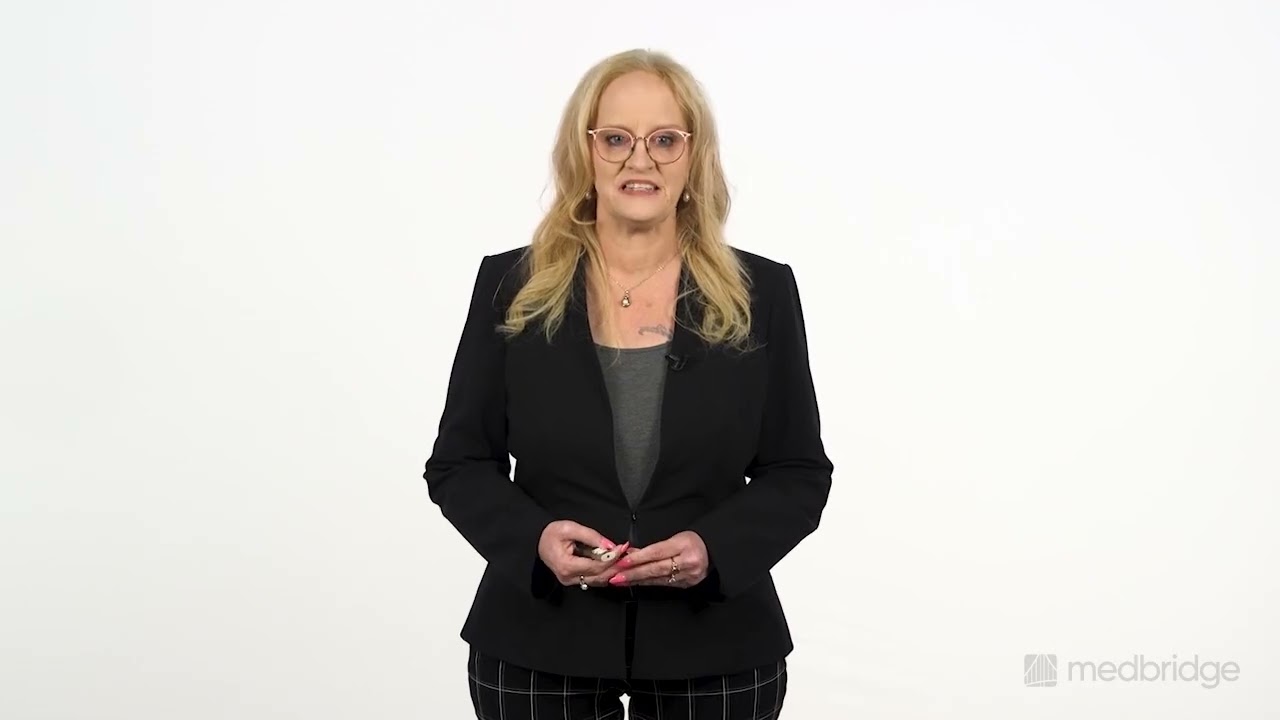
Below, watch Colleen Morley discuss the access trifecta (prescription access, care access, and transportation) in this brief clip from her Medbridge course "Reducing Readmissions Part 5: Best Practices and Future Directions."
Meet the Author


Subscribe to Our Newsletter
Related Posts

June 30, 2021
Providing The Hospital At Home Model: A Q&A with AHN Healthcare @ Home
By Medbridge

April 28, 2026
When Everything Feels Urgent: How OTs Decide What Matters Most in Progressive Neuro Home Care
By Krista Covell-Pierson

May 19, 2026
Helping Patients Follow Aspiration Precautions: A 5-Pillar Framework for SLPs
By Medbridge

May 15, 2023
Reducing Hospital Readmissions: 5 Considerations for Discharge
By Amanda Wilson