
Is Your Home Health Team Ready to Care for Pediatric Patients?
Caring for pediatric patients requires specialized knowledge and skills, even for experienced home health nurses. Learn how agencies can build pediatric expertise, prepare clinicians to support children and their families, and expand access to skilled nursing care at home.
November 5, 2026
6 min. read
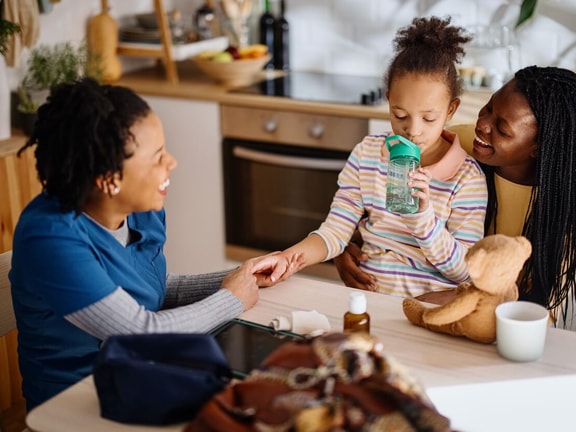
Imagine this scenario: A home health agency that primarily serves adults receives a referral for an infant who's finally ready to leave the neonatal intensive care unit (NICU) after a long stay. The child will need oxygen therapy, feeding tube care, and close monitoring at home.
The agency has many experienced nurses, but only a few have worked with pediatric patients, and their schedules are already full. Finding someone prepared to take the assignment won't be easy.
Situations like this can leave agencies in a difficult position. A nurse who's spent years caring for adults won't necessarily feel comfortable caring for an infant or young child, even when some of the procedures are familiar. And without pediatric experience, it's not always obvious where additional knowledge is needed until an unfamiliar situation comes up during a home visit.
For agencies hoping to serve more children with complex medical needs, developing pediatric expertise among existing staff is an important place to start.
Limited pediatric experience can create barriers to care
An agency could have a number of nurses experienced in managing feeding tubes, administering medications, or providing respiratory care, yet only a handful who feel comfortable performing those procedures with children. If those clinicians aren't available, the agency might have to turn away pediatric referrals despite having other experienced nurses on staff.
Equipment is also a consideration. Caring for infants requires the right supplies, such as smaller blood pressure cuffs, and nurses who know how to assess patients whose normal clinical findings differ from those of adults.
Families feel the effects when pediatric home health services aren't available. In rural communities, where specialized care can be especially difficult to find, parents sometimes travel long distances for appointments or services that could otherwise take place at home. For a family already managing a child's complex medical needs, those trips can add considerable time and expense.
Expanding pediatric capabilities gives agencies an opportunity to accept more referrals and help families receive care closer to home.
Pediatric patients aren't simply small adults
A child's anatomy, physiology, and developmental needs change dramatically from infancy through adolescence. What's normal for a newborn can be quite different from what's expected in a school-age child, and nurses need to recognize those differences when assessing patients and making care decisions.
Some of the ways pediatric care differs include:
Respiratory care: Infants have smaller airways that are more vulnerable to obstruction, and normal breathing patterns change as children grow. Recognizing respiratory distress requires being familiar with age-specific findings and warning signs.
Physical and neurological assessments: Reflexes and other clinical findings that are typical for an infant can be quite different from the ones expected for older children.
Feeding tube management: Nurses with experience in feeding tube care also need to understand infant growth patterns, feeding tolerance, and signs of inadequate nutrition when caring for a child with a gastrostomy tube.
Medication administration: Pediatric doses are frequently calculated according to body weight, and even small errors can have serious consequences.
These are the kinds of differences that foundational pediatric education can help nurses understand, giving them a better basis for recognizing potential complications and deciding when to escalate concerns.
Pediatric home health nursing also means caring for families
For parents of children with complex medical needs, the day they've been waiting for finally arrives—their child can come home from the hospital. But along with the excitement and relief, there's often a lot of anxiety about managing care outside the hospital.
Families typically receive extensive instruction before discharge. They learn to administer medications, provide tube feedings, operate equipment, and watch for signs of trouble. Then they're home, handling much of that care themselves while juggling appointments, medical supplies, work, and the needs of other family members.
Home health nurses help families adjust by reinforcing what they've learned, checking their understanding, and watching for mistakes that could affect the child's care. A parent might know when a medication is due, for example, but have trouble measuring the correct dose or administering it through a feeding tube.
Families might also need clear explanations for a child’s symptoms, reassurance that they're handling a difficult situation appropriately, or simple empathy at the right moment. Knowing when a caregiver needs additional support is an important part of pediatric home health nursing.
Parents also have knowledge that nurses need. They spend more time with their children than anyone else and often notice subtle changes in breathing, behavior, or feeding patterns. Taking those observations seriously is especially important when a nurse is still getting to know the child.
How agencies can strengthen pediatric readiness
Agencies looking to expand their pediatric services can begin by assessing what their nurses already know and where additional preparation is needed. A combination of pediatric education, supervised practice, and easily accessible clinical guidance can help clinicians develop the skills to care for children at home.
Start with this checklist:
Evaluate current capabilities. Look at the pediatric referrals your agency receives, including those you decline. Which patients could you serve with additional training or equipment? Review staff experience and available clinical resources to identify where to focus your efforts.
Provide consistent, pediatric-specific education. Build on nurses' existing knowledge with education in pediatric anatomy, development, age-specific assessments, and medication safety. Add procedure-specific training based on the patients your agency serves, using expert-reviewed resources that give clinicians a consistent foundation.
Make clinical guidance available in the field. Nurses occasionally need to refresh their knowledge, particularly before performing procedures they haven't done recently. Make approved, step-by-step instructions and equipment-specific guidance easy to access, and ensure clinicians can quickly contact a clinical supervisor when questions arise.
Verify competency through supervised practice. Give nurses opportunities to perform clinical skills under the observation of an experienced preceptor. When someone needs additional preparation, provide feedback and time to practice before reassessing their ability to perform the procedure independently.
Prepare nurses for family-centered care. Include caregiver education, communication, and family needs in pediatric training. Realistic scenarios can help nurses practice responding to caregiver concerns and identifying potential problems with care tasks at home.
Developing pediatric expertise expands access to care
For agencies that have traditionally served adults, developing pediatric services takes time and resources. But many of the clinical skills nurses already have provide a foundation for caring for children, especially when paired with education that addresses pediatric development, assessment, and procedures.
As more nurses gain experience and demonstrate competency in pediatric care, agencies can begin accepting referrals they previously had to decline. For children with complex medical needs and their families, that can mean greater access to skilled nursing care at home.
Build pediatric nursing skills with Medbridge
Medbridge helps home health agencies prepare clinicians to care for children with complex medical needs. Our Pediatric Home Health Solution brings together expert-reviewed video-based education designed for busy nurses, along with digital competency management and step-by-step clinical procedure guidance designed for pediatric care in the home.
Meet the Author


Subscribe to Our Newsletter
Related Posts
September 15, 2026
Medbridge Debuts Specialized Skills Training to Advance At-Home Care for Children With Medically Complex Needs
By Medbridge

July 22, 2026
The Pediatric G-Tube Details Adult Protocols Don't Cover
By Anna Zimmerman

April 5, 2022
The Value of Pediatric PT and Telehealth: More Than Our Hands
By Sierra Christensen

May 29, 2024
Excellence at the Point of Care: Empowering Home Health Nurses to Succeed
By Joseph Brence