
Body Mechanics and Injury Prevention
Presented by Rachel Madsen
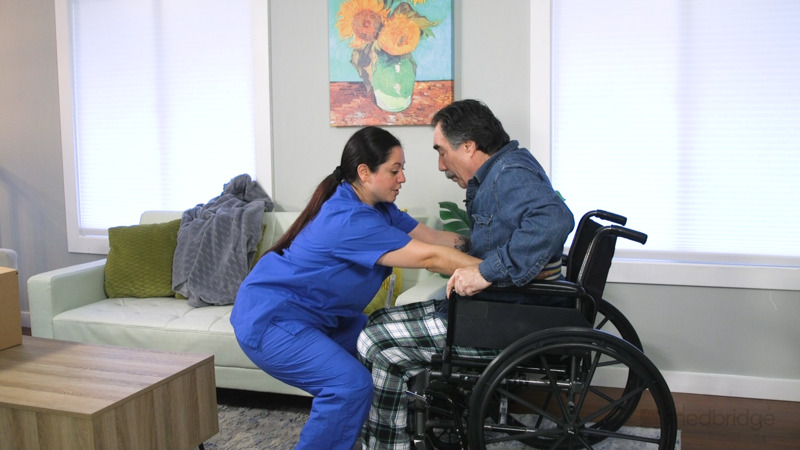
Caring for patients in any setting puts healthcare workers at significant risk for injury. To prevent injury among home health workers, this course reviews the basic principles of good body mechanics, including guidelines for using good body mechanics. It guides the learner through applying those principles in the home care setting.
Learning Objectives
- Outline the basic principles of good body mechanics
- List 10 guidelines for good body mechanics/Injury prevention
- Identify five ways to use principles of good body mechanics and injury prevention principles in the home care setting
Meet your instructor

Rachel Madsen
Rachel is a registered nurse with experience in home healthcare, long-term care, and emergency medicine. She is also a certified educator and has taught certified nursing assistants and other health science classes for over 20 years. She has been a school administrator and works as a health coach to assist others in improving…
Chapters & learning objectives

1. Introduction
This chapter highlights the prevalence of back injuries among home health aides (HHAs) and the long-term impact such injuries can have on their health and careers. Learners will be introduced to the key objectives of the course, including understanding body mechanics principles and their application in home care settings. A role-play scenario demonstrates common pitfalls in lifting and transferring tasks, emphasizing the importance of learning proper techniques.

2. Principles of Body Mechanics
In this chapter, participants will explore the foundational principles of body mechanics, including alignment, center of gravity, and base of support. Clear explanations and visuals illustrate how maintaining proper alignment and stability can prevent injuries. By understanding these principles, learners will be better equipped to approach physical tasks with confidence and safety.

3. Guidelines
This chapter provides actionable guidelines to help HHAs incorporate body mechanics principles into daily tasks. Learners will understand the importance of assessing tasks, planning movements, and using tools or assistance when needed. Practical tips such as bending the knees, avoiding twisting, and holding objects close to the body will be reinforced to build healthy habits that reduce injury risks.

4. Application
This chapter brings the concepts of body mechanics to life through real-world scenarios. Learners will practice applying principles to common tasks such as lifting objects, assisting with transfers, and working in cluttered or confined spaces. Interactive examples help HHAs develop critical thinking and problem-solving skills to adapt body mechanics principles to diverse home care environments.


Frequently asked questions
Everything you need to know about Medbridge courses.
Who creates Medbridge courses?
We work with industry-leaders, top researchers, and consultants to build content roadmaps that are then structured into courses, filmed, and edited by our production team before being launched to our site.
How often does Medbridge release new courses?
New courses are added monthly and are automatically included in your subscription as they launch.
How often does Medbridge update courses?
Medbridge reviews its courses annually for relevance and to assess if content is up to date. Based on these reviews it may be determined that a course is out of date resulting in the course being re-filmed or retired, if the content is no longer needed (e.g. a replacement course already exists, the concepts are no longer best practice, etc.).
How many courses does Medbridge offer?
We have over 3,000 accredited courses and we are continually updating our library with new courses. Check our course library for the most up-to-date count for your discipline.
Are there any additional fees for taking a Medbridge course?
There are no additional fees for taking a Medbridge course, obtaining a course certificate of completion, earning CEUs as a subscriber, or accessing any of the additional tools your subscription may include.
Is there a limit to the number of courses I can take?
There is no limit to the number of courses you can take as a subscriber! As a subscriber to Medbridge, you have unlimited access to over 3,000+ accredited CE courses.
If you are a Premium subscriber, you also have unlimited access to our Patient Engagement Tools such as the Home Exercise Program, Patient Education Library, Orthopedic Exam Tests, and Manual Therapy Techniques. We have over 7,000 exercises and over 650+ videos and handouts of patient education resources with more exercises and patient education added to the library based on subscriber feedback, volume of request and specialities.
What is your refund policy?
You are eligible for a refund provided your request is received within 30 days of your subscription purchase and your account has no activity.