
Critical Thinking Skills in Home Care: Quality, Safety, and Care
Presented by Nathalie Rennell
The health care system is complex. The health conditions of people utilizing home care services are becoming more complex as well. Yet, home care providers have limitations on their time and often limited resources for the populations served. How can they manage these demands? Critical thinking can play a key role in many of the areas of home care including scheduling, clinical decision-making and communication. This practical course will present tools, patient case scenarios, and behaviors that demonstrate effective critical thinking and its application and integration into daily operations and patient care for success. Last Reviewed: September 2024
Meet your instructor

Nathalie Rennell
Nathalie Rennell currently cares for her medically fragile grandson. Prior to making this transition, she was an instructor in the RN-BSN/CEP programs and on the honors faculty with the Edson College of Nursing and Health Innovation at Arizona State University (ASU). She was also faculty at the Phoenix Institute for Herbal…
Chapters & learning objectives

1. Critical Thinking: What is it and Why is it Important to Me in Home Care?
This chapter provides an introduction to critical thinking as well as an overview of current thought and research on the topic. A practical definition adapted to home care will be presented. The creation of a personal definition of critical thinking and how it applies to practice in home care will be discussed. A correlation with the use of critical thinking and enhanced care delivery and patient safety will also be made.

2. Critical Thinking and Clinical Decision-Making Skills in Home Care
This chapter incorporates case scenarios with an interview of a home care nurse to demonstrate the application of critical thinking in planning a home care provider’s day, plan of care development, care delivery and patient and family education. One may become more effective in daily practice by utilizing the strategies discussed in this section.

3. Why is Critical Thinking Important in my Communication with Members of the Home Care Team?
Clear communication is critical to safety and quality in home care. Whether that communication is between patients or families and clinicians, within the home care team or with primary care providers, clinicians can improve their communication skills with the use of critical thinking. Scenarios in this chapter will provide experiences with critical thinking in communication skills.

4. What Behaviors Linked to Critical Thinking Contribute to Quality Care and Patient Safety?
This chapter includes a discussion of the behaviors of critical thinkers and how those behaviors contribute to the planning and delivery of quality home care while promoting patient safety. These behaviors can have career implications as well as they align with state and professional scopes of practice. Developing a plan for the continuous inclusion of critical thinking in personal practice will also be discussed in this chapter.
More courses in this series

Critical Thinking Skills in Home Care: Quality, Safety, and Care
Nathalie Rennell

Arthritis: Considerations for the Home Care Nurse
Nathalie Rennell

Having a Professional Presence: Creating Professional Boundaries
Nathalie Rennell
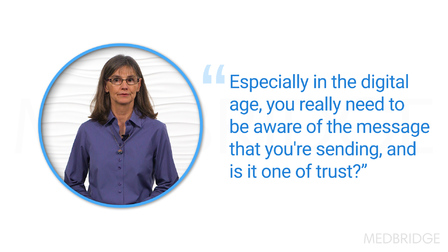
Ethical Considerations for Home Care Personnel in the Digital Age (2026)
Nathalie Rennell
Frequently asked questions
Everything you need to know about Medbridge courses.
Who creates Medbridge courses?
We work with industry-leaders, top researchers, and consultants to build content roadmaps that are then structured into courses, filmed, and edited by our production team before being launched to our site.
How often does Medbridge release new courses?
New courses are added monthly and are automatically included in your subscription as they launch.
How often does Medbridge update courses?
Medbridge reviews its courses annually for relevance and to assess if content is up to date. Based on these reviews it may be determined that a course is out of date resulting in the course being re-filmed or retired, if the content is no longer needed (e.g. a replacement course already exists, the concepts are no longer best practice, etc.).
How many courses does Medbridge offer?
We have over 3,000 accredited courses and we are continually updating our library with new courses. Check our course library for the most up-to-date count for your discipline.
Are there any additional fees for taking a Medbridge course?
There are no additional fees for taking a Medbridge course, obtaining a course certificate of completion, earning CEUs as a subscriber, or accessing any of the additional tools your subscription may include.
Is there a limit to the number of courses I can take?
There is no limit to the number of courses you can take as a subscriber! As a subscriber to Medbridge, you have unlimited access to over 3,000+ accredited CE courses.
If you are a Premium subscriber, you also have unlimited access to our Patient Engagement Tools such as the Home Exercise Program, Patient Education Library, Orthopedic Exam Tests, and Manual Therapy Techniques. We have over 7,000 exercises and over 650+ videos and handouts of patient education resources with more exercises and patient education added to the library based on subscriber feedback, volume of request and specialities.
What is your refund policy?
You are eligible for a refund provided your request is received within 30 days of your subscription purchase and your account has no activity.