
Optimizing Function After Shoulder Arthroplasty
Presented by John O’Halloran
Advanced surgical techniques and multimodal pain management have revolutionized shoulder reconstruction, yet achieving optimal functional outcomes remains a complex clinical challenge. This course addresses the critical shift toward same-day surgery and the specific rehabilitation strategies required to manage the rising volume of both anatomic and reverse shoulder replacements. Participants will examine the biomechanical nuances of various shoulder prostheses, including the emergence of reverse total shoulder arthroplasty (rTSA) for patients with rotator cuff deficiency. Through an evidence-based lens, the curriculum explores manual techniques, soft-tissue releases, and short-lever exercises designed to facilitate deltoid function and restore above-average range of motion. Designed for physical therapists and healthcare providers in outpatient and home health settings, this course provides a comprehensive framework for navigating the recovery phases and managing patient expectations for a successful return to sport and daily activity.
Learning Objectives
- Analyze the history of shoulder arthroplasty, including the evolution of surgical procedures
- Categorize the rehabilitation phases for shoulder arthroplasty and the expected ranges of motion associated with each phase
- Implement manual therapy strategies—such as fascial release—to promote functional range of motion beyond normative levels
- Prepare therapeutic exercise progressions, with an emphasis on short-lever-arm, deltoid-assisted variations
- Determine postoperative expectations for return to functional activity and participation in daily activities
- Distinguish the phases of rehabilitation following reverse total shoulder arthroplasty and the factors contributing to the recent rise in procedure volume
Meet your instructor

John O’Halloran
John O’Halloran, PT, DPT, OCS, ATC (retired), CSCS (retired), Cert MDT, Certified SCTM-1 Practitioner, is a board-certified orthopedic clinical specialist by the American Physical Therapy Association with over 30 years of experience in the field of orthopedics. He earned his postprofessional Doctor of Physical Therapy from…
Chapters & learning objectives
1. Introduction
This chapter examines the history of shoulder arthroplasty and the demographic factors, such as advanced age and smoking, that contribute to the high prevalence of glenohumeral osteoarthritis. Clinicians will compare historical inpatient protocols to modern same-day discharge trends to better understand how changing patient expectations drive the need for early therapeutic intervention.
2. Rehabilitating the Shoulder
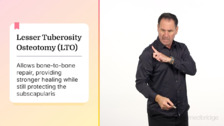
Clinicians will explore the essential phases of shoulder rehabilitation, emphasizing the use of manual therapy and periscapular techniques to improve functional mobility. This section highlights the importance of standardized protocols and the protection of healing tissues, such as the subscapularis, during the initial six weeks of recovery.
3. Postoperative Exercises and Expectations
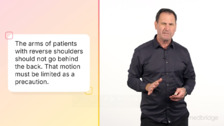
This chapter provides actionable techniques for the early facilitation of movement, focusing on short-lever deltoid exercises and the “balanced position” to optimize the kinetic chain. Participants will analyze expected range-of-motion outcomes for different surgical procedures and learn to identify when patients are ready to transition from joint protection to functional strengthening.
4. Reverse Total Shoulder Arthroplasty
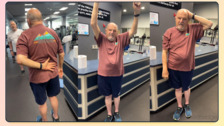
As the utilization of reverse shoulder arthroplasty continues to grow, therapists must master the unique biomechanics and strict dislocation precautions required for this procedure. This chapter details the long-term survival rates of modern implants and provides evidence-based guidance for safely returning patients to high-demand activities such as golf, swimming, and weightlifting.
More courses in this series

Optimizing Outcomes After Total Joint Arthroplasty
John O’Halloran
Optimizing Function After Shoulder Arthroplasty
John O’Halloran
Optimizing Gait After Hip Arthroplasty
John O’Halloran
Optimizing Recovery After Knee Arthroplasty
John O’Halloran
Optimizing Complex Cases in Joint Arthroplasty
John O’Halloran
Frequently asked questions
Everything you need to know about Medbridge courses.
Who creates Medbridge courses?
We work with industry-leaders, top researchers, and consultants to build content roadmaps that are then structured into courses, filmed, and edited by our production team before being launched to our site.
How often does Medbridge release new courses?
New courses are added monthly and are automatically included in your subscription as they launch.
How often does Medbridge update courses?
Medbridge reviews its courses annually for relevance and to assess if content is up to date. Based on these reviews it may be determined that a course is out of date resulting in the course being re-filmed or retired, if the content is no longer needed (e.g. a replacement course already exists, the concepts are no longer best practice, etc.).
How many courses does Medbridge offer?
We have over 3,000 accredited courses and we are continually updating our library with new courses. Check our course library for the most up-to-date count for your discipline.
Are there any additional fees for taking a Medbridge course?
There are no additional fees for taking a Medbridge course, obtaining a course certificate of completion, earning CEUs as a subscriber, or accessing any of the additional tools your subscription may include.
Is there a limit to the number of courses I can take?
There is no limit to the number of courses you can take as a subscriber! As a subscriber to Medbridge, you have unlimited access to over 3,000+ accredited CE courses.
If you are a Premium subscriber, you also have unlimited access to our Patient Engagement Tools such as the Home Exercise Program, Patient Education Library, Orthopedic Exam Tests, and Manual Therapy Techniques. We have over 7,000 exercises and over 650+ videos and handouts of patient education resources with more exercises and patient education added to the library based on subscriber feedback, volume of request and specialities.
What is your refund policy?
You are eligible for a refund provided your request is received within 30 days of your subscription purchase and your account has no activity.