
Preventing and Delaying ADL/IADL Disability in Older Adults
Presented by Pamela E. Toto
Nonfinancial: Pamela Toto has no competing nonfinancial interests or relationships with regard to the content presented in this course.
Difficulty or inability to complete daily activities in older adults leads to adverse outcomes, including injury, institutionalization, and even death. Changing trends in demographics, healthcare costs, and improved community resources offer older adults greater opportunities to maximize their independence and safety, thereby preventing or delaying the onset of disability. Understanding of facilitators and barriers for a preventive approach in skilled service delivery can position occupational therapy practitioners (OTPs) to be essential in current and new models of service delivery for this population. OTPs in all settings can increase their distinct value by strengthening their preventive approach skills to address difficulties in daily activities with older adult clients. This course will provide OTPs with evidence-based assessments, resources, and key strategies to effectively prevent and delay disability in their older adult clients.
Meet your instructor

Pamela E. Toto
Pamela Toto is an occupational therapist and an assistant professor of occupational therapy and the program director of the Clinical Science Doctorate in Occupational Therapy program at the University of Pittsburgh. She is board-certified in gerontology and is a fellow of the American Occupational Therapy Association (AOTA).…
Chapters & learning objectives

1. Describing Preclinical Disability and Disability Through a Preventive Approach
This chapter will define preclinical disability and discuss evidence and trends to support a preventive approach for addressing disability in older adults. Exemplars will offer guidance on the potential role of occupational therapy in a preventive model. Facilitators and barriers to implementing preventive services for older adults will be summarized.
2. Assessment Tools and Resources for Identification of Preclinical and Early-Stage Disability and Goal Setting
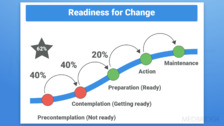
This chapter will provide instruction on how to screen for preclinical disability, selection of evidence-based occupational therapy assessment tools to best assess for preclinical disability, and use of readiness for change in determining intervention strategies. Common areas for intervention will be reviewed along with tips for effective goal setting in preventive models.

3. Intervention Approaches and Strategies for Preventing and Delaying Disability in Older Adults
This chapter will analyze benefits of various occupational therapy intervention approaches in prevention of disability and the effects of select personal and environmental contextual factors of influence on service delivery. Examples of proximal and distal outcomes will be discussed as measures of impact for program adoption and sustainability across practice settings.


Frequently asked questions
Everything you need to know about Medbridge courses.
Who creates Medbridge courses?
We work with industry-leaders, top researchers, and consultants to build content roadmaps that are then structured into courses, filmed, and edited by our production team before being launched to our site.
How often does Medbridge release new courses?
New courses are added monthly and are automatically included in your subscription as they launch.
How often does Medbridge update courses?
Medbridge reviews its courses annually for relevance and to assess if content is up to date. Based on these reviews it may be determined that a course is out of date resulting in the course being re-filmed or retired, if the content is no longer needed (e.g. a replacement course already exists, the concepts are no longer best practice, etc.).
How many courses does Medbridge offer?
We have over 3,000 accredited courses and we are continually updating our library with new courses. Check our course library for the most up-to-date count for your discipline.
Are there any additional fees for taking a Medbridge course?
There are no additional fees for taking a Medbridge course, obtaining a course certificate of completion, earning CEUs as a subscriber, or accessing any of the additional tools your subscription may include.
Is there a limit to the number of courses I can take?
There is no limit to the number of courses you can take as a subscriber! As a subscriber to Medbridge, you have unlimited access to over 3,000+ accredited CE courses.
If you are a Premium subscriber, you also have unlimited access to our Patient Engagement Tools such as the Home Exercise Program, Patient Education Library, Orthopedic Exam Tests, and Manual Therapy Techniques. We have over 7,000 exercises and over 650+ videos and handouts of patient education resources with more exercises and patient education added to the library based on subscriber feedback, volume of request and specialities.
What is your refund policy?
You are eligible for a refund provided your request is received within 30 days of your subscription purchase and your account has no activity.