
Task Analysis and Task Specific Training 1: Theoretical Foundations
Presented by Leslie Allison
Movement is shaped by interactions between the individual, the task, and the environment. This course is the first in a three-part series, and will review the theoretical foundations of the Ecological Approach to understanding movement. The course will (1) describe the significant shift in our understanding of movement, away from earlier approaches that viewed the individual in isolation, and toward our current understanding that movement is shaped by and adapted to the demands of the task and environment, and (2) consider the clinical implications of this shift.
Meet your instructor

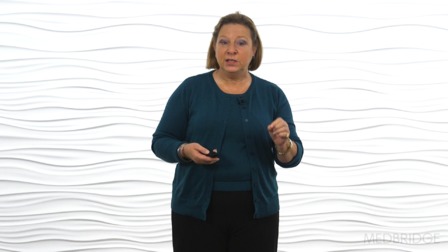
Leslie Allison
Dr. Allison has been a DPT faculty member at Winston-Salem State University since 2013 and was a physical therapy educator at Midwestern University and East Carolina University from 2004 to 2013. She has 12 years of clinical experience in adult neurorehabilitation and geriatrics in acute, inpatient, and outpatient…
Chapters & learning objectives

1. Down Memory Lane
Early motor control and motor learning theories focused almost exclusively on processes internal to an individual. Consequently, strategies to teach motor skills centered on practice of movements isolated from functional activities and real-life contexts. Coaches and therapists were the experts who defined for the learner what the goals were, and prescribed the optimal way to perform the motor skills.

2. The Ecological Approach to Understanding Human Movement
Advances in our understanding of human movement led to the development of the Ecological Approach, which views movement as goal-directed action to accomplish meaningful tasks that is adapted to suit varied environments. The ecological approach better explains movement because it accounts for not only the individual doing the movement, but also how that movement is shaped by what the individual is trying to do (task constraints) and in what context the movement occurs (environmental constraints).

3. The Individual-Task-Environment Triangle (I-T-E) Model
To facilitate the application of the ecological approach to clinical practice, the Individual-Task-Environment Triangle (I-T-E) Model has been used to illustrate the interaction between these critical components. Each of the three original components has been expanded to incorporate additional concepts that improve our ability to understand the model and use it to analyze motor performance.

4. The Relationship between the I-T-E and I.C.F Models
Therapists use the ICF Model framework to categorize patient problems, understanding the causative contributions of lower to higher levels. The I-T-E Triangle Model is complimentary to the ICF Model, and an overlay of these two models adds an emphasis on movement to the ICF Model that is highly relevant to clinical practice.


Frequently asked questions
Everything you need to know about Medbridge courses.
Who creates Medbridge courses?
We work with industry-leaders, top researchers, and consultants to build content roadmaps that are then structured into courses, filmed, and edited by our production team before being launched to our site.
How often does Medbridge release new courses?
New courses are added monthly and are automatically included in your subscription as they launch.
How often does Medbridge update courses?
Medbridge reviews its courses annually for relevance and to assess if content is up to date. Based on these reviews it may be determined that a course is out of date resulting in the course being re-filmed or retired, if the content is no longer needed (e.g. a replacement course already exists, the concepts are no longer best practice, etc.).
How many courses does Medbridge offer?
We have over 3,000 accredited courses and we are continually updating our library with new courses. Check our course library for the most up-to-date count for your discipline.
Are there any additional fees for taking a Medbridge course?
There are no additional fees for taking a Medbridge course, obtaining a course certificate of completion, earning CEUs as a subscriber, or accessing any of the additional tools your subscription may include.
Is there a limit to the number of courses I can take?
There is no limit to the number of courses you can take as a subscriber! As a subscriber to Medbridge, you have unlimited access to over 3,000+ accredited CE courses.
If you are a Premium subscriber, you also have unlimited access to our Patient Engagement Tools such as the Home Exercise Program, Patient Education Library, Orthopedic Exam Tests, and Manual Therapy Techniques. We have over 7,000 exercises and over 650+ videos and handouts of patient education resources with more exercises and patient education added to the library based on subscriber feedback, volume of request and specialities.
What is your refund policy?
You are eligible for a refund provided your request is received within 30 days of your subscription purchase and your account has no activity.