
Balancing Evidence-Based Practice: Research Boot Camp
Chad Cook and Kenneth Learman have spent three decades watching evidence-based practice narrow into "do what the best study says." Here, they make the case for the wider version and offer a practical method to weigh research, patient values, and clinical expertise together through their Research Boot Camp.
July 28, 2026
5 min. read

When we began practicing physical therapy in the late 1980s and early 1990s, the profession we entered bears little resemblance to the one we practice today. We view this evolution as overwhelmingly positive.
Physical therapy is, at its core, an empirical science. Knowledge advances through observation, experimentation, and the continual revision of conclusions as new data emerge. Yet the pace of that revision has accelerated beyond what earlier generations could have imagined. In the 1950s, medical knowledge doubled roughly every 50 years; by 1980, the interval had fallen to seven years; by 2010, to approximately three and a half; and by 2020, estimates suggested a doubling time of only 73 days.¹
We have also witnessed profound changes in how health professions incorporate evidence into practice. When we trained, most clinical recommendations were drawn from textbooks or clinician expertise. Only recently has peer‑reviewed research meaningfully shaped how care strategies are adopted.
The philosophical foundation for this shift began in 1972, when Archibald Cochrane published Effectiveness and Efficiency. In 1984, David Eddy questioned why evidence played such a limited role in everyday medical decision-making.² Notably, the term “evidence‑based medicine” did not gain widespread use until 1996, when David Sackett and colleagues published their landmark definition in the British Medical Journal.³
The transformation we have observed, both in educational settings and clinical practice, has not been without challenges. Over time, medicine, nursing, physical therapy, and other empirical sciences have embraced Sackett’s definition of evidence‑based medicine, which rests on three equally weighted components:
Best available evidence
Patient values and preferences
Clinical expertise
Sackett emphasized that each component carries equal importance and must be considered when consulting with a patient. Unfortunately, we have observed an imbalance in practice, where “best available evidence” often overshadows the other two components. This imbalance has weakened the foundation of clinical decision-making and, at times, enabled educators or clinicians to wield “evidence” as a weapon rather than a tool. This concern is one of the motivations behind revising and expanding our research boot camp series.
Our approach in boot camp is intentionally straightforward: begin with the evidence and treat it as guide rails, not a prescription. Integrate it with your own expertise, shaped by patterns recognized across thousands of patient encounters, and then collaborate with the patient through open dialogue about what you believe will help and whether it aligns with their goals.
When care is framed this way, the treatment plan reflects both your clinical judgment and the patient’s voice, rather than arriving prepackaged from a journal article. But to treat a trial as guide rails rather than a directive, clinicians must understand what the trial can, and cannot, tell them.
Why the balance matters
Here is the uncomfortable reality.
Despite decades of scientific progress and roughly $400 billion annually in global health research spending, outcomes in several domains have not improved; in musculoskeletal care, they have arguably worsened over the past twenty years.
Our lack of progress stems largely from failing to identify and address the factors that truly drive patient outcomes.⁶ Moreover, most musculoskeletal interventions demonstrate similarly small to moderate effects. Research on determinants of health suggests that clinical care accounts for only about 20 percent of what shapes population health.⁷
When these facts are juxtaposed with the three‑legged stool of evidence‑based medicine, the message becomes unmistakable: we must fully consider patient beliefs, preferences, and circumstances, alongside our own clinical expertise, to individualize care. The gains we are missing are unlikely to come from a better trial. They require a different way of thinking, and this is the central focus of the course series.
Research Boot Camp is an eight‑course certification series developed with Medbridge. Each course deepens the research skills needed to hold all three legs of the stool at once in order to command evidence well enough to recognize when the patient in front of you needs something the trial never studied.
We would be glad to have you join us for the courses below:
References
Kelly, D. (n.d.). Medical knowledge half-life: What is it and why does it matter? Eolas Medical. https://www.eolasmedical.com/blog/medical-knowledge-half-life-what-is-it-and-why-does-it-matter
Eddy, D. M. (1984). Variations in physician practice: The role of uncertainty. Health Affairs, 3(2), 74–89. https://www.healthaffairs.org/doi/10.1377/hlthaff.3.2.74
Sackett, D. L., Rosenberg, W. M. C., Gray, J. A. M., Haynes, R. B., & Richardson, W. S. (1996). Evidence based medicine: What it is and what it isn’t. BMJ, 312(7023), 71–72. https://www.bmj.com/content/312/7023/71
Isaacs, D., & Fitzgerald, D. (1999). Seven alternatives to evidence based medicine. BMJ, 319(7225), 1618. https://www.bmj.com/content/319/7225/1618
Murad, M. H., Asi, N., Alsawas, M., & Alahdab, F. (2016). New evidence pyramid. Evidence-Based Medicine, 21(4), 125–127. https://ebm.bmj.com/content/21/4/125
Foster, N. E. (2011). Barriers and progress in the treatment of low back pain. BMC Medicine, 9, Article 108. https://pmc.ncbi.nlm.nih.gov/articles/PMC3192671/
McGinnis, J. M., Williams-Russo, P., & Knickman, J. R. (2002). The case for more active policy attention to health promotion. Health Affairs, 21(2), 78–93. https://www.healthaffairs.org/doi/10.1377/hlthaff.21.2.78
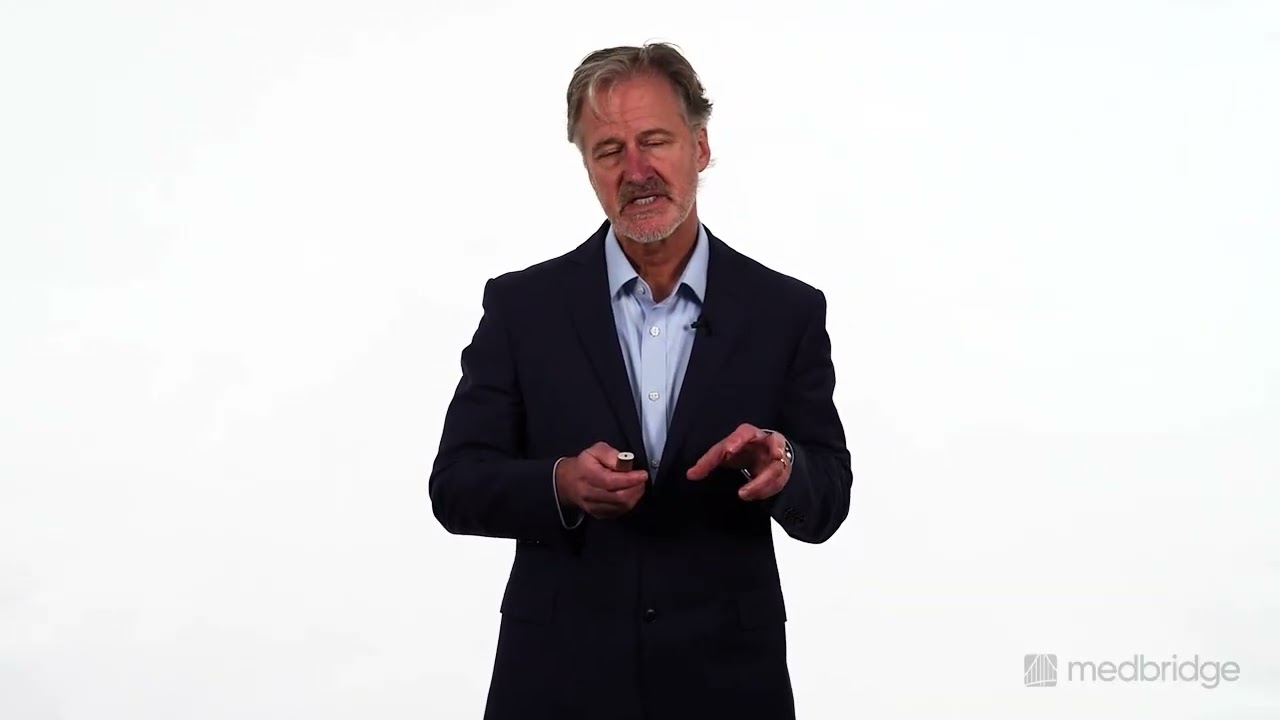
Below, watch Chad Cook discuss the best available evidence in this brief clip from his and Kenneth Learman's Medbridge course, "Rehabilitation Research Boot Camp: A Renewed Look at Evidence-Based Practice."
Meet the Authors


Subscribe to Our Newsletter
Related Posts
November 3, 2017
Evidence is Evidence! Are You Sure about That?
By Chad Cook
.jpg)
April 27, 2026
The Real Reason Readmissions Persist (and What to Fix First)
By Colleen Morley

October 19, 2022
Strategies for Clinical Reasoning: Building the Therapeutic Alliance
By Eric Trauber

December 16, 2023
Elevating Person-Centered Care in Physical Therapy
By Amy McDevitt