
Rehabilitation Research Boot Camp: A Renewed Look at Evidence-Based Practice
Presented by Chad E. Cook
This course provides a comprehensive update on the evolution and practical application of evidence-based practice (EBP) in a rapidly changing medical landscape. While historical research innovations such as antibiotics and vaccines have dramatically improved global mortality rates, modern clinicians face a paradoxical decline in musculoskeletal and chronic disease outcomes despite an overwhelming surge in published data. This training addresses the critical "information overload" barrier by refining how providers classify the strength of evidence and integrate it with clinical expertise and patient values. Participants will explore the ethical foundations of research, the staggering 73-day doubling rate of medical knowledge, and the systemic factors contributing to worsening morbidity. Designed for physical therapists, occupational therapists, and other rehabilitation professionals, this course is applicable across various clinical settings, including outpatient orthopedics and acute care. By shifting the focus to personalized, evidence-informed care and addressing social determinants of health, clinicians will learn to move beyond rigid protocols toward better patient outcomes.
Learning Outcomes
- Recognize how research innovations have transformed healthcare delivery and clinical decision-making over the past century
- Recall the historical evolution of evidence-based practice, highlighting key milestones and paradigm shifts
- Define the three foundational pillars of EBP—clinical expertise, patient values, and best available evidence—and their interdependence in practice
- Differentiate between levels of evidence using the pyramid and design hierarchy, with emphasis on study design and methodological rigor
- Evaluate ethical considerations in clinical research, including informed consent, bias, and the protection of vulnerable populations
- Analyze the implications of shifting research emphases, such as pragmatic trials, big data, and translational science, on clinical outcomes and relevance
- Compare current healthcare outcome trends in light of evolving research methodologies and systemic challenges
- Reflect on the course perspectives to synthesize key themes and consider future directions for EBP in clinical practice
Meet your instructor

Chad E. Cook
Dr. Cook is a professor at Duke University with a Category A appointment in the Duke Clinical Research Institute and an adjunct appointment in the Department of Population Health Sciences. He is a clinical researcher, physical therapist, and profession advocate with a long history of clinical care excellence and service and…
Chapters & learning objectives
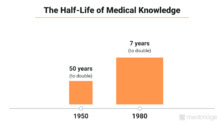
1. How Research Has Changed Healthcare
This chapter examines the transformative power of medical discovery, highlighting how innovations like penicillin and genome mapping have saved billions of lives. It emphasizes the empirical nature of medicine, in which conclusions must be continually revised as the “half-life” of medical knowledge continues to shrink at a staggering pace.
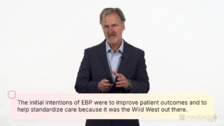
2. Evidence-Based Practice: A Historical Tutorial
Learners will trace the origins of evidence-based practice from its philosophical groundwork in the 1970s to its formal definition in the mid-1990s. This history is essential for understanding the original intent of EBP—to standardize care and bridge the gap between research and practice—while identifying modern barriers, such as information overload.

3. The Three Pillars of Evidence-Based Practice
This section explores the vital interdependence between the best available evidence, clinical expertise, and patient values. It is important because an overemphasis on research alone can lead to inappropriate care, requiring clinicians to balance these pillars to achieve truly personalized, evidence-informed results.

4. Classification of Strength of Evidence
This chapter introduces the traditional evidence-based pyramid and the methodological rigor required for different study designs. Understanding this hierarchy, along with its limitations and potential for oversimplification, helps clinicians better synthesize complex data and select the most appropriate research for their specific clinical questions.

5. Ethical Considerations of Research
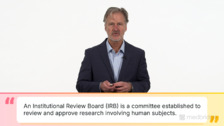
Participants will evaluate the historical atrocities that necessitated the development of the Nuremberg Code and Institutional Review Boards to protect human subjects. Reviewing past ethical breaches, such as the Tuskegee and Willowbrook studies, underscores the permanent necessity of informed consent, beneficence, and justice in clinical science.
6. Why Are Our Outcomes Worsening?
This chapter critiques the alarming trend of rising disability and worsening morbidity despite increased research funding and guidelines. It highlights the need to rethink healthcare delivery by addressing health behaviors and social factors that traditional biomedical models often fail to influence.

7. Course Summary
The final chapter synthesizes the course’s core themes to help clinicians reflect on future directions for evidence-based practice. By integrating historical lessons with modern challenges, learners will be better prepared to adapt their clinical decision-making to their patients’ evolving needs.
More courses in this series

Rehabilitation Research Boot Camp: A Renewed Look at Evidence-Based Practice
Chad E. Cook

Rehabilitation Research Boot Camp: Research Methodology I
Kenneth E. Learman

Rehabilitation Research Boot Camp: Research Methodology II
Chad E. Cook
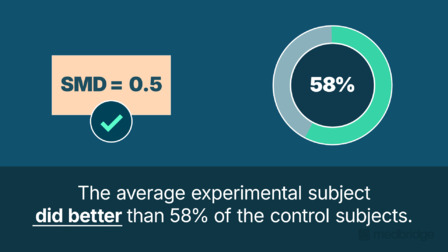
Rehabilitation Research Boot Camp: Statistical Analysis Essentials
Kenneth E. Learman

Rehabilitation Research Boot Camp: Why Critical Appraisal Skills Are Necessary
Chad E. Cook

Rehabilitation Research Boot Camp: Translating Research to Practice
Kenneth E. Learman
Rehabilitation Research Boot Camp: Navigating Grant Funding
Chad E. Cook

Rehabilitation Research Boot Camp: Publishing Case Reports and Series
Kenneth E. Learman
Frequently asked questions
Everything you need to know about Medbridge courses.
Who creates Medbridge courses?
We work with industry-leaders, top researchers, and consultants to build content roadmaps that are then structured into courses, filmed, and edited by our production team before being launched to our site.
How often does Medbridge release new courses?
New courses are added monthly and are automatically included in your subscription as they launch.
How often does Medbridge update courses?
Medbridge reviews its courses annually for relevance and to assess if content is up to date. Based on these reviews it may be determined that a course is out of date resulting in the course being re-filmed or retired, if the content is no longer needed (e.g. a replacement course already exists, the concepts are no longer best practice, etc.).
How many courses does Medbridge offer?
We have over 3,000 accredited courses and we are continually updating our library with new courses. Check our course library for the most up-to-date count for your discipline.
Are there any additional fees for taking a Medbridge course?
There are no additional fees for taking a Medbridge course, obtaining a course certificate of completion, earning CEUs as a subscriber, or accessing any of the additional tools your subscription may include.
Is there a limit to the number of courses I can take?
There is no limit to the number of courses you can take as a subscriber! As a subscriber to Medbridge, you have unlimited access to over 3,000+ accredited CE courses.
If you are a Premium subscriber, you also have unlimited access to our Patient Engagement Tools such as the Home Exercise Program, Patient Education Library, Orthopedic Exam Tests, and Manual Therapy Techniques. We have over 7,000 exercises and over 650+ videos and handouts of patient education resources with more exercises and patient education added to the library based on subscriber feedback, volume of request and specialities.
What is your refund policy?
You are eligible for a refund provided your request is received within 30 days of your subscription purchase and your account has no activity.