
Adaptive Mental Health Strategies for Clients and Care Partners
Presented by Stephen Nawotniak
This introductory course bridges the gap between symptom reduction and functional living by focusing on adaptive strategies for occupational success in work, education, and living environments. Rather than focusing exclusively on symptom management, this course equips practitioners and care partners with practical tools to help individuals achieve satisfaction and success in their chosen environments. Participants will learn evidence-based adaptive strategies that clients and care partners can implement, promoting recovery-oriented practice and meaningful occupational engagement.
Learning Outcomes
- Differentiate the four Stages of Recovery to match appropriate occupational therapy interventions to a client's current recovery needs and level of engagement
- Infer the clinical value of utilizing lived experience narratives to inspire hope and promote recovery-oriented practice in client and group settings
- Select adaptive occupational strategies that simplify task demands and reduce cognitive strain for individuals managing anxiety or mood-related challenges in living, learning, or working environments
- Classify adaptive strategies for performance patterns—including structured routines, environmental supports, and accountability check-ins—to promote consistent daily task initiation
- Match evidence-based care partner techniques—such as active listening, open-ended questioning, and strength reinforcement—to collaborative approaches that honor client autonomy in recovery-oriented care
Meet your instructor

Stephen Nawotniak
Stephen Nawotniak is a keynote speaker, occupational therapist, certified peer specialist, and award-winning author who combines professional expertise with his lived experience of bipolar disorder. Drawing from his work in mental health care and an eight-month volunteer trek down the East Coast, Stephen equips individuals…
Chapters & learning objectives

1. Introduction and Foundational Concepts
This foundational chapter presents the four stages of recovery: four primary stages that a person can be in during their recovery journey. These foundational concepts establish the theoretical basis for the adaptive strategies and care partner techniques presented in subsequent chapters.

2. The Lived Experience
This chapter offers an authentic perspective through lived-experience interviews with individuals who have successfully implemented adaptive strategies in their recovery journeys. Learners will hear firsthand accounts of how adaptive approaches have supported meaningful engagement in work, learning, and living environments. These narratives illustrate the real-world impact of the strategies and concepts presented throughout the course and provide inspiring examples of recovery-oriented practice in action.
3. Adaptive Strategies for the Person
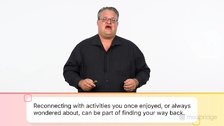
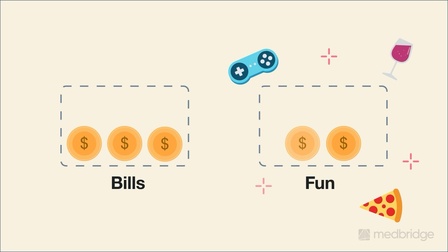
This chapter focuses on practical adaptive strategies that individuals with mental health needs can implement to support occupational success. Learners will examine adaptations specific to occupations (activities and tasks) and performance patterns (habits, routines, and roles). The chapter provides concrete examples and strategies that practitioners can teach clients to enhance their capacity for success and satisfaction in living, learning, and working environments.

4. Adaptive Strategies for Care Partners
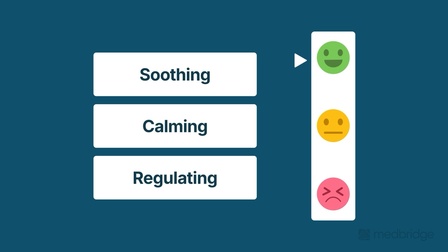
This chapter expands the scope to include care partners—family members, friends, and supporters who play vital roles in recovery. Learners will explore the recovery model framework and foundational concepts in partnership-based care, including orienting, active listening, open-ended questioning, appropriate self-disclosure, and strength reinforcement. The chapter emphasizes collaborative approaches that empower care partners to meaningfully support individuals with mental health needs.

Frequently asked questions
Everything you need to know about Medbridge courses.
Who creates Medbridge courses?
We work with industry-leaders, top researchers, and consultants to build content roadmaps that are then structured into courses, filmed, and edited by our production team before being launched to our site.
How often does Medbridge release new courses?
New courses are added monthly and are automatically included in your subscription as they launch.
How often does Medbridge update courses?
Medbridge reviews its courses annually for relevance and to assess if content is up to date. Based on these reviews it may be determined that a course is out of date resulting in the course being re-filmed or retired, if the content is no longer needed (e.g. a replacement course already exists, the concepts are no longer best practice, etc.).
How many courses does Medbridge offer?
We have over 3,000 accredited courses and we are continually updating our library with new courses. Check our course library for the most up-to-date count for your discipline.
Are there any additional fees for taking a Medbridge course?
There are no additional fees for taking a Medbridge course, obtaining a course certificate of completion, earning CEUs as a subscriber, or accessing any of the additional tools your subscription may include.
Is there a limit to the number of courses I can take?
There is no limit to the number of courses you can take as a subscriber! As a subscriber to Medbridge, you have unlimited access to over 3,000+ accredited CE courses.
If you are a Premium subscriber, you also have unlimited access to our Patient Engagement Tools such as the Home Exercise Program, Patient Education Library, Orthopedic Exam Tests, and Manual Therapy Techniques. We have over 7,000 exercises and over 650+ videos and handouts of patient education resources with more exercises and patient education added to the library based on subscriber feedback, volume of request and specialities.
What is your refund policy?
You are eligible for a refund provided your request is received within 30 days of your subscription purchase and your account has no activity.