
Adult Swallow Assessment: From Bedside to Instrumental (Recorded Webinar)
Presented by Kendrea L. (Focht) Garand and Jo Puntil

Jo Puntil, instructor for this educational event, receives compensation from Medbridge for this course. No one with the ability to control content has relevant relationship(s) to disclose.
Adult swallowing evaluation spans a continuum—from screening to clinical examination to instrumental assessment—yet practice across these components remains strikingly variable. This inconsistency undermines diagnostic precision and the comparability of care.
This webinar offers a standardized, evidence-based framework for navigating the full swallow evaluation continuum. Participants will clarify what each component—screening tools, the clinical swallow examination, and instrumental studies (VFSS and FEES)—is designed to reveal and will learn how to apply consistent criteria for determining when to progress from one component to the next. Further, attendees will be able to integrate findings into physiologically grounded, defensible management plans.
Designed for speech-language pathologists across the clinical care continuum, this session translates current evidence into practical, repeatable decision-making you can apply immediately to strengthen the quality and consistency of your dysphagia evaluations.
Learning Outcomes
- Differentiate dysphagia/aspiration screenings against clinical swallow evaluations
- Execute a standardized adult clinical swallow evaluation
- Discriminate the strengths and limitations of each swallowing evaluation component: screenings, clinical swallow evaluations, and instrumental swallow studies
- Examine standardized protocols and rating systems used in instrumental swallow studies
- Select the instrumental swallow study best suited to answer the clinical question
- Integrate findings to inform a patient-centered care plan for an adult with dysphagia
Meet your instructors
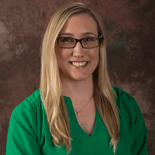
Kendrea L. (Focht) Garand
Dr. Kendrea Garand is currently an assistant professor in the Department of Speech Pathology and Audiology in the College of Allied Health Professions at the University of South Alabama. Further, she is the founder and director of the Swallowing Disorders Initiative Research Laboratory. She holds board certification in…

Jo Puntil
Jo Puntil is an ASHA Fellow, past chair of the CFCC, and a board-certified specialist in swallowing and swallowing disorders. She has extensive experience in developing interdisciplinary rehab programs/teams throughout southern California and Utah, specifically in the areas of critical and acute care. Jo has lectured…
Chapters & learning objectives

1. Screenings
This chapter examines screenings as the entry point of the assessment continuum, focusing on the role of validated screening tools in efficiently identifying patients who require further assessment. Participants will clarify what screening is designed to accomplish and consider how tool selection and inconsistent application contribute to variability in practice. Lastly, the chapter establishes how screening outcomes appropriately trigger the next step in the continuum, whether a clinical swallow examination or referral for instrumental evaluation.
2. Clinical Swallow Evaluation (CSE)
This chapter provides a systematic approach to the clinical swallow evaluation (CSE). Clarification is provided on what the CSE is designed to detect and where its limitations lie, with attention to the variability that arises when it is performed without a standardized approach. The chapter also establishes how clinical findings inform the decision to proceed to instrumental assessment, positioning the CSE as a deliberate step rather than a substitute for physiologic evaluation.
3. Foundations of Standardized Instrumental Exams
This chapter focuses on the importance of standardization in adult instrumental swallow evaluations, detailing the specific protocols, physiological scoring metrics, and validated severity scales utilized during both videofluoroscopic and endoscopic examinations. Learners will examine how replacing subjective observations with objective, standardized testing parameters reduces clinician bias and improves diagnostic reliability across various care settings. The discussion establishes the baseline knowledge necessary to accurately interpret and track physiologic swallow impairments over time.
4. Clinical Decision-Making and Case Studies of Instrumental Selection
This chapter guides learners through the clinical reasoning required to select the optimal instrumental swallow study best suited to answer specific diagnostic questions. By analyzing the unique structural advantages, logistical limitations, and patient-specific contraindications of videofluoroscopy versus endoscopy, learners will practice determining which modality is indicated. Through the interactive analysis of clinical case studies, learners will apply these concepts to directly bridge objective instrumental findings with bedside management and patient-centered care plans.
5. Question and Answer Session
The Q&A will address participant-submitted questions related to all three content chapters. Presenters will prioritize questions that reflect common clinical dilemmas and connect evidence to practice.


Frequently asked questions
Everything you need to know about Medbridge courses.
Who creates Medbridge courses?
We work with industry-leaders, top researchers, and consultants to build content roadmaps that are then structured into courses, filmed, and edited by our production team before being launched to our site.
How often does Medbridge release new courses?
New courses are added monthly and are automatically included in your subscription as they launch.
How often does Medbridge update courses?
Medbridge reviews its courses annually for relevance and to assess if content is up to date. Based on these reviews it may be determined that a course is out of date resulting in the course being re-filmed or retired, if the content is no longer needed (e.g. a replacement course already exists, the concepts are no longer best practice, etc.).
How many courses does Medbridge offer?
We have over 3,000 accredited courses and we are continually updating our library with new courses. Check our course library for the most up-to-date count for your discipline.
Are there any additional fees for taking a Medbridge course?
There are no additional fees for taking a Medbridge course, obtaining a course certificate of completion, earning CEUs as a subscriber, or accessing any of the additional tools your subscription may include.
Is there a limit to the number of courses I can take?
There is no limit to the number of courses you can take as a subscriber! As a subscriber to Medbridge, you have unlimited access to over 3,000+ accredited CE courses.
If you are a Premium subscriber, you also have unlimited access to our Patient Engagement Tools such as the Home Exercise Program, Patient Education Library, Orthopedic Exam Tests, and Manual Therapy Techniques. We have over 7,000 exercises and over 650+ videos and handouts of patient education resources with more exercises and patient education added to the library based on subscriber feedback, volume of request and specialities.
What is your refund policy?
You are eligible for a refund provided your request is received within 30 days of your subscription purchase and your account has no activity.