
Auditory Comprehension Treatment in a Clinical Setting: Case Studies
Presented by Janet Patterson and Mary Purdy
Dr. Patterson receives an honorarium for this course, a salary from St. Mary’s College, and royalties from Jones & Bartlett Learning.
Dr. Purdy receives an honorarium for this course and salaries from Southern Connecticut State University and the University of Connecticut.
Nonfinancial:
Dr. Patterson is a member of the Academy of Neurological Communication Disorders and Sciences and its Evidence-Based Clinical Research Committee, Aphasia Writing Group.
Dr. Purdy is a member of the Academy of Neurological Communication Disorders and Sciences and its Evidence-Based Clinical Research Committee, Aphasia Writing Group.
Treatment programs for persons with auditory comprehension deficit must be individualized, theoretically motivated, and based on evidence. Although published treatment protocols may be used, it may not always be possible to deliver a protocol as described in the original literature. Factors that limit successful implementation of a published protocol are client-related factors such as environmental awareness, personal needs and goals, or aphasia severity; clinician-related factors such as program drift or unfamiliarity with a treatment protocol and expected outcomes; and setting-related factors such as voltage drop or time limits imposed by a facility. Successful treatment implementation and outcome requires clinicians to understand the theoretical and situational evidence supporting a protocol; to compare the aims of a treatment protocol and aims for a specific client; and to plan and provide evidence in justification for protocol modifications. Linking these components in clinical decision-making requires following the components of evidence-based practice and providing theoretical, empirical, or observational evidence to justify decisions. This process will be illustrated using case examples of individuals with mild to severe auditory comprehension deficit accompanying aphasia.
Meet your instructors
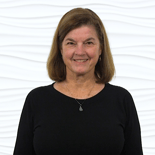
Janet Patterson
Janet Patterson is chief of the the Audiology and Speech-Language Pathology Service at the VA in Northern California. Prior to that, she held academic positions as faculty member, associate dean, and department chair at California State University East Bay, Central Michigan University, and Michigan State University. With…

Mary Purdy
Mary Purdy is professor emeritus at Southern Connecticut State University, where she taught courses on aphasia and related neurogenic communication disorders. She is board certified by the Academy of Neurologic Communication Disorders and Sciences and has authored articles, book chapters, and presentations related to aphasia.…
Chapters & learning objectives

1. Selecting an Appropriate Auditory Comprehension Approach
Treatment programs for persons with auditory comprehension deficit must be individualized, theoretically motivated, and based on evidence. Although published treatment protocols may be used, it may not always be possible to deliver a protocol as described in the original literature. Treatment, client, and outcome factors related to selecting an appropriate treatment will be discussed.

2. Clinical Example 1: Aphasia With Severe Auditory Comprehension Deficit
Successful treatment implementation and outcome requires clinicians to understand the theoretical and situational evidence supporting a protocol, to compare the aims of a treatment protocol and aims for a specific client, and to plan and provide evidence in justification for protocol modifications. This process will be demonstrated using a case example of an individual with severe auditory comprehension deficit.

3. Clinical Example 2: Aphasia With Moderate Auditory Comprehension Deficit
Successful treatment implementation and outcome requires clinicians to understand the theoretical and situational evidence supporting a protocol, to compare the aims of a treatment protocol and aims for a specific client, and to plan and provide evidence in justification for protocol modifications. This process will be demonstrated using a case example of an individual with moderate auditory comprehension deficit.

4. Clinical Example 3: Aphasia With Mild Auditory Comprehension Deficit
Successful treatment implementation and outcome requires clinicians to understand the theoretical and situational evidence supporting a protocol, to compare the aims of a treatment protocol and aims for a specific client, and to plan and provide evidence in justification for protocol modifications. This process will be demonstrated using a case example of an individual with mild auditory comprehension deficit.
More courses in this series

Auditory Comprehension Deficit in Aphasia: Examining the Evidence
Janet Patterson and Mary Purdy

Auditory Comprehension Deficit in Aphasia: Assessment Plans and Data
Janet Patterson and Mary Purdy

Auditory Comprehension Deficit in Aphasia: Evidence-Based Treatment
Janet Patterson and Mary Purdy

Auditory Comprehension Treatment in a Clinical Setting: Case Studies
Janet Patterson and Mary Purdy
Frequently asked questions
Everything you need to know about Medbridge courses.
Who creates Medbridge courses?
We work with industry-leaders, top researchers, and consultants to build content roadmaps that are then structured into courses, filmed, and edited by our production team before being launched to our site.
How often does Medbridge release new courses?
New courses are added monthly and are automatically included in your subscription as they launch.
How often does Medbridge update courses?
Medbridge reviews its courses annually for relevance and to assess if content is up to date. Based on these reviews it may be determined that a course is out of date resulting in the course being re-filmed or retired, if the content is no longer needed (e.g. a replacement course already exists, the concepts are no longer best practice, etc.).
How many courses does Medbridge offer?
We have over 3,000 accredited courses and we are continually updating our library with new courses. Check our course library for the most up-to-date count for your discipline.
Are there any additional fees for taking a Medbridge course?
There are no additional fees for taking a Medbridge course, obtaining a course certificate of completion, earning CEUs as a subscriber, or accessing any of the additional tools your subscription may include.
Is there a limit to the number of courses I can take?
There is no limit to the number of courses you can take as a subscriber! As a subscriber to Medbridge, you have unlimited access to over 3,000+ accredited CE courses.
If you are a Premium subscriber, you also have unlimited access to our Patient Engagement Tools such as the Home Exercise Program, Patient Education Library, Orthopedic Exam Tests, and Manual Therapy Techniques. We have over 7,000 exercises and over 650+ videos and handouts of patient education resources with more exercises and patient education added to the library based on subscriber feedback, volume of request and specialities.
What is your refund policy?
You are eligible for a refund provided your request is received within 30 days of your subscription purchase and your account has no activity.