
Equitable Access in Remote Care: Disability and Language Support
Presented by Anna DeLaRosby, Julie Mulcahy, and Todd Norwood
Julie Mulcahy instructor for this educational event, receive compensation from Medbridge for this course. No one with the ability to control content has relevant relationships to disclose.
Todd Norwood, instructor for this educational event, receive compensation from Medbridge for this course. No one with the ability to control content has relevant relationships to disclose.
*This presentation utilizes AirPods Pro 2 and native Live Captioning features (iOS, Windows, Android, macOS) as instructional examples to demonstrate the clinical application of Over-the-Counter (OTC) Hearing Aid technology and Automatic Speech Recognition (ASR) in telehealth. These specific tools were selected due to their high level of consumer accessibility and prevalence in patient environments; however, their inclusion does not constitute an endorsement. Equivalent or similar functionalities are available through other manufacturers, such as Jabra Enhance Plus, Sony CRE-C20, Google Live Transcribe, or Otter.ai and learners are encouraged to explore the full marketplace of assistive technologies.
The instructors have no financial relationships with any companies mentioned, and all clinical recommendations are made independently and based on evidence.
This course prepares rehabilitation professionals to deliver equitable, accessible telehealth care to patients with language barriers and disabilities, grounded in the legal requirements of Section 1557 of the Affordable Care Act. Clinicians will learn to implement compliant language access protocols, including qualified interpreter services and privacy-conscious translation practices, alongside practical accessibility strategies across major digital platforms. The course provides a systematic review of built-in accessibility tools for auditory, visual, physical, and cognitive accommodations on iOS, Android, Windows, and macOS devices, supported by case studies and clinical scenarios. By the end of the course, clinicians will be equipped to configure digital health platforms and communication strategies that meet legal accessibility standards while improving patient safety, engagement, and equitable outcomes in remote care.
Learning Outcomes
- Implement specific language and disability accessibility protocols to ensure legal compliance during remote patient encounters
- Modify digital platform settings to provide visual accommodations for patients with low vision or color blindness
- Execute auditory accommodation features within telehealth platforms to support d/Deaf or hard-of-hearing clients
- Select appropriate digital cognitive aids to reduce or manage cognitive load during remote care
Meet your instructors

Anna DeLaRosby
Anna has been a physical therapist since receiving her doctorate in physical therapy in 2008 and loves all things PT. Anna became certified in mechanical diagnosis and therapy in 2012, and in 2014, she became a board-certified orthopedic clinical specialist. Anna is the clinical program manager for Physera Physical Therapy…

Julie Mulcahy
Julie Mulcahy received her doctorate in physical therapy from the University of Michigan. For the past 20+ years, she has specialized in orthopedics, sports medicine, and women’s health. She obtained her Certificate of Achievement in Pregnancy and Postpartum Physical Therapy (CAPP-OB) in 2021 and her LAMP Institute for…

Todd Norwood
Todd received his doctorate in physical therapy from the University of Southern California and his BA in human biology from Stanford University. He is a board-certified clinical specialist in both orthopedic and sports physical therapy and a fellow of the American College of Healthcare Executives. Todd is currently the senior…
Chapters & learning objectives
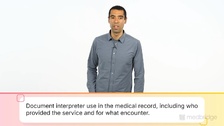
1. Legal Obligations for Language and Disability Accessibility
This chapter establishes the legal foundation for accessible digital healthcare, focusing on the language and disability access requirements of Section 1557 of the Affordable Care Act. Clinicians will learn to identify digital accessibility gaps, select appropriate translation services, and maintain HIPAA compliance and patient privacy when using interpreter services in remote encounters.
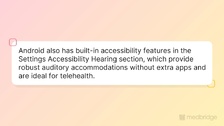
2. Tools for Auditory Accommodation
This chapter reviews strategies and built-in device features for accommodating patients who are d/Deaf or hard of hearing during telehealth encounters, including live captioning and hearing health tools available across iOS, Android, and desktop platforms. Clinicians will learn best practices for screening auditory needs before and during visits to support clear communication and equitable care.
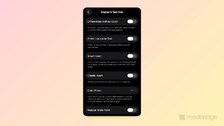
3. Tools for Visual Accommodation
This chapter covers accessibility features that support patients with low vision or visual impairments, including screen readers, magnification, and contrast and color customization across iOS, Android, Windows, and macOS. Clinicians will learn practical implementation strategies for configuring these tools to ensure independent, equitable access to patient portals, health apps, and telehealth platforms.
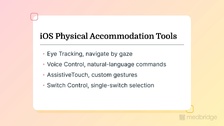
4. Tools for Physical Accommodation
This chapter addresses digital accessibility strategies for patients with limited motor control or physical impairments, including voice control, eye tracking, switch access, and alternative input methods available across major operating systems. Clinicians will learn to assess patients’ current technology use and select tools and workflows that make remote monitoring and telehealth participation feasible, not frustrating.
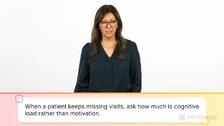
5. Tools for Cognitive Accommodation
This chapter explores digital tools and settings that reduce cognitive load for patients with cognitive impairments, including focus modes, reading modes, simplified interfaces, and voice-controlled navigation. Clinicians will learn to apply these accommodations in clinical practice to support patient comprehension, engagement, and independence during remote care.
More courses in this series
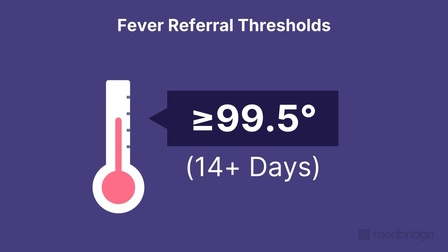
Advanced Medical Screening and Safety in Telehealth
Anna DeLaRosby, Julie Mulcahy, and Todd Norwood
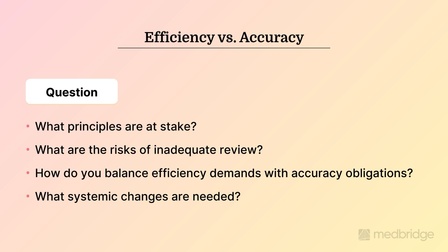
Ethics in Digital Care for Rehabilitation
Anna DeLaRosby, Julie Mulcahy, and Todd Norwood
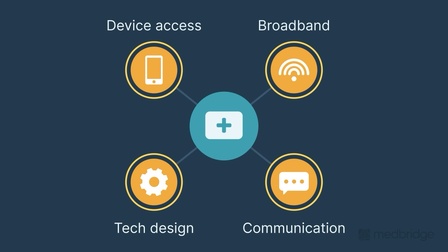
Equitable Access in Remote Care: Disability and Language Support
Anna DeLaRosby, Julie Mulcahy, and Todd Norwood
Frequently asked questions
Everything you need to know about Medbridge courses.
Who creates Medbridge courses?
We work with industry-leaders, top researchers, and consultants to build content roadmaps that are then structured into courses, filmed, and edited by our production team before being launched to our site.
How often does Medbridge release new courses?
New courses are added monthly and are automatically included in your subscription as they launch.
How often does Medbridge update courses?
Medbridge reviews its courses annually for relevance and to assess if content is up to date. Based on these reviews it may be determined that a course is out of date resulting in the course being re-filmed or retired, if the content is no longer needed (e.g. a replacement course already exists, the concepts are no longer best practice, etc.).
How many courses does Medbridge offer?
We have over 3,000 accredited courses and we are continually updating our library with new courses. Check our course library for the most up-to-date count for your discipline.
Are there any additional fees for taking a Medbridge course?
There are no additional fees for taking a Medbridge course, obtaining a course certificate of completion, earning CEUs as a subscriber, or accessing any of the additional tools your subscription may include.
Is there a limit to the number of courses I can take?
There is no limit to the number of courses you can take as a subscriber! As a subscriber to Medbridge, you have unlimited access to over 3,000+ accredited CE courses.
If you are a Premium subscriber, you also have unlimited access to our Patient Engagement Tools such as the Home Exercise Program, Patient Education Library, Orthopedic Exam Tests, and Manual Therapy Techniques. We have over 7,000 exercises and over 650+ videos and handouts of patient education resources with more exercises and patient education added to the library based on subscriber feedback, volume of request and specialities.
What is your refund policy?
You are eligible for a refund provided your request is received within 30 days of your subscription purchase and your account has no activity.