
HOPE Tool in Practice: IDT Collaboration for Accurate Data Capture
Presented by Annette Lee
The HOPE assessment is signed by the nurse, but its accuracy depends on the entire hospice team: the aide who notices a skin change, the social worker who documents a conversation about preferences, the chaplain who elicits spiritual concerns, and the therapist who observes dyspnea with activity. When those observations are not communicated, HOPE items are underrated or left incomplete, and the care plan no longer matches the real patient. This course shows how each discipline’s findings map to specific HOPE items, why the team member closest to a finding is the one who should report it, and how coding items such as spiritual concerns and symptom impact depends on documented, interdisciplinary evidence. It then moves from data capture to using HOPE as a team, translating findings into individualized care plans, comparing timepoints to spot trends, and applying HOPE data to quality improvement and survey readiness. Hospice clinicians and interdisciplinary team members will leave able to contribute to HOPE data that reflects the whole patient.
Learning Outcomes
- Differentiate the specific contributions of each interdisciplinary team member to ensure the accuracy of HOPE data collection
- Analyze how discipline-specific observations influence HOPE responses and overall data integrity
- Examine symptom identification and follow-up processes to ensure compliance with CMS HOPE measures
- Integrate interdisciplinary insights into care planning to improve patient-centered outcomes
Meet your instructor

Annette Lee
Annette is a registered nurse who has been practicing since 1990, with the majority of her nursing experience being in public healthcare. She has a master’s degree in healthcare administration. In 2000, she joined the home health intermediary Cahaba GBA, where she became an instructor, providing education to home health and…
Chapters & learning objectives

1. HOPE Foundations for the IDT: Why Every Role Matters
This chapter establishes that HOPE is a team-based assessment rather than a nursing form, showing how each discipline brings a different lens to the patient and where the data breaks down when interdisciplinary input is missing. It also clarifies who may complete which HOPE items under the Conditions of Participation, including when a skilled nursing assessment requires an RN and how Section Z signatures document each contributor.

2. Connecting the Dots: IDT Observations to HOPE Accuracy
This chapter maps specific HOPE items to the disciplines best positioned to inform them—from skin conditions and the aide to preferences and the social worker, from spiritual concerns and the chaplain to dyspnea and therapy—and reinforces that coding an item Yes requires documented evidence that a discussion or observation actually occurred. By working through items such as F3000 and symptom impact, clinicians learn why the team member closest to a finding must be the one to report it, or the item is inaccurate.

3. From Collaboration to Excellence: Using HOPE as a Team
This chapter moves from capturing data to using it, showing how each discipline’s HOPE findings should drive a matching, individualized intervention and how comparing timepoints reveals whether symptom impact is improving, stable, or declining. It connects accurate, team-based documentation to quality improvement and survey readiness, framing HOPE data as a shared accountability that protects compliance and supports better patient care.
More courses in this series
HOPE Tool in Practice: Capturing Sections A, F, I, M, N, and Z
Annette Lee

HOPE Tool in Practice: Accurately Capturing J-Item Data
Annette Lee
HOPE Tool in Practice: IDT Collaboration for Accurate Data Capture
Annette Lee
HOPE: Section F: Preferences
Annette Lee
HOPE: Section M: Skin Conditions
Annette Lee
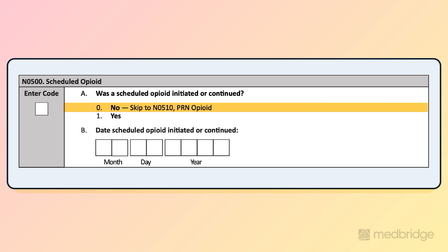
HOPE: Section N: Medications
Annette Lee
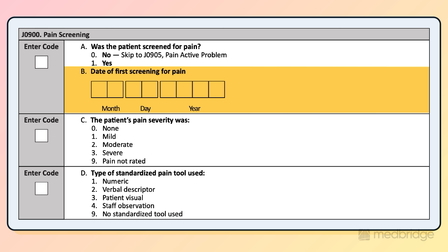
HOPE: Section J: Pain
Annette Lee
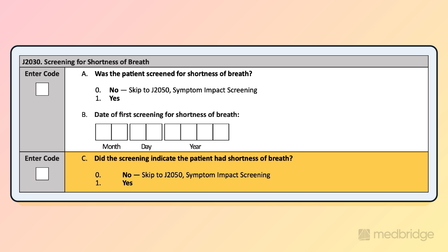
HOPE: Section J: Shortness of Breath
Annette Lee
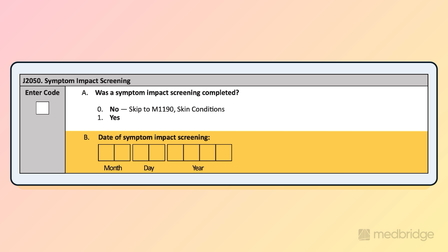
HOPE: Section J: Symptom Impact
Annette Lee
Frequently asked questions
Everything you need to know about Medbridge courses.
Who creates Medbridge courses?
We work with industry-leaders, top researchers, and consultants to build content roadmaps that are then structured into courses, filmed, and edited by our production team before being launched to our site.
How often does Medbridge release new courses?
New courses are added monthly and are automatically included in your subscription as they launch.
How often does Medbridge update courses?
Medbridge reviews its courses annually for relevance and to assess if content is up to date. Based on these reviews it may be determined that a course is out of date resulting in the course being re-filmed or retired, if the content is no longer needed (e.g. a replacement course already exists, the concepts are no longer best practice, etc.).
How many courses does Medbridge offer?
We have over 3,000 accredited courses and we are continually updating our library with new courses. Check our course library for the most up-to-date count for your discipline.
Are there any additional fees for taking a Medbridge course?
There are no additional fees for taking a Medbridge course, obtaining a course certificate of completion, earning CEUs as a subscriber, or accessing any of the additional tools your subscription may include.
Is there a limit to the number of courses I can take?
There is no limit to the number of courses you can take as a subscriber! As a subscriber to Medbridge, you have unlimited access to over 3,000+ accredited CE courses.
If you are a Premium subscriber, you also have unlimited access to our Patient Engagement Tools such as the Home Exercise Program, Patient Education Library, Orthopedic Exam Tests, and Manual Therapy Techniques. We have over 7,000 exercises and over 650+ videos and handouts of patient education resources with more exercises and patient education added to the library based on subscriber feedback, volume of request and specialities.
What is your refund policy?
You are eligible for a refund provided your request is received within 30 days of your subscription purchase and your account has no activity.