
HOPE Tool in Practice: Capturing Sections A, F, I, M, N, and Z
Presented by Annette Lee
This course is part of a series designed to be taken sequentially. It is recommended that learners view the series in the following course order:
- HOPE Tool in Practice: Capturing Sections A, F, I, M, N, and Z
- HOPE Tool in Practice: Accurately Capturing J-Item Data
Learning Outcomes
- Distinguish the purpose and structure of the HOPE dataset and its role in hospice quality reporting
- Apply accurate data capture techniques for HOPE Section A items related to patient demographics, social determinants of health, and living arrangements
- Interpret and document HOPE Sections F (Preferences) and I (Active Diagnoses) items to reflect individualized patient goals and clinical diagnoses
- Differentiate coding guidelines for HOPE Sections M (Skin Conditions) and N (Medications) to ensure complete and compliant documentation
- Utilize HOPE Section Z record administration items to accurately complete and submit hospice assessments
Meet your instructor

Annette Lee
Annette is a registered nurse who has been practicing since 1990, with the majority of her nursing experience being in public healthcare. She has a master’s degree in healthcare administration. In 2000, she joined the home health intermediary Cahaba GBA, where she became an instructor, providing education to home health and…
Chapters & learning objectives

1. Introduction to HOPE
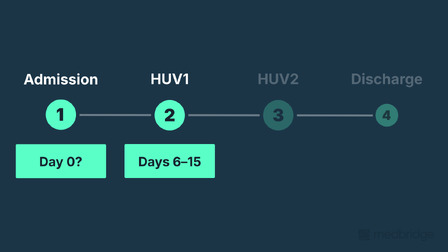
This chapter establishes what the HOPE assessment is, why CMS replaced the Hospice Item Set, and how real-time data collection across four timepoints (admission, two update visits, and discharge) supports care planning, quality reporting on Care Compare, and the survey process. It gives clinicians the framing they need to understand why accurate, interdisciplinary data capture matters before working through the individual sections.
2. Section A: Administrative Information
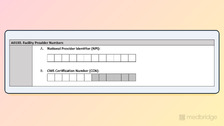
This chapter covers the administrative items that uniquely identify each patient and hospice, including record type, provider numbers, site of service, admission and diagnosis dates, and payer information, along with the modification and inactivation logic that keeps accepted records accurate. Because these fields anchor every submitted record, small errors here generate correction requests and validation failures that ripple through the rest of the assessment.

3. Section A: Social Determinants of Health/Living Arrangements
This chapter applies the patient-first hierarchy for collecting ethnicity, race, language, interpreter needs, and living arrangement data, asking the patient first, then the caregiver, and finally the medical record. Accurate capture of these social determinants supports individualized care and ensures that increasingly scrutinized equity measures reflect the patient’s own self-report whenever possible.
4. Section F: Preferences
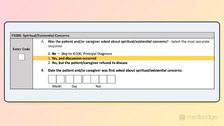
This chapter addresses how to document a patient’s CPR and other life-sustaining treatment preferences and their spiritual or existential concerns, coding from the first dated discussion rather than from standing orders alone. Accurate capture here ensures care aligns with what patients actually value and that the record shows evidence of the conversations that drive goal-concordant care.

5. Section I: Active Diagnoses
This chapter distinguishes the principal diagnosis, the condition most contributing to a life expectancy of six months or less, from the comorbid and coexisting conditions that affect the plan of care, using only the clinical record and the correct diagnostic categories. Precise diagnosis coding shapes how a patient’s clinical picture and service needs are represented in the HOPE dataset.
6. Section M: Skin Conditions
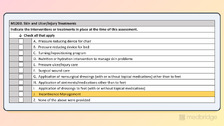
This chapter works through identifying, classifying, and documenting the skin conditions common in the hospice population, from the M1190 gateway item to the specific types (pressure injuries, skin tears, moisture-associated skin damage, and surgical wounds) and their treatments. Accurate skin documentation flags patients at risk for further injury and protects against avoidable quality concerns.

7. Section N: Medications
This chapter covers coding for scheduled and PRN opioids and the bowel regimens that accompany them, including how the scheduled-opioid order date anchors the timing of the bowel-regimen quality measure. Because patients do not develop tolerance to opioid-induced constipation, correct capture here supports both symptom management and compliance with the HQRP opioid and bowel-regimen measure.

8. Section Z: Record Administration
This chapter explains the record administration items that close out a HOPE assessment: the completion date, the signatures of everyone who completed any part of the record, and the certification that the information is accurate. Understanding who signs, what they attest to, and which items are retained rather than submitted ensures assessments are completed and verified on time.
More courses in this series
HOPE Tool in Practice: Capturing Sections A, F, I, M, N, and Z
Annette Lee

HOPE Tool in Practice: Accurately Capturing J-Item Data
Annette Lee

HOPE Tool in Practice: IDT Collaboration for Accurate Data Capture
Annette Lee
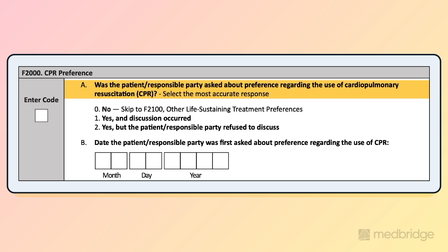
HOPE: Section F: Preferences
Annette Lee
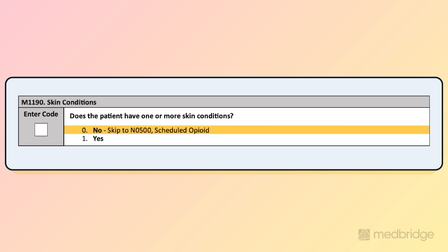
HOPE: Section M: Skin Conditions
Annette Lee
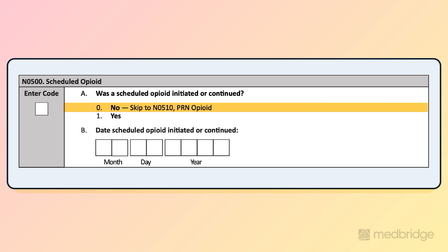
HOPE: Section N: Medications
Annette Lee
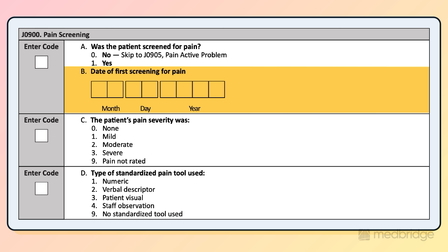
HOPE: Section J: Pain
Annette Lee
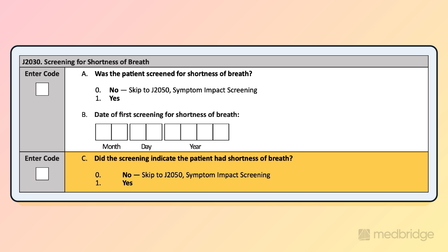
HOPE: Section J: Shortness of Breath
Annette Lee
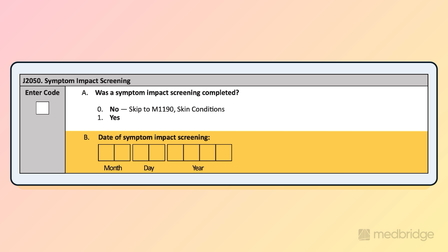
HOPE: Section J: Symptom Impact
Annette Lee
Frequently asked questions
Everything you need to know about Medbridge courses.
Who creates Medbridge courses?
We work with industry-leaders, top researchers, and consultants to build content roadmaps that are then structured into courses, filmed, and edited by our production team before being launched to our site.
How often does Medbridge release new courses?
New courses are added monthly and are automatically included in your subscription as they launch.
How often does Medbridge update courses?
Medbridge reviews its courses annually for relevance and to assess if content is up to date. Based on these reviews it may be determined that a course is out of date resulting in the course being re-filmed or retired, if the content is no longer needed (e.g. a replacement course already exists, the concepts are no longer best practice, etc.).
How many courses does Medbridge offer?
We have over 3,000 accredited courses and we are continually updating our library with new courses. Check our course library for the most up-to-date count for your discipline.
Are there any additional fees for taking a Medbridge course?
There are no additional fees for taking a Medbridge course, obtaining a course certificate of completion, earning CEUs as a subscriber, or accessing any of the additional tools your subscription may include.
Is there a limit to the number of courses I can take?
There is no limit to the number of courses you can take as a subscriber! As a subscriber to Medbridge, you have unlimited access to over 3,000+ accredited CE courses.
If you are a Premium subscriber, you also have unlimited access to our Patient Engagement Tools such as the Home Exercise Program, Patient Education Library, Orthopedic Exam Tests, and Manual Therapy Techniques. We have over 7,000 exercises and over 650+ videos and handouts of patient education resources with more exercises and patient education added to the library based on subscriber feedback, volume of request and specialities.
What is your refund policy?
You are eligible for a refund provided your request is received within 30 days of your subscription purchase and your account has no activity.