
Rehabilitation Research Boot Camp: Why Critical
Appraisal Skills Are Necessary
Presented by Chad E. Cook
Developing proficiency in identifying high-quality research is essential for healthcare providers who must navigate a landscape often saturated with low-value or misleading information. This course addresses the critical need for advanced appraisal skills by exploring the mechanics of the peer review system, the rise of predatory publishing, and the distinction between unintentional bias and deliberate fraud. Participants will learn to identify statistical anomalies such as outliers and recognize common logical fallacies that can skew clinical reasoning and lead to the premature adoption of unvetted treatments. By refining these evaluative techniques, clinicians can better protect the integrity of their evidence-based practice and ensure patient care is grounded in truly valid findings. This course is designed for physical therapists, researchers, and other healthcare professionals across various clinical and academic settings who utilize scientific literature to inform their decision-making process.
Learning Outcomes
- Classify scientific literature by evaluating study design, methodology, and relevance to clinical practice
- Clarify the strengths and limitations of the peer review system in maintaining research integrity
- Identify characteristics of predatory publishing to avoid unreliable or deceptive sources
- Distinguish between bias and fraud in research regarding their impact on data validity and ethical standards
- Interpret statistical outliers to understand their potential significance and influence on study conclusions
- Recognize logical fallacies in research arguments to detect flawed reasoning and unsupported claims
- Compare the credibility and applicability of published research in clinical decision-making
Meet your instructor

Chad E. Cook
Dr. Cook is a professor at Duke University with a Category A appointment in the Duke Clinical Research Institute and an adjunct appointment in the Department of Population Health Sciences. He is a clinical researcher, physical therapist, and profession advocate with a long history of clinical care excellence and service and…
Chapters & learning objectives

1. Why Do We Critically Appraise Research?
This chapter defines the systematic process of critical appraisal and its relatively recent emergence as a cornerstone of evidence-based practice. Understanding how to evaluate the validity, reliability, and applicability of a study is vital for any professional who relies on research to guide clinical decisions and avoid the adoption of ineffective care models.

2. The Peer Review System
Participants will explore the history and internal mechanics of the modern peer review process, including the roles of editors and the various types of blinding used to maintain objectivity. Learning these nuances helps clinicians appreciate the system’s strengths as a quality filter while recognizing the significant burden placed on unpaid reviewers.

3. Predatory Publishing
This chapter examines the explosive growth of predatory journals and the deceptive practices they use to bypass legitimate scientific standards for profit. Identifying these unreliable sources is essential to prevent “source amnesia,” a phenomenon where flawed information is remembered while its untrustworthy origin is forgotten.

4. Bias vs. Fraud
Understanding the distinction between omnipresent, often unconscious bias and intentional, unethical fraud is critical for accurately interpreting research results. This chapter highlights how various errors impact data validity and explains the role of retractions in correcting the scholarly record when science is found to be fundamentally flawed.

5. How to Interpret Outliers
This chapter provides strategies for identifying and managing statistical outliers that can significantly skew treatment effects and lead to inaccurate conclusions. By learning to differentiate between legitimate data variation and errors in coding or methodology, providers can better determine the true merit and effect size of clinical interventions.

6. Logical Fallacies in Research
Clinicians will learn to recognize flaws in reasoning, such as the confusion of association with causation, that render an argument invalid or misleading. Mastering the ability to detect these fallacies, including those that emerged during the COVID-19 pandemic, is necessary to maintain critical thinking and public trust in healthcare.

7. Course Summary
The final chapter synthesizes the core concepts of the course, reinforcing the importance of lifelong practice in critical appraisal skills. This summary ensures that participants leave with a cohesive framework for vetting the credibility and clinical utility of any published research they encounter.
More courses in this series

Rehabilitation Research Boot Camp: A Renewed Look at Evidence-Based Practice
Chad E. Cook

Rehabilitation Research Boot Camp: Research Methodology I
Kenneth E. Learman

Rehabilitation Research Boot Camp: Research Methodology II
Chad E. Cook
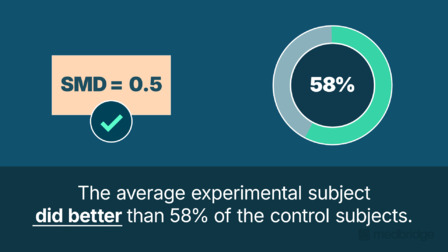
Rehabilitation Research Boot Camp: Statistical Analysis Essentials
Kenneth E. Learman

Rehabilitation Research Boot Camp: Why Critical Appraisal Skills Are Necessary
Chad E. Cook

Rehabilitation Research Boot Camp: Translating Research to Practice
Kenneth E. Learman
Rehabilitation Research Boot Camp: Navigating Grant Funding
Chad E. Cook

Rehabilitation Research Boot Camp: Publishing Case Reports and Series
Kenneth E. Learman
Frequently asked questions
Everything you need to know about Medbridge courses.
Who creates Medbridge courses?
We work with industry-leaders, top researchers, and consultants to build content roadmaps that are then structured into courses, filmed, and edited by our production team before being launched to our site.
How often does Medbridge release new courses?
New courses are added monthly and are automatically included in your subscription as they launch.
How often does Medbridge update courses?
Medbridge reviews its courses annually for relevance and to assess if content is up to date. Based on these reviews it may be determined that a course is out of date resulting in the course being re-filmed or retired, if the content is no longer needed (e.g. a replacement course already exists, the concepts are no longer best practice, etc.).
How many courses does Medbridge offer?
We have over 3,000 accredited courses and we are continually updating our library with new courses. Check our course library for the most up-to-date count for your discipline.
Are there any additional fees for taking a Medbridge course?
There are no additional fees for taking a Medbridge course, obtaining a course certificate of completion, earning CEUs as a subscriber, or accessing any of the additional tools your subscription may include.
Is there a limit to the number of courses I can take?
There is no limit to the number of courses you can take as a subscriber! As a subscriber to Medbridge, you have unlimited access to over 3,000+ accredited CE courses.
If you are a Premium subscriber, you also have unlimited access to our Patient Engagement Tools such as the Home Exercise Program, Patient Education Library, Orthopedic Exam Tests, and Manual Therapy Techniques. We have over 7,000 exercises and over 650+ videos and handouts of patient education resources with more exercises and patient education added to the library based on subscriber feedback, volume of request and specialities.
What is your refund policy?
You are eligible for a refund provided your request is received within 30 days of your subscription purchase and your account has no activity.