
Rehabilitation Research Boot Camp: Statistical Analysis Essentials
Presented by Kenneth E. Learman
This comprehensive course provides healthcare researchers and clinicians with a robust framework for navigating the complexities of data analysis in rehabilitation and medical research. In an era where evidence-based practice is paramount, the ability to accurately interpret and apply statistical findings is essential for optimizing patient outcomes and ensuring research fidelity. This course addresses the critical gap between raw data collection and clinical application by exploring hypothesis testing, the nuances of parametric and nonparametric statistics, and the distinction between statistical significance and clinical meaningfulness. Participants will learn to evaluate associations, identify group differences, and understand the impact of confounding variables on study results. Designed for a broad audience of healthcare providers—including physical therapists, physicians, and clinical researchers—this material is applicable across diverse settings, including academic institutions, private practices, and hospital-based research departments. By mastering these analytical tools, practitioners can better translate complex research findings into effective, evidence-driven clinical interventions.
Learning Outcomes
- Define the purpose of a statistical analysis
- Interpret the findings of a hypothesis test
- Clarify characteristics of data types and how this influences the choice of statistics
- Differentiate between parametric and non-parametric statistics
- Interpret the results of common statistical tests used in rehabilitation research
- Apply appropriate statistics related to the various research design types
- Interpret specific statistics related to epidemiology such as odds ratios, relative risk, absolute risk, attributable risk
- Recognize the impact of confounding, mediating, moderating variables, sampling variability and information bias in epidemiology studies
- Differentiate between statistical significance and clinical meaningfulness
Meet your instructor

Kenneth E. Learman
Kenneth E. Learman is a professor of physical therapy at Youngstown State University, where he is responsible for teaching manual therapy, patient examination and clinical reasoning, and research design and data analysis in the curriculum. Ken is also affiliated faculty at Duke University Division of Physical Therapy. Ken has…
Chapters & learning objectives

1. Hypothesis Testing and the Goal of Statistical Analyses
This chapter introduces the fundamental mathematical models used to describe relationships between predictor and outcome variables while accounting for inherent systematic and random errors. It is essential for learners to understand that the p-value is a probabilistic estimate of the data to accurately determine whether a null hypothesis remains tenable.

2. Understanding and Describing Data
Participants will explore the characteristics of descriptive and inferential statistics, focusing on measures of central tendency, variability, and the various types of data scales. Mastering data visualization and understanding distribution shapes are critical prerequisites for selecting the most appropriate analytical methods and correctly interpreting experimental outcomes.

3. Parametric and Nonparametric Statistics
This section details the specific assumptions required for parametric testing, such as normality and homogeneity of variance, and introduces nonparametric alternatives for categorical or skewed data. Understanding these distinctions ensures that researchers use the most powerful and familiar statistical tools available while remaining robust to common data violations.

4. Studies of Differences
This chapter examines experimental designs aimed at determining whether differences between or within groups are statistically significant and clinically relevant. By comparing means and proportions using tests such as ANOVA or the chi-square test, clinicians can better evaluate the true impact of their interventions relative to control groups.

5. Studies of Associations
Learners will investigate exploratory research methods that identify the strength and direction of relationships between multiple variables through correlation and regression. This is important for developing predictive models and understanding how various factors covary to influence patient risks or treatment hazards.

6. Clinical and/or Statistical Significance
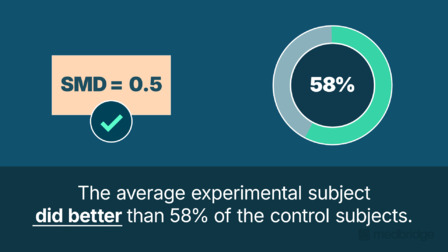
This chapter addresses the vital distinction between a model’s mathematical significance and the patient's actual meaningfulness of the change perceived. It provides the tools necessary to calculate effect sizes and minimal clinically important differences, ensuring that research findings translate into practical improvements in the clinical setting.

7. Course Summary and Discussion
The final chapter synthesizes the core analytical concepts covered throughout the series to reinforce a multimodal approach to interpreting evidence. This summary serves as a reflective conclusion that helps practitioners apply their newfound statistical literacy to the broader medical literature.
More courses in this series

Rehabilitation Research Boot Camp: A Renewed Look at Evidence-Based Practice
Chad E. Cook

Rehabilitation Research Boot Camp: Research Methodology I
Kenneth E. Learman

Rehabilitation Research Boot Camp: Research Methodology II
Chad E. Cook
Rehabilitation Research Boot Camp: Statistical Analysis Essentials
Kenneth E. Learman

Rehabilitation Research Boot Camp: Why Critical Appraisal Skills Are Necessary
Chad E. Cook

Rehabilitation Research Boot Camp: Translating Research to Practice
Kenneth E. Learman

Rehabilitation Research Boot Camp: Navigating Grant Funding
Chad E. Cook

Rehabilitation Research Boot Camp: Publishing Case Reports and Series
Kenneth E. Learman
Frequently asked questions
Everything you need to know about Medbridge courses.
Who creates Medbridge courses?
We work with industry-leaders, top researchers, and consultants to build content roadmaps that are then structured into courses, filmed, and edited by our production team before being launched to our site.
How often does Medbridge release new courses?
New courses are added monthly and are automatically included in your subscription as they launch.
How often does Medbridge update courses?
Medbridge reviews its courses annually for relevance and to assess if content is up to date. Based on these reviews it may be determined that a course is out of date resulting in the course being re-filmed or retired, if the content is no longer needed (e.g. a replacement course already exists, the concepts are no longer best practice, etc.).
How many courses does Medbridge offer?
We have over 3,000 accredited courses and we are continually updating our library with new courses. Check our course library for the most up-to-date count for your discipline.
Are there any additional fees for taking a Medbridge course?
There are no additional fees for taking a Medbridge course, obtaining a course certificate of completion, earning CEUs as a subscriber, or accessing any of the additional tools your subscription may include.
Is there a limit to the number of courses I can take?
There is no limit to the number of courses you can take as a subscriber! As a subscriber to Medbridge, you have unlimited access to over 3,000+ accredited CE courses.
If you are a Premium subscriber, you also have unlimited access to our Patient Engagement Tools such as the Home Exercise Program, Patient Education Library, Orthopedic Exam Tests, and Manual Therapy Techniques. We have over 7,000 exercises and over 650+ videos and handouts of patient education resources with more exercises and patient education added to the library based on subscriber feedback, volume of request and specialities.
What is your refund policy?
You are eligible for a refund provided your request is received within 30 days of your subscription purchase and your account has no activity.