
Dementia Care: Using the GEMS States Model for Personal Care Tasks
Presented by Teepa Snow
Non-Financial: Teepa Snow has no competing non-financial interests or relationships with regard to the content presented in this course.
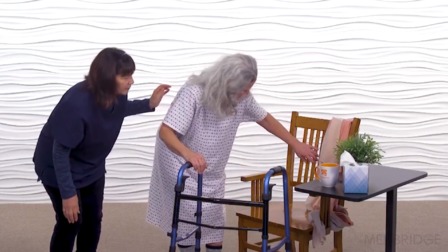
This course will help direct care providers and clinicians see beyond the inevitable losses that happen when someone develops and lives with dementia and focus instead on what is still possible when completing ADL tasks. In the course, we will focus on recognizing and making use of retained abilities, skills, and interests from the first signs of the condition until the end of the journey to complete self-care activities. By encouraging the use of a language that highlights the unique and valuable characteristics of each state of function, care partners can better respond to the altered capacity of the person who is changing. This new perspective will foster the development and use of effective strategies that match what is possible and what is needed to engage, interact, and encourage participation in self-care activities.
Meet your instructor

Teepa Snow
Teepa Snow is an advocate for those living with dementia. She has made it her personal mission to help families and professionals better understand how it feels to be living with such challenges and seeks to change and improve life for everyone involved. Her practice has included everything from neuro intensive care units in…
Chapters & learning objectives

1. Seeing Dementia as More than Loss When Providing Assistance
This chapter will compare Global Deterioration Scale to GEMS State Model for providing support and care that match remaining abilities.

2. Building Your Skills for Care
This chapter will have learners identify the level being demonstrated through the use of symptoms and behaviors. This chapter will also highlight the impact of positive reinforcement for effort and engagement in the task.

3. Working with Sapphires and Diamonds
This chapter will demonstrate and discuss the progression of the disease using role play and symptom identification by GEM State, Sapphires & Diamonds. This chapter will also demonstrate and discuss the value of matching visual, verbal, and touch cues to the person’s demonstrated retained ability sets in task performance. Finally, the chapter will highlight the impact of positive reinforcement for effort and engagement in the task.

4. Working with Emeralds
This chapter will demonstrate and discuss the progression of the disease using role play and symptom identification of the Emeralds GEM State. This chapter will also demonstrate and discuss the value of matching visual, verbal, and touch cues to the person’s demonstrated retained ability sets in task performance. The chapter will highlight the impact of positive reinforcement for effort and engagement in the task.

5. Working with Ambers
This chapter will demonstrate and discuss the progression of the disease using role play and symptom identification for the GEM State of Amber. This chapter will also demonstrate and discuss the value of matching visual, verbal, and touch cues to the person's demonstrated retained ability sets in task performance.

6. Working with Rubies
This chapter will demonstrate and discuss the progression of the disease using role play and symptom identification for the GEM State of Rubies. The chapter will also demonstrate and discuss the value of matching visual, verbal, and touch cues to the person’s demonstrated retained ability sets in task performance. Finally, the chapter will highlight the impact of positive reinforcement for effort and engagement in the task.

7. Working with Pearls
This chapter will demonstrate and discuss the progression of the disease using role play and symptom identification for the GEM State of Pearl. This chapter will also demonstrate and discuss the value of matching visual, verbal, and touch cues to the person’ demonstrated retained ability sets in task performance. Finally, this chapter will highlight the impact of positive reinforcement for effort and engagement in the task.
More courses in this series
Overview of Dementia: Alzheimer's, Vascular, Lewy Body, Frontotemporal
Teepa Snow

Dementia Care: Understanding Common Symptoms for Better Care
Teepa Snow

Dementia Care: Reducing the Risk of Challenging Situations
Teepa Snow

Dementia Care: Coping with Challenging Situations in Support & Care
Teepa Snow

Dementia Care: Using the GEMS States Model for Personal Care Tasks
Teepa Snow

Dementia Care: Communicating When Someone Has Dementia
Teepa Snow

Dementia Care: Offering Engagement for People Living With Dementia
Teepa Snow

Dementia Care: Helping as Abilities are Failing and Life is Ending
Teepa Snow
Frequently asked questions
Everything you need to know about Medbridge courses.
Who creates Medbridge courses?
We work with industry-leaders, top researchers, and consultants to build content roadmaps that are then structured into courses, filmed, and edited by our production team before being launched to our site.
How often does Medbridge release new courses?
New courses are added monthly and are automatically included in your subscription as they launch.
How often does Medbridge update courses?
Medbridge reviews its courses annually for relevance and to assess if content is up to date. Based on these reviews it may be determined that a course is out of date resulting in the course being re-filmed or retired, if the content is no longer needed (e.g. a replacement course already exists, the concepts are no longer best practice, etc.).
How many courses does Medbridge offer?
We have over 3,000 accredited courses and we are continually updating our library with new courses. Check our course library for the most up-to-date count for your discipline.
Are there any additional fees for taking a Medbridge course?
There are no additional fees for taking a Medbridge course, obtaining a course certificate of completion, earning CEUs as a subscriber, or accessing any of the additional tools your subscription may include.
Is there a limit to the number of courses I can take?
There is no limit to the number of courses you can take as a subscriber! As a subscriber to Medbridge, you have unlimited access to over 3,000+ accredited CE courses.
If you are a Premium subscriber, you also have unlimited access to our Patient Engagement Tools such as the Home Exercise Program, Patient Education Library, Orthopedic Exam Tests, and Manual Therapy Techniques. We have over 7,000 exercises and over 650+ videos and handouts of patient education resources with more exercises and patient education added to the library based on subscriber feedback, volume of request and specialities.
What is your refund policy?
You are eligible for a refund provided your request is received within 30 days of your subscription purchase and your account has no activity.