
TBI Foundations: Key Knowledge Impacting Clinical Approach
Presented by Kristen Keech and Jessica Asiello
Traumatic brain injury (TBI) is a complex and often misunderstood condition with widespread implications for function, recovery, and quality of life. This course equips clinicians with foundational knowledge about the neuroanatomy, mechanisms, classifications, and health disparities associated with TBI. Participants will gain critical insight into how different types of brain injury—focal, diffuse, traumatic, and nontraumatic—present in clinical practice as well as how to anticipate complications and guide treatment planning accordingly. The course also introduces the new CBI-M framework for TBI classification and explores a dual-lens approach to care that integrates prevention and rehabilitation. Designed for clinicians working across acute and postacute settings, this course supports safe, informed, and equitable care delivery for individuals at all stages of TBI recovery.
Learning Objectives
- Identify the primary neuroanatomical structures affected by traumatic brain injury (TBI)
- Recall the mechanisms of injury leading to TBI, including acceleration-deceleration forces and direct impact
- Paraphrase the new classification system for TBI severity and its clinical implications
- Differentiate between focal and diffuse brain injuries and their associated pathophysiology
- Build knowledge of neuroanatomy and injury mechanisms to anticipate clinical outcomes and inform treatment planning
- Compare dual lens approaches related to TBI care: Preventative vs. Rehabilitative
Meet your instructors

Kristen Keech
Dr. Kristen Keech is an occupational therapist who is passionate about advancing care and advocating for survivors of brain injury. She holds a master of science in occupational therapy from the University of New Hampshire and a doctorate in occupational therapy from the MGH Institute of Health Professions. She is recognized…

Jessica Asiello
Jessica Asiello is an assistant professor in the Department of Occupational Therapy in the School of Health and Rehabilitation Sciences at the MGH Institute of Health Professions in Boston, Massachusetts. She primarily teaches in the online postprofessional OTD program. Her clinical practice is in acute care at Massachusetts…
Chapters & learning objectives
1. Neuroanatomy, Prevalence, Mechanisms, and Classification
This chapter lays the groundwork for understanding TBI by exploring key neuroanatomical structures, mechanisms of injury, and prevalence across populations. Clinicians will examine how forces like acceleration-deceleration and direct impact affect brain function, how injury severity is classified using the new CBI-M framework, and how social determinants of health influence outcomes. The content highlights the importance of linking brain regions to function when evaluating impairments and planning care.
2. Types of Traumatic Brain Injury
This chapter explores the full spectrum of brain injuries, including subdural and epidural hematomas, diffuse axonal injury, contusions, skull fractures, and concussion. It also includes nontraumatic causes, such as infections, tumors, and anoxic injuries. Clinicians will learn to differentiate injury types, recognize complications, and consider how pathophysiology and imaging findings impact prognosis, precautions, and interdisciplinary management.
3. Approach: Preventative and Rehabilitative
The final chapter introduces a dual-lens model for TBI care, emphasizing the integration of prevention and rehabilitation strategies. Occupational therapy practitioners will explore evidence-based approaches for reducing injury risk across populations and gain tools to support recovery through early intervention, interdisciplinary coordination, and long-term functional goal setting. The chapter empowers clinicians to tailor care that promotes both safety and independence across the continuum.
More courses in this series
Acute Stroke Essentials: BE FAST and Prepared
Jessica Asiello and Kristen Keech
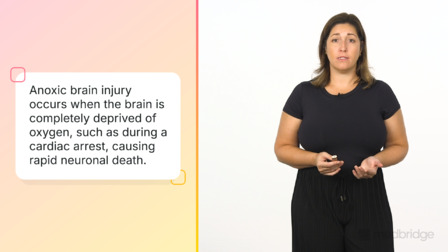
TBI Foundations: Key Knowledge Impacting Clinical Approach
Jessica Asiello and Kristen Keech

Navigating the Neuro Chart Review Part 1: Imaging, Vitals, and Medications
Jessica Asiello and Kristen Keech

Navigating the Neuro Chart Review Part 2: Monitoring and Procedures
Jessica Asiello and Kristen Keech
Frequently asked questions
Everything you need to know about Medbridge courses.
Who creates Medbridge courses?
We work with industry-leaders, top researchers, and consultants to build content roadmaps that are then structured into courses, filmed, and edited by our production team before being launched to our site.
How often does Medbridge release new courses?
New courses are added monthly and are automatically included in your subscription as they launch.
How often does Medbridge update courses?
Medbridge reviews its courses annually for relevance and to assess if content is up to date. Based on these reviews it may be determined that a course is out of date resulting in the course being re-filmed or retired, if the content is no longer needed (e.g. a replacement course already exists, the concepts are no longer best practice, etc.).
How many courses does Medbridge offer?
We have over 3,000 accredited courses and we are continually updating our library with new courses. Check our course library for the most up-to-date count for your discipline.
Are there any additional fees for taking a Medbridge course?
There are no additional fees for taking a Medbridge course, obtaining a course certificate of completion, earning CEUs as a subscriber, or accessing any of the additional tools your subscription may include.
Is there a limit to the number of courses I can take?
There is no limit to the number of courses you can take as a subscriber! As a subscriber to Medbridge, you have unlimited access to over 3,000+ accredited CE courses.
If you are a Premium subscriber, you also have unlimited access to our Patient Engagement Tools such as the Home Exercise Program, Patient Education Library, Orthopedic Exam Tests, and Manual Therapy Techniques. We have over 7,000 exercises and over 650+ videos and handouts of patient education resources with more exercises and patient education added to the library based on subscriber feedback, volume of request and specialities.
What is your refund policy?
You are eligible for a refund provided your request is received within 30 days of your subscription purchase and your account has no activity.