
HOPE Tool in Practice: Accurately Capturing J-Item Data
Presented by Annette Lee
This course is part of a series designed to be taken sequentially. It is recommended that learners view the series in the following course order:
- HOPE Tool in Practice: Capturing Sections A, F, I, M, N, and Z
- HOPE Tool in Practice: Accurately Capturing J-Item Data
Learning Outcomes
- Explain the purpose and structure of HOPE Section J and its significance in hospice quality reporting and patient care outcomes
- Apply HOPE coding guidelines to accurately document death-imminent status and neuropathic pain items (J0050, J0900, J0905, J0910, J0915) during the hospice assessment
- Apply HOPE documentation standards to accurately capture shortness of breath frequency and treatment items (J2030, J2040) in the hospice patient record
- Analyze symptom impact data to accurately complete HOPE items J2050–J2053 using interdisciplinary team input and patient-reported information
Meet your instructor

Annette Lee
Annette is a registered nurse who has been practicing since 1990, with the majority of her nursing experience being in public healthcare. She has a master’s degree in healthcare administration. In 2000, she joined the home health intermediary Cahaba GBA, where she became an instructor, providing education to home health and…
Chapters & learning objectives

1. Introduction to the Health Conditions Section of HOPE
This chapter frames why Section J represents the largest area of change in the Hospice Quality Reporting Program, mapping its items to the quality measures they support: comprehensive assessment and timely follow-up for pain and non-pain symptom impact. Clinicians gain the big-picture context they need to understand how accurate Section J documentation shapes both patient care and publicly reported outcomes before working through the individual items.
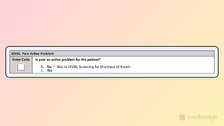
2. Section J: Health Conditions: Screens and Assessments (J0050–J0915)
This chapter covers the imminent-death indicator (J0050), pain screening, and the comprehensive pain assessment items (J0900–J0915), including how to code from clinical judgment and observed signs rather than a formal prognosis. Because pain is prevalent and often undertreated near the end of life, accurate screening and assessment here drive both effective symptom management and the comprehensive-assessment measure.
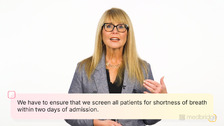
3. Section J: Health Conditions: Dyspnea Screen and Treatment (J2030 and J2040)
This chapter details how to screen for shortness of breath and document its severity and treatment (J2030 and J2040), including the rule that a dated dyspnea screening within two days of admission earns the measure whether or not shortness of breath is present. Clinicians learn the skip logic and the distinction between an active problem and an incidental finding, so the dyspnea measure is met and the record reflects the patient’s actual respiratory status.
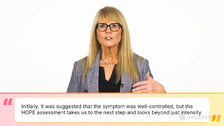
4. Section J: Health Conditions: Symptom Impacts and Follow-Up (J2050–J2053)
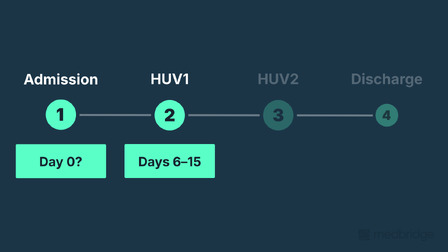
This chapter addresses symptom impact screening and the Symptom Follow-Up Visit items (J2050–J2053), centering on the difference between how intense a symptom feels and how much it disrupts a patient’s daily life and function. Because the screening date starts the two-day clock for a required follow-up visit and because impact is best judged with patient and caregiver input, precise coding here determines whether the hospice meets its timely-follow-up measures.
More courses in this series
HOPE Tool in Practice: Capturing Sections A, F, I, M, N, and Z
Annette Lee

HOPE Tool in Practice: Accurately Capturing J-Item Data
Annette Lee
HOPE Tool in Practice: IDT Collaboration for Accurate Data Capture
Annette Lee
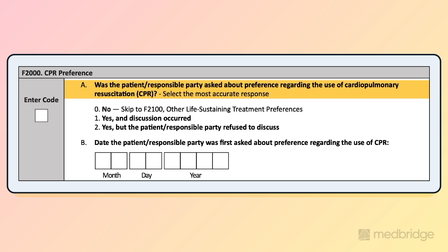
HOPE: Section F: Preferences
Annette Lee
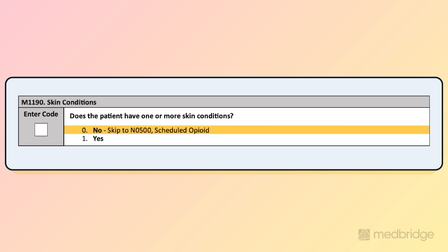
HOPE: Section M: Skin Conditions
Annette Lee
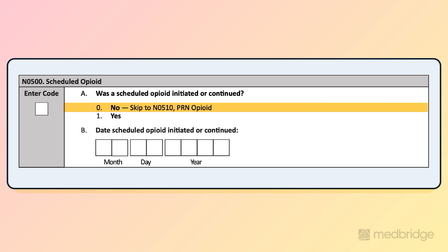
HOPE: Section N: Medications
Annette Lee
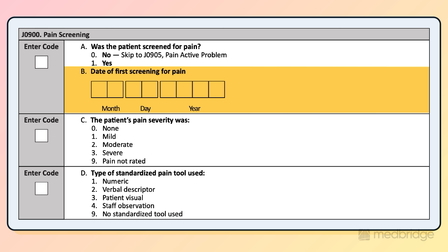
HOPE: Section J: Pain
Annette Lee
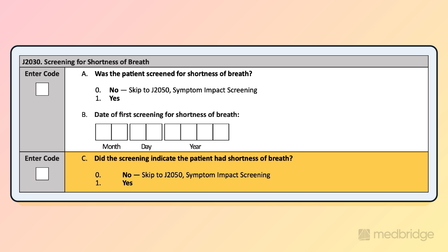
HOPE: Section J: Shortness of Breath
Annette Lee
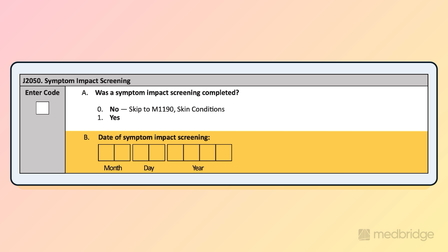
HOPE: Section J: Symptom Impact
Annette Lee
Frequently asked questions
Everything you need to know about Medbridge courses.
Who creates Medbridge courses?
We work with industry-leaders, top researchers, and consultants to build content roadmaps that are then structured into courses, filmed, and edited by our production team before being launched to our site.
How often does Medbridge release new courses?
New courses are added monthly and are automatically included in your subscription as they launch.
How often does Medbridge update courses?
Medbridge reviews its courses annually for relevance and to assess if content is up to date. Based on these reviews it may be determined that a course is out of date resulting in the course being re-filmed or retired, if the content is no longer needed (e.g. a replacement course already exists, the concepts are no longer best practice, etc.).
How many courses does Medbridge offer?
We have over 3,000 accredited courses and we are continually updating our library with new courses. Check our course library for the most up-to-date count for your discipline.
Are there any additional fees for taking a Medbridge course?
There are no additional fees for taking a Medbridge course, obtaining a course certificate of completion, earning CEUs as a subscriber, or accessing any of the additional tools your subscription may include.
Is there a limit to the number of courses I can take?
There is no limit to the number of courses you can take as a subscriber! As a subscriber to Medbridge, you have unlimited access to over 3,000+ accredited CE courses.
If you are a Premium subscriber, you also have unlimited access to our Patient Engagement Tools such as the Home Exercise Program, Patient Education Library, Orthopedic Exam Tests, and Manual Therapy Techniques. We have over 7,000 exercises and over 650+ videos and handouts of patient education resources with more exercises and patient education added to the library based on subscriber feedback, volume of request and specialities.
What is your refund policy?
You are eligible for a refund provided your request is received within 30 days of your subscription purchase and your account has no activity.