
Advances in Balance Diagnosis and Treatment: Part 1
Presented by Andrea E. Ecsedy
This course provides a streamlined clinical framework for physical therapists to evaluate and diagnose individuals with balance dysfunction using current evidence-based movement system diagnoses. Clinicians often struggle to balance high productivity standards with integrating complex evidence into daily practice. By focusing on the “bread and butter” of geriatric and neurological care—the community-dwelling or subacute resident at risk for falls—this program introduces a palatable, one-hour evaluation strategy. Participants will learn to move beyond generic “bad balance” labels and instead identify specific impairments across musculoskeletal, neuromuscular, and behavioral domains. Using primary and secondary gateway measures, such as gait speed and the Modified Clinical Test for Sensory Integration and Balance (mCTSIB), clinicians will gain the tools to develop patient-specific treatment plans that address the true underlying determinants of postural instability.
Learning Outcomes
- Evaluate patients with balance dysfunction using evidence-based tests and measures to develop a specific therapy diagnosis
- Determine fall risk in patients by utilizing gateway measures for balance dysfunction
- Interpret assessment findings to identify underlying determinants for balance dysfunction
- Formulate a balance diagnosis for people with balance dysfunction to guide interventions for improved functional mobility
Meet your instructor

Andrea E. Ecsedy
Andrea Ecsedy is a board-certified specialist in neurologic physical therapy with over 40 years of clinical experience. Her clinical focus includes balance and vestibular dysfunction, stroke, Parkinson’s disease, and other neurologic diseases. She has taught as adjunct faculty in several university physical therapy programs…
Chapters & learning objectives
1. Practical Balance Assessment and Diagnosis
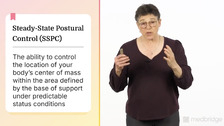
This chapter introduces a practical framework for categorizing balance deficits into three primary postural control strategies: steady state, anticipatory, and reactive. Participants will explore the movement system diagnosis model to better understand how musculoskeletal, neuromuscular, and cognitive determinants contribute to a patient’s overall fall risk.
2. Gateway Measures for Balance Dysfunction
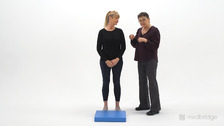
Clinicians will learn to utilize gait speed as the “functional vital sign” and primary gateway measure to triage patients efficiently. The session also details the administration and interpretation of the Modified Clinical Test for Sensory Integration and Balance (mCTSIB) to differentiate between sensory processing and sensory integrity issues.
3. Developing a Balance Diagnosis
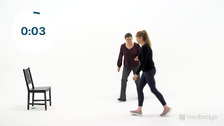
The final chapter demonstrates how to synthesize objective data into a specific, multifactorial balance diagnosis and comprehensive treatment plan. A methodical evaluation template is provided to ensure that frequently overlooked areas, such as ankle range of motion and vestibular agnosia, are addressed within a standard one-hour assessment.

4. Additional Demonstration Examples
In this chapter, we’ll include additional demonstration examples for balance assessment.


Frequently asked questions
Everything you need to know about Medbridge courses.
Who creates Medbridge courses?
We work with industry-leaders, top researchers, and consultants to build content roadmaps that are then structured into courses, filmed, and edited by our production team before being launched to our site.
How often does Medbridge release new courses?
New courses are added monthly and are automatically included in your subscription as they launch.
How often does Medbridge update courses?
Medbridge reviews its courses annually for relevance and to assess if content is up to date. Based on these reviews it may be determined that a course is out of date resulting in the course being re-filmed or retired, if the content is no longer needed (e.g. a replacement course already exists, the concepts are no longer best practice, etc.).
How many courses does Medbridge offer?
We have over 3,000 accredited courses and we are continually updating our library with new courses. Check our course library for the most up-to-date count for your discipline.
Are there any additional fees for taking a Medbridge course?
There are no additional fees for taking a Medbridge course, obtaining a course certificate of completion, earning CEUs as a subscriber, or accessing any of the additional tools your subscription may include.
Is there a limit to the number of courses I can take?
There is no limit to the number of courses you can take as a subscriber! As a subscriber to Medbridge, you have unlimited access to over 3,000+ accredited CE courses.
If you are a Premium subscriber, you also have unlimited access to our Patient Engagement Tools such as the Home Exercise Program, Patient Education Library, Orthopedic Exam Tests, and Manual Therapy Techniques. We have over 7,000 exercises and over 650+ videos and handouts of patient education resources with more exercises and patient education added to the library based on subscriber feedback, volume of request and specialities.
What is your refund policy?
You are eligible for a refund provided your request is received within 30 days of your subscription purchase and your account has no activity.